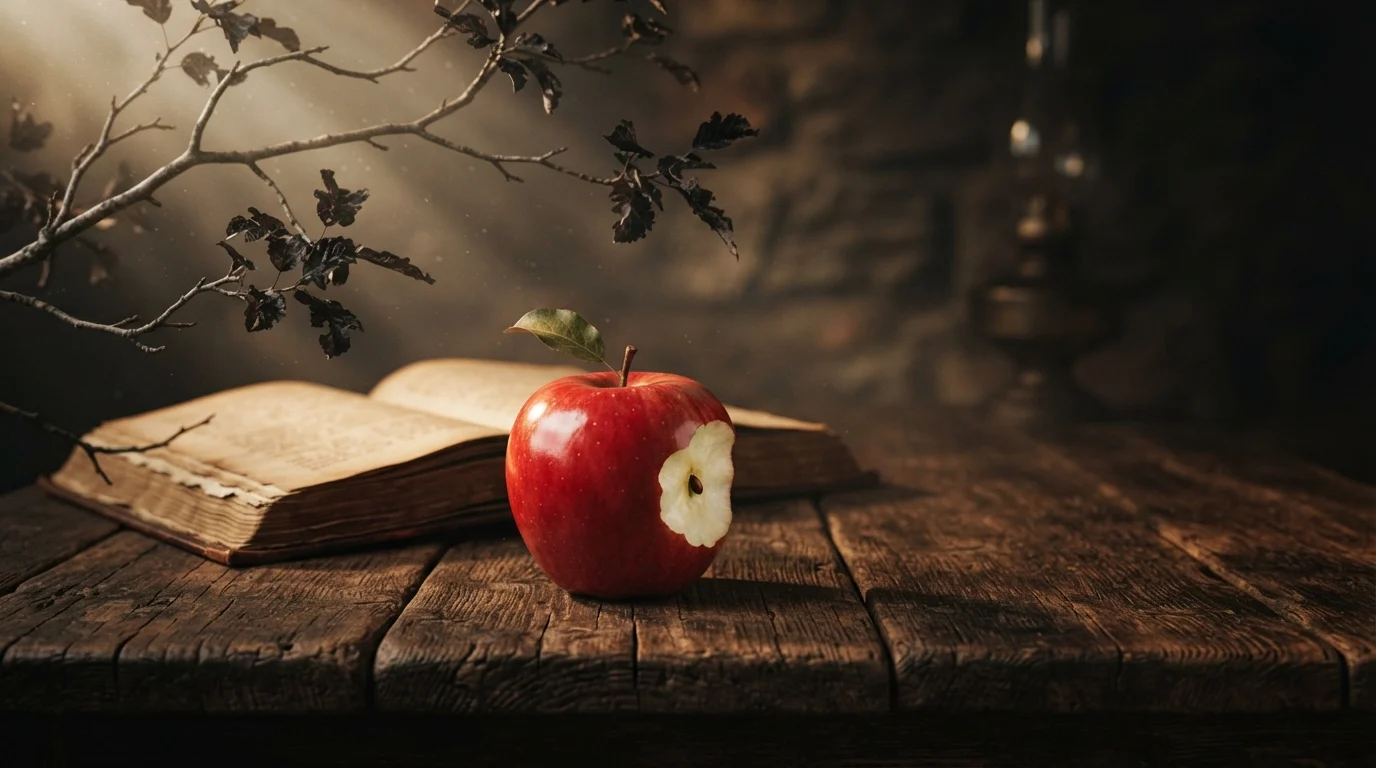
Apple symbolism has fascinated people for centuries because the apple can represent both simple pleasures and profound ideas.
Across religion, mythology, literature, art, and dreams, the apple is often associated with knowledge, temptation, love, fertility, abundance, wisdom, and transformation.
Its meaning depends heavily on context. A fresh apple may suggest health and vitality, while a bitten or rotten apple can symbolize temptation, loss, corruption, or change.
Apple Symbolism Meaning (Clear Definition)
Apple symbolism refers to the meanings and ideas traditionally associated with apples, including knowledge, temptation, love, fertility, prosperity, health, and spiritual transformation.
The apple is especially interesting because its symbolism can contain opposing ideas. It may represent innocence and temptation at the same time, or life and mortality depending on how it appears.
Common apple symbolism includes:
- Knowledge and wisdom — learning, discovery, and intellectual growth
- Temptation — desire, forbidden choices, and moral testing
- Love and attraction — romance, beauty, and sensuality
- Fertility — creation, motherhood, and new beginnings
- Abundance — prosperity, nourishment, and harvest
- Health and vitality — wellness, longevity, and natural strength
- Transformation — personal growth, change, and important life decisions
Because of these layered meanings, the apple remains one of the most recognizable symbolic fruits in the world.
What Does Apple Symbolism Represent?
At its core, apple symbolism represents the choices, desires, knowledge, and opportunities that shape human life.
The apple’s round shape and association with trees, seasons, and harvests also connect it with cycles of life. It begins as a blossom, develops into fruit, ripens, and eventually decays. This natural process can symbolize growth, maturity, aging, and renewal.
Knowledge and Wisdom
One of the strongest symbolic associations of the apple is knowledge. An apple can represent curiosity, education, discovery, and the desire to understand something hidden.
This interpretation is particularly powerful when an apple appears alongside books, teachers, scholars, or other symbols of learning.
Temptation and Choice
A bitten apple often represents temptation. It can suggest that someone has encountered an attractive opportunity but must decide whether pursuing it is wise.
This symbolism can apply to relationships, career decisions, personal desires, or moral challenges.
Love and Fertility
Apples have also been connected with love, beauty, fertility, and romantic attraction. In some cultural traditions, offering or sharing an apple can carry affectionate or courtship related meanings.
Abundance and Prosperity
Because apples are associated with harvests and nourishment, they can symbolize abundance and material or emotional prosperity.
A basket of ripe apples may therefore represent blessings, rewards, productivity, or the results of patience and hard work.
Spiritual Meaning of Apple Symbolism
Spiritually, apple symbolism often points toward knowledge, awakening, temptation, personal growth, and the consequences of choice.
The apple can represent a moment when a person becomes aware of something that changes their understanding of life. In this sense, eating or encountering an apple may symbolize an awakening.
A healthy, beautiful apple can suggest spiritual nourishment and positive growth. A damaged or rotten apple may point toward something that needs healing, releasing, or reconsidering.
Apple Symbolism in Spiritual Contexts
- Whole apple: potential, wholeness, health, and abundance
- Red apple: passion, vitality, love, and desire
- Green apple: renewal, growth, youth, and fresh opportunities
- Bitten apple: temptation, curiosity, or a major decision
- Rotten apple: decay, disappointment, corruption, or something neglected
- Apple tree: stability, family roots, growth, and life cycles
- Apple blossom: beginnings, beauty, hope, and future possibilities
The spiritual meaning is rarely fixed. Your emotions and the surrounding circumstances usually provide the most important clues.
Biblical / Religious Meaning of Apple Symbolism
The apple has a complicated relationship with religious symbolism, particularly within Christian traditions.
The Book of Genesis does not actually identify the forbidden fruit as an apple. It describes it simply as fruit from the tree of the knowledge of good and evil. The association between the forbidden fruit and the apple developed later through cultural and artistic traditions.
Over time, the apple became strongly connected with the story of Adam and Eve and therefore acquired symbolic associations with temptation, disobedience, knowledge, sin, and humanity’s fall.
The apple also became useful in Christian art because of a Latin wordplay involving malum, which can relate to both “evil” and “apple.” This helped reinforce the fruit’s visual association with the Fall.
However, apple symbolism is not exclusively negative. Apples can also represent knowledge, creation, fertility, and the complexity of human choice.
Apple Symbolism in History and Culture
Apples appear in numerous myths, traditions, and cultural stories, although their meanings vary considerably.
In Greek mythology, golden apples appear in important stories. The golden apples of the Hesperides represent extraordinary value and divine abundance, while the Golden Apple of Discord plays a major role in the events leading toward the Trojan War.
In European folklore, apples can represent beauty, youth, love, danger, or supernatural transformation. Their connection with harvest traditions also gives them associations with seasonal cycles and abundance.
In Celtic and medieval traditions, apples were sometimes associated with otherworldly realms, immortality, or magical knowledge.
The fruit’s cultural meaning therefore extends far beyond the familiar idea of temptation.
Apple Symbolism in Literature and Art
Writers and artists have repeatedly used apples because their visual simplicity allows them to carry complex meanings.
In literature, an apple may represent:
- A forbidden desire
- A life changing discovery
- Innocence being lost
- Love or attraction
- Hidden knowledge
- Mortality
- Beauty that conceals danger
In visual art, the apple can immediately suggest biblical themes, mythology, still life traditions, or ordinary human life.
Artists may also use a fresh apple beside a decaying one to contrast youth and aging, abundance and loss, or beauty and mortality.
The famous image of a bitten apple has become especially powerful in modern visual culture because one simple bite can suggest curiosity, rebellion, discovery, or irreversible change.
Dream Meaning of Apple Symbolism
Dreaming about an apple can have several possible interpretations. The meaning depends on the apple’s appearance, what happens to it, and how you feel during the dream.
A ripe apple may symbolize opportunity, reward, health, abundance, or emotional fulfillment.
A bitten apple may represent temptation, curiosity, a difficult choice, or an experience that has already changed you.
A rotten apple can symbolize disappointment, neglected potential, unhealthy circumstances, or something that appears attractive on the outside but is harmful underneath.
Common Apple Dreams and Their Possible Meanings
| Apple in a Dream | Possible Symbolic Meaning |
|---|---|
| Eating a sweet apple | Pleasure, fulfillment, or enjoying life’s rewards |
| Seeing a red apple | Love, passion, attraction, or vitality |
| Picking an apple | Opportunity, achievement, or receiving a reward |
| Seeing an apple tree | Growth, family, stability, or long-term potential |
| Giving someone an apple | Affection, generosity, or an emotional offering |
| Rotten apple | Disappointment, decay, or something unhealthy |
| Bitten apple | Temptation, curiosity, or an irreversible choice |
| Many apples | Abundance, prosperity, or multiple opportunities |
Dream symbolism is personal rather than predictive. The emotions you experienced in the dream can be more meaningful than the object itself.
Modern Meaning of Apple Symbolism
Today, apple symbolism continues to evolve.
The apple can represent education, health, innovation, simplicity, creativity, rebellion, and technological discovery. Its traditional meanings have been joined by modern cultural associations.
The classic image of an apple given to a teacher connects it with education and respect. The phrase “an apple a day” links it with health and well-being.
Meanwhile, the bitten apple has become a widely recognized symbol of technology and innovation, giving the fruit a new association with creativity, design, and modern discovery.
This demonstrates why symbolism changes over time. An object can preserve ancient meanings while gaining completely new ones.
Is Apple Symbolism Positive or Negative?
Apple symbolism can be either positive or negative depending on the context.
Positive meanings include knowledge, health, love, abundance, growth, fertility, wisdom, and opportunity. Negative interpretations may include temptation, deception, disobedience, decay, loss, or dangerous desire.
The surrounding symbols usually determine which interpretation makes the most sense.
What Does a Red Apple Symbolize?
A red apple commonly symbolizes love, passion, vitality, temptation, beauty, and desire.
Its meaning can shift depending on context. A red apple in a romantic setting may suggest attraction, while one appearing in a religious scene may suggest temptation or moral choice.
What Does a Green Apple Symbolize?
A green apple often represents growth, freshness, renewal, youth, opportunity, and new beginnings.
Because green is associated with nature and development, the green apple can suggest something that is still growing or has not yet reached full maturity.
What Does a Rotten Apple Symbolize?
A rotten apple commonly symbolizes decay, disappointment, corruption, neglected potential, or something unhealthy beneath an attractive surface.
It may also represent the natural process of change and the reminder that nothing remains unchanged forever.
What Does a Bitten Apple Symbolize?
A bitten apple often symbolizes temptation, curiosity, forbidden knowledge, discovery, or a choice that cannot be undone.
Its meaning is especially powerful because the bite shows that an action has already taken place.
FAQs About Apple Symbolism
What is the main meaning of apple symbolism?
The main meanings of apple symbolism include knowledge, temptation, love, abundance, health, fertility, and transformation. Its interpretation depends on cultural and personal context.
What does an apple symbolize spiritually?
Spiritually, an apple can symbolize awakening, knowledge, temptation, personal growth, and the consequences of important choices. It may represent both opportunity and the responsibility that comes with gaining new awareness.
Is the apple the forbidden fruit in the Bible?
The Bible does not specifically say that the forbidden fruit was an apple. The apple became associated with the biblical story through later religious, artistic, linguistic, and cultural traditions.
What does an apple mean in a dream?
An apple in a dream may symbolize opportunity, desire, knowledge, health, abundance, or temptation. The apple’s condition and your feelings during the dream can help determine the most relevant interpretation.
Why is the apple a symbol of knowledge?
The apple became strongly associated with knowledge through its connection to the story of the Tree of Knowledge and later cultural traditions. It has also become a practical symbol of education because apples are traditionally associated with teachers and classrooms.
Conclusion
Apple symbolism is powerful because one ordinary fruit can express many sides of human experience. It can represent knowledge and temptation, love and desire, growth and decay, abundance and mortality.
If encountered in mythology, religion, dreams, art, or everyday life, the apple often reminds us that every choice can bring new knowledge and every new beginning carries the possibility of transformation.

I’m Sophia Brown, passionate about exploring symbols, their meanings, and cultural significance. I enjoy researching history, spirituality, and traditions, creating clear, engaging articles that inspire curiosity and deeper understanding for every reader.