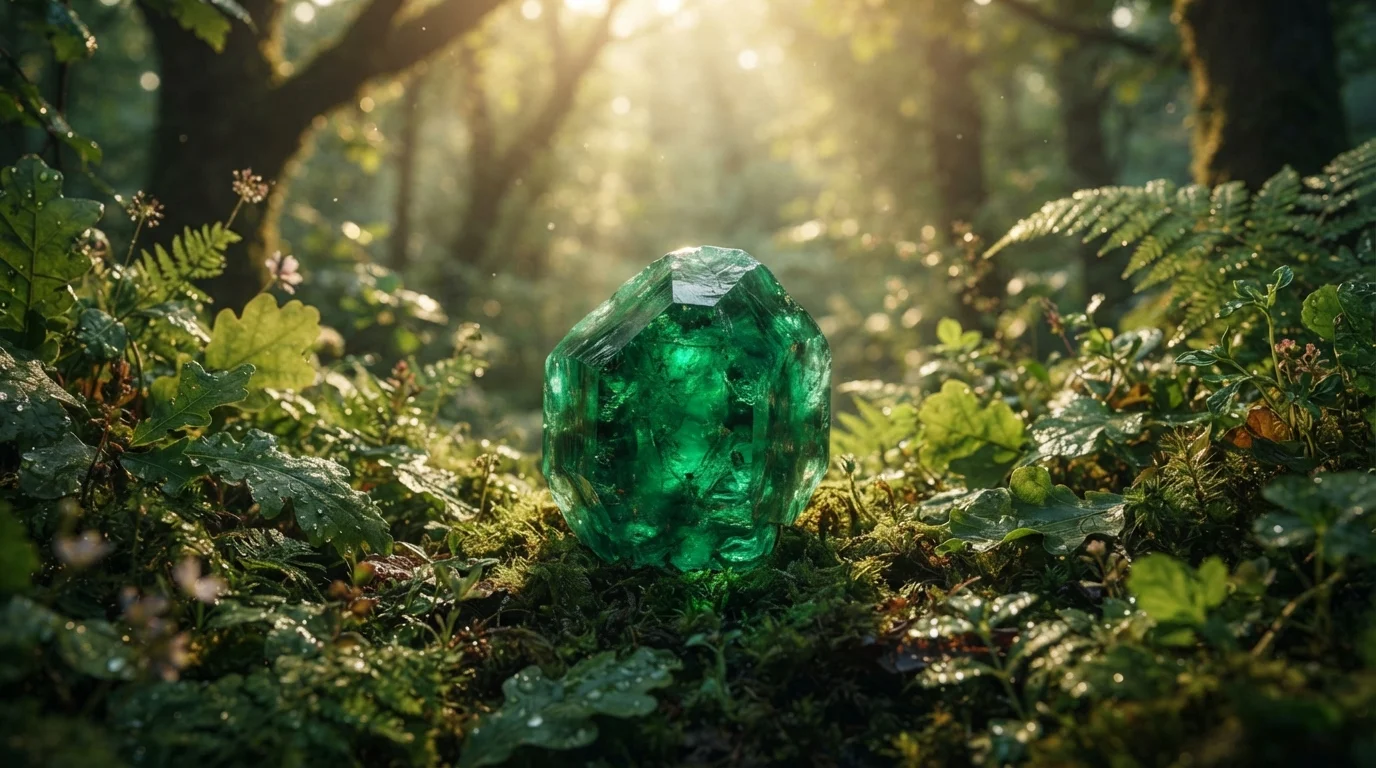
Emerald symbolism is deeply connected to growth, wisdom, love, prosperity, and renewal. Known for its rich green color and timeless beauty, the emerald has captivated people for centuries, appearing in royal jewelry, spiritual traditions, ancient legends, and works of art.
But what does an emerald truly represent? Beyond its value as a precious gemstone, the emerald symbolizes the vitality of nature, the promise of new beginnings, and the wisdom that develops through experience. Its green color evokes flourishing forests, fresh leaves, and the continuous cycle of life.
If you are drawn to emeralds for their beauty, curious about their spiritual meaning, or exploring what they represent in dreams and different cultures, this gemstone offers a fascinating world of symbolism.
Emerald Symbolism Meaning (Clear Definition)
Emerald symbolism refers to the meanings associated with the emerald gemstone, especially growth, renewal, wisdom, love, prosperity, and emotional harmony.
As a green variety of the mineral beryl, emerald has long been admired for its distinctive color and rarity. Its connection to nature makes it a natural symbol of life, fertility, healing, and abundance.
The central meaning of emerald symbolism is renewal and flourishing. It represents the ability to grow through experience, nurture meaningful relationships, and maintain hope during periods of change.
Here are the most common symbolic meanings of emeralds:
- Growth and renewal: The green color represents nature, fresh beginnings, and personal development.
- Wisdom and insight: Emeralds are associated with understanding, clear thinking, and learning from experience.
- Love and loyalty: The gemstone symbolizes lasting affection, trust, and emotional commitment.
- Prosperity and abundance: Its historical association with wealth connects emeralds with success and good fortune.
- Healing and harmony: Emeralds can symbolize emotional restoration, balance, and peace.
- Hope and vitality: Their vibrant color evokes optimism, energy, and the promise of a better future.
- Protection and spiritual awareness: Some historical traditions associate emeralds with safeguarding their wearers and encouraging spiritual understanding.
Although these meanings appear in various cultural and spiritual interpretations, they are symbolic associations rather than scientifically established properties of the gemstone.
What Does Emerald Symbolism Represent?
Emerald symbolism represents several important aspects of human experience, from personal transformation to enduring relationships. Its meanings are closely connected to its green color, precious status, and long history in jewelry and cultural traditions.
1. Growth and New Beginnings
Green is commonly associated with growing plants, springtime, and the renewal of nature. Emeralds naturally reflect these associations, making them powerful symbols of development and fresh opportunities.
An emerald can serve as a reminder that growth often happens gradually. Just as a plant needs time, nourishment, and suitable conditions to flourish, personal development requires patience and consistent effort.
This symbolism may resonate with people starting a new chapter, pursuing an ambition, or rebuilding their confidence after a difficult experience.
2. Wisdom and Clear Understanding
Emeralds have long been associated with knowledge, insight, and intellectual ability in various traditions.
Their symbolism encourages thoughtful decision-making and a willingness to learn from experience. Rather than acting impulsively, the emerald invites you to consider different perspectives before choosing your direction.
In this sense, emerald wisdom is not simply about possessing information. It is about understanding what matters and using knowledge responsibly.
3. Love, Loyalty, and Commitment
Emeralds are popular in fine jewelry and are often associated with romantic devotion, emotional depth, and enduring relationships.
Their rich green color can represent a love that continues to grow over time. Unlike a relationship based only on excitement, lasting love depends on trust, communication, patience, and mutual respect.
Emerald symbolism therefore makes the gemstone meaningful for anniversaries, meaningful gifts, and jewelry intended to celebrate long-term commitment.
4. Wealth and Prosperity
Throughout history, emeralds have been treasured by rulers, wealthy families, and collectors. Their rarity and beauty helped establish their association with luxury, status, and material success.
Symbolically, emeralds can represent financial opportunity, professional achievement, and the desire to build a secure future.
However, the gemstone does not guarantee wealth or good fortune. Its deeper message may be to combine ambition with sound judgment and appreciation for what you already possess.
5. Emotional Balance and Harmony
The color green often evokes calmness, balance, and a connection with the natural world.
Emerald symbolism reflects these qualities by encouraging emotional steadiness and thoughtful relationships. It can remind you to make space for rest, recognize your feelings, and seek healthier ways to respond to stress.
This interpretation is especially meaningful when life feels overwhelming or when you are trying to restore balance between personal responsibilities and emotional needs.
6. Hope and Vitality
Emeralds possess a vivid green color that suggests life and energy. This makes them natural symbols of hope, resilience, and the ability to begin again.
Their symbolism reminds us that difficult circumstances do not have to define the future. New possibilities can emerge when we remain open to change and continue working toward meaningful goals.
7. Protection and Good Fortune
Some historical traditions regarded emeralds as protective stones or symbols of good fortune. People sometimes wore them with the hope of receiving guidance, safety, or favorable outcomes.
Today, these associations remain part of the gemstone’s spiritual and cultural appeal. They are best understood as traditional beliefs rather than proven protective effects.
Spiritual Meaning of Emerald Symbolism
The spiritual meaning of emerald symbolism centers on renewal, inner wisdom, compassion, balance, and a deeper connection with life.
In contemporary spiritual practices, emeralds are often associated with the heart chakra, a concept originating in Indian spiritual traditions. This chakra is commonly connected with love, compassion, emotional openness, and relationships.
These interpretations can offer meaningful ways to reflect on personal experiences without assuming that a gemstone possesses supernatural powers.
Emerald and the Heart Chakra
In chakra-based spiritual traditions, the heart chakra is associated with the center of the chest and the qualities of love, empathy, and emotional connection.
Because emeralds are green, some modern spiritual practitioners connect them with this energy center.
Symbolically, emeralds may encourage you to:
- Develop greater compassion for yourself and others.
- Build relationships based on honesty and mutual respect.
- Release resentment through reflection and healthy communication.
- Maintain emotional boundaries without closing yourself off from love.
- Find greater balance between giving and receiving support.
These practices can support personal reflection, but wearing an emerald has not been scientifically demonstrated to activate or balance a chakra.
Emerald as a Symbol of Spiritual Growth
Spiritual growth often involves examining your beliefs, learning from mistakes, and becoming more aware of your actions.
Emerald symbolism reflects this process through the image of flourishing life. Growth is not always immediate, and personal transformation rarely follows a perfectly straight path.
The emerald can serve as a reminder that developing patience, compassion, and integrity is an ongoing journey.
Emerald and Inner Wisdom
In spiritual interpretations, emeralds can symbolize the ability to look beyond immediate appearances and make thoughtful decisions.
This meaning encourages you to pay attention to your values, examine your motivations, and distinguish between temporary desires and lasting priorities.
An emerald may become a personal reminder to approach difficult choices with calmness rather than fear.
Emerald and Abundance Consciousness
Some spiritual traditions associate emeralds with prosperity and the attraction of positive opportunities.
A grounded interpretation of this symbolism focuses on gratitude, generosity, and responsible action.
Rather than expecting a gemstone to create wealth, you can use its symbolism to reflect on how you manage resources, recognize opportunities, and contribute to the well-being of others.
Emerald as a Symbol of Renewal
The emerald’s green color closely connects it with the natural cycle of growth and regeneration.
Spiritually, it can represent the willingness to move beyond old patterns and develop healthier habits. It may also remind you that recovery and personal transformation require time.
Like a landscape returning to life after a harsh season, people can find new strength after periods of uncertainty.
Biblical / Religious Meaning of Emerald Symbolism
Emerald symbolism has a notable place in biblical imagery and several religious and cultural traditions. Its associations include divine glory, heavenly beauty, sacredness, and spiritual significance.
However, the Bible does not provide one universal symbolic definition for every emerald reference. The meaning depends on the passage and its context.
Emeralds in the Bible
Emeralds are mentioned in several biblical passages, often in descriptions of precious stones, sacred objects, and heavenly visions.
In Exodus 28:17–20, gemstones are included in the high priest’s breastpiece. The passage describes stones arranged in rows, representing the tribes of Israel through the breastpiece’s twelve-stone arrangement.
The exact identification of some ancient gemstone names can vary among translations, so modern gem classifications should be applied carefully.
In Ezekiel 28:13, precious stones appear in a poetic description of splendor and beauty. The passage includes emerald among the stones named in many English translations.
These references contribute to the emerald’s historical association with sacred beauty and preciousness.
Emerald Symbolism in Revelation
One of the most striking biblical images involving an emerald appears in Revelation 4:3.
In this vision, a rainbow resembling an emerald surrounds the throne in heaven. The imagery combines brilliant color with the grandeur of the heavenly scene.
The emerald-like rainbow is often interpreted as contributing to the passage’s atmosphere of divine majesty, beauty, and awe. Some readers also connect the rainbow with covenant imagery elsewhere in scripture.
The text does not explicitly define the emerald’s green color as a universal symbol of hope or healing, so those meanings should be distinguished from the passage itself.
Emeralds and Sacred Beauty
In biblical contexts, precious gemstones can communicate splendor, value, and extraordinary beauty.
Their presence in descriptions of sacred objects and heavenly visions reflects the importance of precious materials in the imagery of the ancient world.
For modern readers, emerald symbolism may inspire reflection on spiritual reverence, the beauty of creation, and the distinction between material wealth and deeper spiritual values.
Emeralds in Other Religious and Spiritual Traditions
Emeralds have also attracted attention in traditions beyond Christianity.
In some historical and contemporary spiritual practices, green gemstones are associated with vitality, prosperity, compassion, or protective qualities. Such interpretations vary by region and tradition.
It is important not to treat these beliefs as identical across religions. Each tradition has its own history, teachings, and understanding of sacred objects.
Emerald Symbolism in History and Culture
Emeralds have been admired for thousands of years, and their history reveals why they became associated with royalty, wealth, beauty, and spiritual significance.
Their rich color and relative rarity made them especially desirable in societies where precious gemstones demonstrated status and power.
Ancient Egypt: Life and Fertility
Ancient Egypt is one of the best-known historical centers of emerald mining. Emeralds were extracted in the Eastern Desert, particularly in the region later associated with Cleopatra’s emerald mines.
The gemstone’s green color connected naturally with ideas of vegetation, fertility, and renewed life.
Emeralds and other green materials appeared in ancient Egyptian jewelry and decorative objects. Their symbolic associations reflected the cultural importance of regeneration and the fertile landscape along the Nile.
Cleopatra, who ruled Egypt from 51 to 30 BCE, is famously associated with emeralds. However, popular stories about her personal use of emeralds should be distinguished from what can be established through historical evidence.
Ancient Rome: Venus and Love
In Roman culture, emeralds were valued for their color, beauty, and rarity.
The Roman writer Pliny the Elder described emeralds in his Natural History and discussed their distinctive visual qualities. Ancient Roman traditions also associated green gemstones with beauty and, in some accounts, the goddess Venus.
These associations helped strengthen the emerald’s connection with love, attractiveness, and natural beauty.
The gemstone’s reputation has continued into modern jewelry, where emeralds are often chosen to express affection and elegance.
Mesoamerican Cultures: Sacred Value and Prestige
Emeralds held cultural and ceremonial importance in parts of pre-Columbian Mesoamerica, although access to different green gemstones and their meanings varied among communities.
In the region that is now Colombia, Indigenous communities valued emeralds long before Spanish colonization. The Muisca people, in particular, are historically associated with emerald use and exchange.
Emeralds could function as prestigious objects and have ceremonial significance. Their meanings were rooted in particular Indigenous traditions rather than a single universal interpretation of green gemstones.
Medieval Europe: Healing Beliefs and Protection
During the medieval period, emeralds and other gemstones appeared in lapidaries, texts that described the properties and traditional meanings of stones.
Some writers attributed protective or medicinal qualities to emeralds. Others connected them with wisdom, vision, or spiritual purity.
These claims reflected historical beliefs about the natural world rather than modern scientific evidence.
Today, such accounts remain valuable for understanding how people in the past interpreted gemstones and incorporated them into medicine, religion, and daily life.
Emeralds in Royal Jewelry
Emeralds became prominent in royal collections and luxury jewelry because of their striking appearance and association with wealth.
Their use in crowns, pendants, rings, and ceremonial objects communicated status and prestige.
Over time, the emerald developed a reputation for timeless elegance. It remains a popular gemstone for significant gifts and heirloom jewelry.
Emerald Symbolism Around the World
Different cultures have interpreted emeralds in different ways, but several themes recur.
| Cultural or historical context | Common association |
|---|---|
| Ancient Egypt | Fertility, vegetation, and renewal |
| Ancient Rome | Beauty, luxury, and associations with love |
| Mesoamerican traditions | Prestige, ceremonial value, and cultural significance |
| Medieval European writings | Traditional healing beliefs, protection, and wisdom |
| Royal jewelry | Wealth, power, and status |
| Contemporary spiritual practices | Compassion, growth, balance, and abundance |
These associations reflect diverse histories and interpretations. They should not be taken as proof that every culture understood emeralds in the same way.
Emerald Symbolism in Literature and Art
Emeralds have inspired writers, poets, painters, jewelers, and designers through their unusual color and associations with rarity and beauty.
In creative works, emeralds can represent much more than wealth. Their meanings often depend on the character, setting, or emotional atmosphere surrounding them.
Emeralds as Symbols of Nature
The emerald’s green color makes it a natural symbol of forests, gardens, springtime, and flourishing landscapes.
Writers may use emerald imagery to describe fertile valleys, mysterious woods, or a world filled with life.
The comparison between a gemstone and nature also creates a sense of harmony between the beauty found in the earth and the beauty found in living things.
Emeralds as Symbols of Wealth and Desire
Because emeralds are valuable gemstones, they often appear in stories involving royalty, ambition, inheritance, and luxury.
An emerald necklace or ring may communicate a character’s social position or reveal the importance of wealth within a story.
In some narratives, the same gemstone can symbolize greed or temptation. Its value becomes a source of conflict when characters place material possessions above relationships or moral responsibilities.
Emeralds as Symbols of Love
Emerald jewelry is frequently used in romantic imagery to communicate devotion, elegance, and lasting affection.
The gemstone’s enduring physical presence can serve as a metaphor for a relationship that develops over time.
However, emerald symbolism in love is not limited to romance. Its green color may also represent compassion, friendship, reconciliation, and emotional renewal.
Emerald Imagery in Fantasy and Fiction
In fantasy stories, emeralds often appear as enchanted stones, royal treasures, magical objects, or clues to hidden knowledge.
Their vivid color makes them visually distinctive, while their historical associations with mystery and preciousness make them useful storytelling elements.
A fictional emerald might represent power, a forgotten civilization, or the responsibility that comes with possessing something valuable.
These meanings belong to the individual story rather than representing universal properties of emeralds.
Emerald Green in Visual Art
Emerald green is a rich color used in painting, textiles, interior design, and decorative arts.
Depending on the composition, it can create a feeling of luxury, tranquility, mystery, or vitality.
Artists may use emerald tones to draw attention to a central figure, emphasize the richness of a landscape, or create contrast with warmer colors.
In this way, emerald symbolism extends beyond the gemstone itself and into the emotional language of color.
Dream Meaning of Emerald Symbolism
Dreaming about an emerald can be interpreted as a personal reflection on growth, love, confidence, prosperity, or something you consider valuable.
Dream interpretation is subjective, and there is no reliable scientific evidence that dreaming about a particular gemstone predicts future events. Nevertheless, dream imagery can provide a starting point for exploring your emotions and current circumstances.
Dreaming of Finding an Emerald
Finding an emerald may symbolize discovering an opportunity, recognizing your own abilities, or realizing the value of something you previously overlooked.
Consider whether you have recently noticed a new possibility in your personal life, work, or relationships.
The dream may encourage you to pay attention to your strengths and use them thoughtfully.
Dreaming of Wearing an Emerald
Wearing an emerald may reflect a desire for confidence, recognition, emotional security, or personal expression.
If the gemstone makes you feel happy in the dream, it might represent pride in your progress or appreciation for something meaningful in your life.
If it feels uncomfortable or burdensome, consider whether you are experiencing pressure to maintain a particular image or meet other people’s expectations.
Dreaming of Losing an Emerald
Losing an emerald may reflect concerns about losing something valuable, such as trust, a relationship, an opportunity, or a sense of stability.
The dream does not mean that such a loss will happen.
Instead, it may be helpful to consider what currently feels uncertain and whether there are practical steps you can take to protect what matters.
Dreaming of a Broken or Cracked Emerald
A damaged emerald may symbolize disappointment, a change in expectations, or concern about a relationship or personal goal.
It can also reflect the recognition that something you once considered perfect has become more complicated.
The dream may encourage you to approach difficulties with honesty and accept that growth sometimes involves adjusting your expectations.
Dreaming of a Large Emerald
A large emerald may represent an important ambition, a strong desire, or something you consider especially valuable.
If the dream feels exciting, it may reflect optimism about future possibilities. If it feels overwhelming, it could relate to the pressure you place on yourself.
The emotions associated with the dream are often more useful to explore than the gemstone’s size alone.
Dreaming of an Emerald Ring
An emerald ring may symbolize commitment, loyalty, or the desire for a lasting connection.
Depending on your circumstances, it might relate to romantic love, friendship, family relationships, or a promise you have made to yourself.
It should not automatically be interpreted as a prediction of marriage or an upcoming relationship.
Modern Meaning of Emerald Symbolism
In modern life, emerald symbolism continues to influence jewelry, fashion, personal gifts, spiritual practices, and the way people use color to express identity.
Its enduring appeal comes from the combination of natural beauty, historical significance, and associations with growth and renewal.
Emeralds as Symbols of Personal Growth
An emerald can serve as a reminder to invest in your development and remain open to learning.
Whether you are building a career, improving a relationship, or developing a new skill, its symbolism emphasizes patience and steady progress.
Growth is not always visible immediately. Sometimes, the most important changes occur through small decisions made consistently over time.
Emeralds and Romantic Relationships
Emeralds are used in engagement rings, anniversary jewelry, and meaningful gifts.
Their association with lasting affection makes them a thoughtful choice for celebrating commitment, although the meaning ultimately depends on the people exchanging them.
An emerald gift can express appreciation, loyalty, and the desire to nurture a relationship for years to come.
Emeralds and Success
In contemporary culture, emeralds often represent luxury, achievement, and confidence.
They appear in fine jewelry and fashion as signs of refined taste and individuality.
Symbolically, they can also encourage a more thoughtful understanding of success: achievement becomes more meaningful when it supports personal values, healthy relationships, and long term well being.
Emeralds and Emotional Well-Being
Some people use emeralds as personal reminders of calmness, compassion, and emotional balance.
For example, someone might wear an emerald pendant to remind themselves to respond patiently during stressful situations.
The benefit in such cases can come from the personal meaning attached to the object. There is no established scientific evidence that emeralds themselves treat emotional or physical health conditions.
Emeralds and Environmental Awareness
Because emeralds are mined from the earth, they can also inspire reflection on nature, resources, and responsible consumption.
Modern discussions about gemstones increasingly consider mining practices, labor conditions, environmental impacts, and the traceability of precious materials.
From this perspective, emerald symbolism can represent not only the beauty of nature but also the responsibility to protect the natural world.
Emeralds as Symbols of Hope
Perhaps the most enduring modern interpretation of emerald symbolism is hope.
Its green color suggests that life continues to develop even after periods of difficulty. It reminds us that a new chapter can begin without erasing the lessons of the past.
An emerald can therefore become a personal symbol of resilience, helping you remember that change creates opportunities for learning and renewal.
Emerald Symbolism by Color and Appearance
Although emeralds are recognized by their green color, differences in shade, clarity, and appearance can influence how people interpret them symbolically.
These interpretations are subjective rather than formal gemstone properties.
| Emerald appearance | Common symbolic association |
|---|---|
| Deep green emerald | Wisdom, maturity, stability, and prosperity |
| Bright green emerald | Vitality, optimism, and fresh opportunities |
| Pale green emerald | Gentle growth, simplicity, and renewal |
| Highly transparent emerald | Clarity, openness, and understanding |
| Emerald with visible inclusions | Natural individuality, character, and uniqueness |
| Emerald in gold jewelry | Luxury, achievement, and enduring value |
| Emerald in silver jewelry | Elegance, balance, and understated beauty |
Natural emeralds commonly contain internal features known as inclusions. These are part of the gemstone’s natural characteristics and can help gemologists assess its identity and formation.
Symbolically, some people interpret these visible features as reminders that beauty does not require perfection. This is a personal metaphor, not a scientific conclusion about the stone.
How to Use Emerald Symbolism in Everyday Life
You do not need to own an emerald to appreciate its symbolism. Its meanings can be applied through reflection, personal goals, and everyday choices.
Here are a few simple ways to connect with the emerald’s traditional associations.
1. Use it as a reminder of growth.
When beginning a new project or learning a skill, think of the emerald as a symbol of patience and steady development.
2. Reflect on your relationships.
Let its association with love and loyalty encourage honest communication, kindness, and mutual respect.
3. Practice gratitude.
Its connection with abundance can remind you to appreciate the resources, relationships, and opportunities already present in your life.
4. Make thoughtful decisions.
Use the emerald’s association with wisdom as a prompt to consider your values before making important choices.
5. Welcome new beginnings.
When a chapter of life ends, reflect on what you have learned and what you would like to nurture in the next one.
6. Stay connected with nature.
The emerald’s green color can remind you to appreciate plants, landscapes, and the natural systems that sustain life.
These practices do not depend on supernatural effects. They use symbolism as a practical tool for reflection and personal meaning.
Frequently Asked Questions About Emerald Symbolism
1. What does an emerald symbolize spiritually?
An emerald commonly symbolizes growth, renewal, wisdom, compassion, and emotional harmony. In contemporary spiritual practices, it is also associated with the heart chakra and the qualities of love and empathy.
2. Is an emerald a symbol of love?
Yes, emeralds are widely associated with love, loyalty, and lasting commitment. Their use in romantic jewelry makes them popular symbols of relationships that deepen over time.
3. What does an emerald symbolize in the Bible?
Emeralds appear in biblical passages describing sacred objects and heavenly visions. In Revelation 4:3, an emerald-like rainbow surrounds the heavenly throne, contributing to the imagery of divine majesty and beauty.
4. What does dreaming about an emerald mean?
An emerald dream may reflect personal growth, love, opportunity, or concern about something valuable. Its interpretation depends on the dream’s circumstances and your feelings rather than predicting a specific future event.
5. Does an emerald symbolize good luck and prosperity?
In some cultural and spiritual traditions, emeralds are associated with good fortune, wealth, and abundance. These are traditional symbolic beliefs, not guarantees of financial success.
Conclusion: The Timeless Power of Emerald Symbolism
Emerald symbolism brings together the beauty of nature and the enduring human desire for growth, wisdom, love, and renewal. From ancient civilizations and biblical imagery to modern jewelry and personal reflection, the emerald has remained a meaningful symbol of life’s potential.
Its deepest message is that flourishing takes time. By nurturing relationships, learning from experience, and remaining hopeful through change, we can create lives that reflect the qualities the emerald represents.
If you see an emerald as a symbol of love, prosperity, spiritual growth, or personal transformation, its rich green color offers a lasting reminder to appreciate the present while continuing to grow toward the future.

I’m Sophia Brown, passionate about exploring symbols, their meanings, and cultural significance. I enjoy researching history, spirituality, and traditions, creating clear, engaging articles that inspire curiosity and deeper understanding for every reader.


