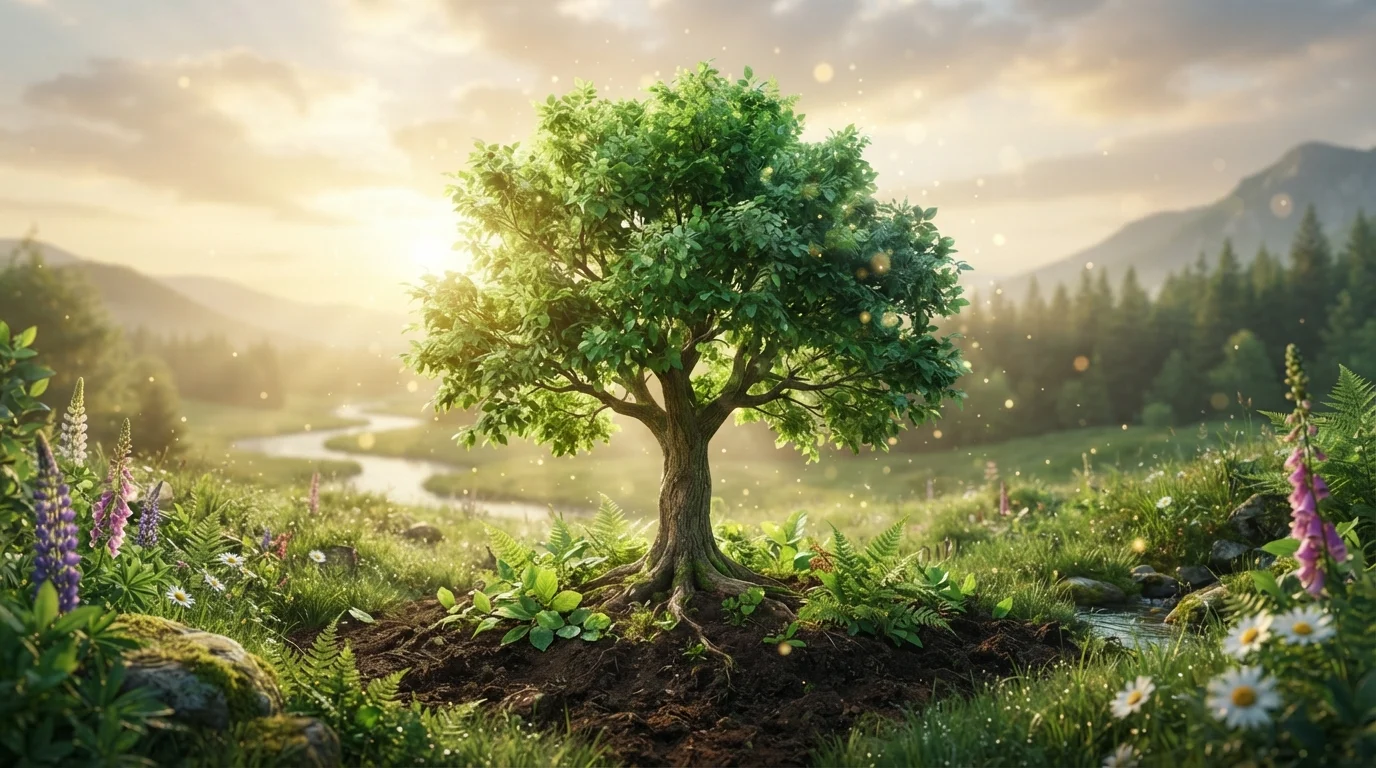
Green symbolism is closely connected with nature, growth, renewal, balance, hope, and life. From lush forests and spring leaves to gemstones, flags, clothing, and artwork, green has carried powerful meanings across cultures and generations.
The color can suggest both physical and emotional renewal. It may represent prosperity, healing, freshness, fertility, peace, or even jealousy, depending on the context.
Understanding green symbolism helps explain why this color appears so often in religion, literature, art, dreams, branding, and everyday life.
Green Symbolism Meaning (Clear Definition)
Green symbolism refers to the ideas, emotions, and qualities commonly associated with the color green.
At its simplest, green represents growth, nature, renewal, life, balance, and hope. Because green is strongly associated with plants and vegetation, it naturally evokes ideas of vitality and regeneration.
However, its meaning can change according to culture and context. A soft natural green may communicate calmness, while a bright green can suggest energy or freshness. Darker green may symbolize stability, wealth, maturity, or mystery.
Common meanings of green symbolism
| Green Symbolism | Meaning |
|---|---|
| Growth | Personal development, progress, and new beginnings |
| Nature | Life, the environment, and connection with the earth |
| Renewal | Rebirth, restoration, and fresh opportunities |
| Hope | Optimism and confidence in the future |
| Balance | Harmony, stability, and emotional calm |
| Healing | Recovery, restoration, and well-being |
| Prosperity | Wealth, abundance, and success |
| Fertility | Life, reproduction, and creative potential |
| Jealousy | Envy, insecurity, or possessiveness |
The most important meaning depends on where and how the color appears.
What Does Green Symbolism Represent?
Green symbolism represents the natural cycle of life. Plants grow, change with the seasons, lose their leaves, and return again, making green a natural symbol of continuity and renewal.
It can also represent emotional balance. Green sits between warm and cool colors, which has helped associate it with harmony and moderation.
Common symbolic associations include:
- Growth and development
- Fresh beginnings
- Nature and environmental awareness
- Peace and balance
- Healing and restoration
- Hope and optimism
- Fertility and abundance
- Wealth and prosperity
- Freedom and independence
- Envy and jealousy
Green therefore has a fascinating duality. It can communicate peaceful growth and abundance, but in certain expressions it can also symbolize jealousy or emotional insecurity.
Spiritual Meaning of Green Symbolism
Spiritually, green is often associated with healing, renewal, compassion, harmony, and connection with nature.
Many spiritual traditions view nature as a reflection of life and creation. Because green dominates healthy landscapes, the color can evoke a sense of vitality and spiritual restoration.
Green is also commonly associated with the heart chakra in modern chakra traditions. In that framework, green represents love, compassion, emotional balance, forgiveness, and connection.
From a broader spiritual perspective, green can encourage a person to:
- Grow without losing inner balance.
- Heal from emotional difficulties.
- Develop compassion for others.
- Reconnect with nature.
- Welcome change and renewal.
- Create harmony between inner and outer life.
Green symbolism can therefore serve as a reminder that growth is not always about moving faster. Sometimes, genuine growth means becoming more balanced, patient, and grounded.
Biblical / Religious Meaning of Green Symbolism
Green has meaningful associations in several religious traditions, although its interpretation varies.
In Christianity, green is especially significant in liturgical traditions. Green is commonly associated with periods of ordinary time and can symbolize spiritual growth, life, hope, and continued development in faith.
The Bible also uses vegetation, grass, trees, and fruitful plants in imagery connected with life, prosperity, restoration, and God’s provision.
In Islamic culture, green has a particularly prominent historical and religious association. It is often connected with paradise, life, blessing, and renewal. Green also became strongly associated with Islamic identity and culture over time.
In other religious and spiritual traditions, green may represent fertility, nature, regeneration, or the sacred relationship between life and the earth.
The religious meaning of green should therefore be understood within the specific tradition and cultural context in which it appears.
Green Symbolism in History and Culture
Throughout history, green has carried both positive and negative meanings.
Ancient cultures often connected green with vegetation, fertility, agriculture, and the continuation of life. In societies dependent on crops and natural cycles, the appearance of green landscapes could represent abundance and survival.
Green pigments were historically more difficult to produce reliably than many other colors. Some early green pigments were also unstable or toxic, which influenced how green appeared in clothing, painting, and decorative objects.
Over time, green became associated with different social ideas. In some European traditions, it became connected with youth, romance, luck, and the unpredictable nature of fortune. It could also symbolize jealousy and inexperience.
In Ireland, green became strongly connected with national and cultural identity. In many modern societies, green is also closely associated with environmentalism and ecological awareness.
Cultural meanings of green can include:
- Nature and fertility
- Luck and fortune
- Youth and freshness
- Prosperity and wealth
- National identity
- Environmental responsibility
- Jealousy or envy
- Peace and renewal
These meanings show that color symbolism is never completely universal. Context and cultural history matter.
Green Symbolism in Literature and Art
Green has long been an expressive color in literature and visual art.
Writers may use green landscapes, clothing, eyes, objects, or lighting to communicate ideas that go beyond their literal appearance. A green garden might symbolize renewal, while a sickly green setting could suggest decay or unease.
One of the most famous literary associations is green as a symbol of desire and unattainable dreams. In The Great Gatsby, the green light across the water becomes closely connected with Gatsby’s hopes and longing.
Green can also represent youth and innocence. In other contexts, it may suggest jealousy, supernatural mystery, decay, or emotional instability.
Artists similarly use different shades of green to create particular moods. Soft greens can feel peaceful and natural, while deep emerald tones can communicate luxury and richness. Unnatural green shades may create feelings of strangeness or tension.
Because green sits between blue and yellow on the traditional color wheel, artists can manipulate its warmth and intensity to produce dramatically different emotional effects.
Dream Meaning of Green Symbolism
Dreams involving green can have several possible interpretations. The meaning usually depends on the object, setting, emotions, and shade of green in the dream.
A green tree or plant may symbolize growth, stability, healing, or a new stage of life.
A green field or forest may represent peace, freedom, renewal, or a desire to reconnect with nature.
Bright green can suggest energy, hope, opportunity, or fresh beginnings.
Dark or unpleasant green may sometimes reflect jealousy, uncertainty, emotional discomfort, or something that feels unhealthy.
Dream symbolism is personal rather than universal, so the emotions you experienced during the dream are often more important than the color alone.
Modern Meaning of Green Symbolism
Today, green has become one of the most recognizable colors for environmentalism, sustainability, health, and natural living.
Businesses often use green to communicate ideas such as freshness, organic products, wellness, conservation, and ecological responsibility.
Green also has strong financial associations. Expressions such as “green” for money have contributed to its connection with wealth and prosperity in popular culture.
In technology and everyday interfaces, green frequently signals:
- Safety
- Approval
- Success
- Availability
- Progress
- Positive status
Green is also prominent in discussions about sustainable development and environmental protection. Its modern symbolism therefore combines ancient associations with nature and newer ideas about ecological responsibility.
Different Shades of Green and Their Symbolic Meanings
Not every shade of green communicates the same message.
Light green often suggests youth, freshness, spring, optimism, and new beginnings.
Emerald green can symbolize luxury, prosperity, beauty, and abundance.
Forest green tends to communicate stability, nature, maturity, and groundedness.
Olive green may suggest peace, resilience, simplicity, and endurance.
Lime green often feels energetic, playful, youthful, and unconventional.
Dark green can represent wealth, authority, security, and sophistication, although it can sometimes feel mysterious or heavy.
This range of meanings makes green one of the most versatile colors in symbolism.
Green Symbolism in Everyday Life
Green appears in many ordinary situations where its symbolic meaning is immediately understood.
Traffic lights use green to communicate permission to proceed. Green spaces can create feelings of calm and connection with nature. Green vegetables are often associated with health and freshness.
Green clothing can communicate naturalness, confidence, individuality, or sophistication depending on its shade and design.
In interior spaces, green is often chosen because it can create a relaxed and natural atmosphere. Plants and green décor may also make a room feel more connected to the outdoors.
The symbolism of green works so effectively because many of its associations come from direct human experience with nature.
Why Is Green Associated With Growth?
Green is associated with growth because healthy plants, trees, and vegetation display green leaves. This visible connection between green and living plants naturally developed into a broader symbol of personal, emotional, and spiritual growth.
What Does Green Symbolize Spiritually?
Spiritually, green commonly symbolizes healing, renewal, compassion, balance, nature, and emotional harmony. In chakra traditions, it is also associated with the heart and qualities such as love and forgiveness.
Is Green a Symbol of Hope?
Yes. Green can symbolize hope because it is connected with spring, renewal, new growth, and the return of life after dormant periods. It often suggests that change and fresh opportunities are possible.
Does Green Symbolize Wealth?
Green can symbolize wealth and prosperity, particularly in modern Western culture because of the association between green and money. Emerald green and dark green are also frequently used to communicate luxury, abundance, and financial success.
Can Green Symbolize Jealousy?
Yes. Green has a long-standing association with jealousy and envy in Western cultural expressions. This is an example of how the same color can carry both positive and negative symbolic meanings.
Conclusion
Green symbolism ultimately reflects one of life’s most enduring ideas: growth is possible.
From nature and spirituality to art, dreams, religion, and modern culture, green can represent renewal, healing, balance, hope, prosperity, and life. Yet its association with jealousy and uncertainty reminds us that symbolism is shaped by context.
If seen in a forest, a painting, a dream, or everyday life, green often invites us to think about growth, restoration, and the possibility of a fresh beginning.

I’m Camden Holland, a passionate writer at Symbolop, where I explore the meanings, history, and cultural significance of symbols. I enjoy creating clear, engaging content that helps readers discover the fascinating stories behind symbols from around the world.