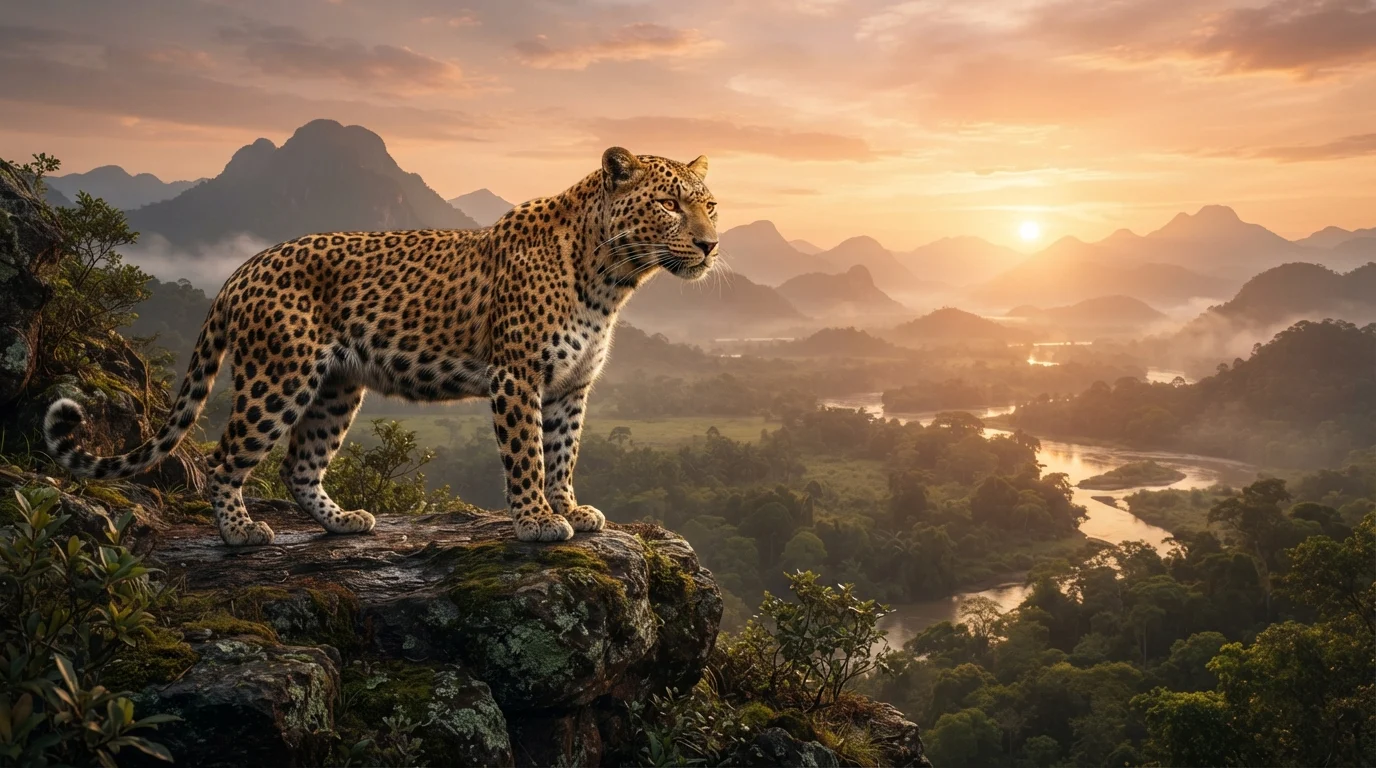
Leopard symbolism represents strength, courage, independence, adaptability, and the power of moving through life with confidence. Known for its beautiful spotted coat, remarkable agility, and ability to thrive in different environments, the leopard has become a powerful symbol in mythology, spirituality, art, and cultural traditions.
If you encounter a leopard in a dream, feel drawn to its image, or are curious about its spiritual significance, understanding leopard symbolism can offer meaningful insights into personal growth, self trust, and resilience.
This fascinating animal reminds us that true power does not always need to be loud. Sometimes, it appears through patience, quiet confidence, and the ability to adapt when life changes.
Leopard Symbolism Meaning (Clear Definition)
Leopard symbolism refers to the meanings and associations connected with leopards in spirituality, folklore, religion, literature, and everyday life. Leopards commonly symbolize independence, stealth, courage, mystery, adaptability, protection, and personal power.
Unlike animals associated primarily with physical strength, the leopard also represents intelligence, precision, and the ability to act at the right moment. Its solitary nature and impressive climbing abilities make it a symbol of self-reliance and resourcefulness.
The most common symbolic meanings of a leopard include:
- Strength: Inner power, resilience, and the ability to overcome challenges.
- Independence: Self reliance, freedom, and confidence in personal decisions.
- Mystery: Hidden knowledge, intuition, and the unknown.
- Stealth: Patience, discretion, and strategic action.
- Adaptability: Adjusting to changing circumstances and environments.
- Courage: Facing uncertainty with determination.
- Protection: Defending personal boundaries and safeguarding what matters.
The precise meaning of a leopard depends on the cultural tradition, personal beliefs, and circumstances in which the animal appears.
What Does Leopard Symbolism Represent?
Leopard symbolism reflects qualities that connect the animal’s natural behavior with human experiences. Its ability to hunt quietly, climb trees, and survive in varied habitats has helped establish its reputation as a symbol of intelligence, independence, and controlled power.
1. Strength and Quiet Power
Leopards are powerful predators capable of taking down prey larger than themselves. Their physical strength, agility, and determination make them natural symbols of resilience.
Symbolically, the leopard represents a form of strength that does not require constant attention or approval. It encourages you to recognize your abilities without feeling the need to prove yourself to everyone.
Sometimes, the strongest response is to remain calm, understand the situation, and act with purpose.
2. Independence and Self-Reliance
Leopards generally live solitary lives outside periods of mating and raising young. This behavior has contributed to their association with independence and self sufficiency.
Leopard symbolism can remind you to trust your judgment, make thoughtful decisions, and develop confidence in your own abilities.
Independence does not mean refusing support. Instead, it means understanding your values and maintaining your identity while building healthy relationships with others.
3. Mystery and Hidden Wisdom
A leopard’s spotted coat helps it blend into many natural environments, allowing it to remain difficult to see. This remarkable camouflage contributes to its symbolic connection with mystery and the unseen.
In spiritual interpretations, the leopard may represent hidden strengths, unrecognized opportunities, or truths that become clearer with patience.
Its symbolism encourages you to look beyond appearances and recognize that not everything important is immediately visible.
4. Patience and Strategic Action
Leopards often rely on stealth and carefully timed movements when hunting. Rather than wasting energy, they use observation and opportunity to their advantage.
This behavior offers a meaningful lesson about patience. You do not always need to act immediately or compete for attention.
Sometimes, the most effective approach is to observe, prepare, and take action when the circumstances are right.
5. Adaptability and Resilience
Leopards inhabit a range of environments, including forests, grasslands, mountains, and other landscapes. Their adaptability has helped them survive in diverse conditions.
Symbolically, this quality represents the ability to adjust without losing your sense of identity.
When circumstances change, leopard symbolism encourages you to remain flexible, learn from experience, and find new ways to move forward.
6. Confidence and Personal Authority
The leopard’s graceful movements and confident presence have made it a symbol of self-assurance.
Its symbolism can inspire you to take ownership of your decisions and express your abilities without arrogance.
True confidence is not about controlling other people. It is about understanding your strengths, accepting your limitations, and acting in alignment with your values.
Spiritual Meaning of Leopard Symbolism
The spiritual meaning of leopard symbolism often centers on intuition, personal power, transformation, and the ability to navigate uncertainty.
Different spiritual traditions interpret the leopard in different ways. Modern spiritual interpretations frequently use the animal as a reminder to trust yourself, remain observant, and approach life’s challenges with courage.
Leopard as a Spiritual Power Animal
In contemporary spiritual language, a leopard may be viewed as a power animal associated with independence, confidence, and strategic thinking.
People who identify with leopard symbolism may interpret it as encouragement to recognize their strengths and act more intentionally.
The leopard’s solitary behavior can also represent the value of spending time alone to reflect, understand personal priorities, and develop emotional independence.
These interpretations are personal spiritual beliefs rather than scientifically established messages from animals.
Leopard Symbolism and Intuition
A leopard’s keen senses and awareness of its surroundings make it a useful symbol of attentiveness and instinct.
Spiritually, it may encourage you to notice subtle details, recognize patterns, and listen to your inner feelings.
Intuition can help you identify concerns or possibilities, but it is most useful when balanced with evidence, thoughtful reasoning, and an understanding of your circumstances.
The Leopard as a Symbol of Transformation
The leopard’s ability to move through different environments makes it a symbol of adaptability and personal transformation.
You may connect with this symbolism when beginning a new chapter, leaving behind outdated habits, or learning to navigate unfamiliar circumstances.
Its message is that change does not have to erase your identity. You can develop new skills and perspectives while remaining true to your core values.
Leopard Symbolism and Shadow Work
In modern spiritual practices, shadow work involves examining emotions, fears, and personality traits that are difficult to acknowledge.
Because the leopard symbolizes both power and secrecy, it can serve as a metaphor for exploring hidden parts of yourself.
This might involve recognizing suppressed ambition, unspoken fears, or the desire for greater independence.
The purpose is not to judge yourself but to understand your motivations and use your strengths responsibly.
The Black Leopard and Spiritual Meaning
A black leopard is often associated in modern symbolism with mystery, protection, transformation, and hidden strength.
The animal commonly called a black leopard is usually a leopard with melanism, a genetic condition that produces unusually dark pigmentation. Its spots may still be visible under certain lighting.
In spiritual interpretations, its dark appearance may symbolize the unknown, the exploration of inner fears, or the discovery of strengths that have remained unnoticed.
These meanings arise from cultural and personal associations rather than proven supernatural properties.
Biblical and Religious Meaning of Leopard Symbolism
Leopards appear in the Bible and have symbolic roles in several religious and cultural traditions. Their meanings depend on the passage, historical context, and beliefs of the community interpreting them.
Leopard Symbolism in the Bible
In biblical literature, leopards are often associated with speed, watchfulness, danger, and the consequences of wrongdoing.
In Jeremiah 5:6, a leopard is used in imagery describing a threat to people who have turned away from God. In Habakkuk 1:8, the speed of horses is compared to that of leopards, emphasizing swiftness and force.
Daniel 7:6 describes a beast resembling a leopard in a symbolic vision. In Revelation 13:2, a composite beast is described as having characteristics that include those of a leopard.
These passages use the animal within specific prophetic or poetic contexts. They do not establish that leopards universally represent evil or that encountering one carries a particular spiritual warning.
What Does a Leopard Represent in Christianity?
Christian interpretations of the leopard may draw on broader themes of vigilance, strength, and the importance of understanding symbolism within Scripture.
Some readers may use the leopard as a personal reminder to remain alert, exercise wisdom, or reflect on the consequences of their actions.
However, the Bible does not prescribe a universal spiritual message for seeing a leopard in everyday life. Personal interpretations should be distinguished from the meanings established by particular biblical passages.
Leopard Symbolism in African Traditions
Leopards have important roles in various African cultural traditions, although beliefs differ significantly between communities.
In some historical kingdoms and societies, leopard imagery has represented kingship, authority, courage, and prestige. Its strength and elusive nature have also contributed to its association with leadership and spiritual significance.
Leopard symbolism should not be treated as identical throughout Africa. Each community has its own histories, practices, and interpretations.
Leopard Symbolism in Asian Traditions
Leopards and other big cats appear in Asian art, folklore, and religious imagery. Their meanings vary according to local traditions and historical circumstances.
In some contexts, spotted big cats symbolize strength, agility, and the power of the natural world. In others, they may appear as signs of danger or reminders of humanity’s relationship with wild animals.
Understanding these meanings requires attention to the specific tradition rather than assuming a single universal religious interpretation.
Leopard Symbolism in History and Culture
Throughout history, leopards have inspired admiration because of their physical abilities, striking appearance, and elusive behavior. Their cultural significance can be found in royal imagery, traditional clothing, folklore, sculpture, and contemporary visual design.
Leopard Symbolism in African Royal Traditions
Leopard imagery has been associated with political authority and royal prestige in several African societies.
For example, leopard motifs and leopard-skin regalia have appeared in certain historical royal and chiefly traditions. The animal’s strength, rarity, and ability to move confidently through its environment helped make it a powerful emblem of authority.
The meaning of leopard imagery depends on the particular society and ceremonial context. These traditions should be understood on their own terms rather than reduced to a general symbol of power.
Leopard Symbolism in Ancient Egypt
Big cats held important places in ancient Egyptian art and religious imagination. Lions, in particular, were prominent symbols of royal authority and protection.
Leopards also appeared in Egyptian visual culture, including representations of leopard skins worn by certain priests. Such imagery was associated with particular religious and ceremonial roles.
These examples demonstrate the historical significance of spotted cat imagery, although the meanings of leopard skins and other big-cat representations varied across contexts.
Leopard Symbolism in Chinese Culture
In traditional Chinese art and symbolism, leopards and other spotted big cats can appear in imagery associated with courage, strength, and military qualities.
Some historical decorative traditions used animal imagery to communicate status, authority, or personal virtues.
The leopard’s cultural meaning should be distinguished from the tiger’s more prominent place in Chinese folklore and zodiac symbolism. The two animals may share certain associations, but they are not interchangeable in every tradition.
Leopard Symbolism in Fashion and Design
Leopard spots have become widely recognized patterns in fashion, accessories, and interior design.
In modern style, the pattern often conveys boldness, confidence, glamour, and individuality. Its dramatic appearance allows designers to create visual contrast and a sense of energy.
This modern association differs from the leopard’s ecological role and from the ceremonial meanings attached to leopard imagery in some historical cultures.
Leopard Symbolism Across Cultures
| Symbolic association | Common interpretation |
|---|---|
| Strength | Resilience, physical power, and endurance |
| Independence | Self reliance and personal freedom |
| Mystery | Hidden potential and the unknown |
| Stealth | Patience, observation, and strategy |
| Adaptability | Flexibility and survival through change |
| Black leopard | Mystery and hidden strength in modern symbolism |
| Royal imagery | Authority and prestige in certain traditions |
| Biblical imagery | Speed, danger, and symbolic judgment in specific passages |
These associations are context dependent and should not be treated as universal meanings.
Leopard Symbolism in Literature and Art
Leopards have long inspired writers, painters, sculptors, and designers. Their distinctive spots, stealthy movements, and powerful appearance make them compelling symbols of beauty, danger, and hidden strength.
The Leopard as a Symbol of Mystery
In literature, a leopard may represent a character or force that is difficult to understand.
Its ability to blend into its surroundings creates a natural metaphor for secrecy, hidden motives, and information that remains concealed.
Writers may use leopard imagery to suggest that appearances can be misleading or that a character possesses abilities others have underestimated.
The Leopard as a Symbol of Power
Artists often portray leopards with muscular bodies, focused eyes, and poised movements to communicate strength and authority.
In historical art, animal imagery could express royal prestige, courage, or social standing. In contemporary artwork, the leopard may symbolize personal independence and determination.
The animal’s visual power makes it especially effective in portraits, sculptures, and dramatic compositions.
Leopards in Poetry and Fiction
In poetry and fiction, the leopard can embody the relationship between beauty and danger.
Its elegance contrasts with its role as a predator, allowing writers to explore themes such as ambition, instinct, freedom, and the unpredictability of nature.
A leopard may also represent the idea that genuine power can remain quiet until the moment when action becomes necessary.
The Leopard in Modern Visual Culture
Today, leopard imagery appears in tattoos, illustrations, advertising, and fashion.
Some designs emphasize the animal’s fierce expression, while others focus on its graceful form or distinctive markings.
A leopard image can communicate confidence and individuality, but its precise meaning depends on the design and the person interpreting it.
Dream Meaning of Leopard Symbolism
Dreaming about a leopard may symbolize independence, hidden fears, confidence, strategic thinking, or a challenge that requires careful attention.
Dream meanings are subjective, and no particular leopard dream has a scientifically established interpretation or guaranteed connection to future events.
Dreaming of a Leopard
A leopard appearing in your dream may reflect a situation in which you need to rely on your abilities or pay closer attention to your surroundings.
A calm leopard might represent confidence or a growing sense of independence. A threatening leopard could reflect anxiety, tension, or uncertainty.
Consider your emotions during the dream and whether similar feelings have appeared in your waking life.
Dreaming of a Leopard Chasing You
A leopard chasing you may symbolize a problem you are avoiding or a situation that makes you feel pressured.
Think about whether you have been postponing an important decision, avoiding a difficult conversation, or struggling with responsibilities.
The dream can be a prompt for reflection, but it does not necessarily predict danger.
Dreaming of a Black Leopard
A black leopard in a dream may represent mystery, personal transformation, hidden emotions, or a desire to understand yourself more deeply.
If the animal seems peaceful, you might associate it with quiet confidence. If it appears threatening, it could reflect uncertainty about an unfamiliar situation.
The meaning depends on your personal associations and the dream’s emotional atmosphere.
Dreaming of a Friendly Leopard
A friendly leopard may symbolize a growing acceptance of your own strength and individuality.
It could also represent learning to approach powerful emotions with greater confidence and self-control.
Consider whether the dream left you feeling safe, curious, empowered, or uncertain.
Dreaming of a Leopard Attacking
A leopard attack may reflect a perceived threat, interpersonal conflict, or fear of losing control.
It may also represent frustration or ambition that feels difficult to manage.
Instead of assuming the dream is a warning, consider which current experiences might be contributing to these feelings.
Dreaming of a Leopard in Your House
A leopard inside your home may symbolize personal boundaries, private emotions, or changes in your family life.
A calm animal might represent confidence entering your personal world, while an aggressive one could reflect tension or discomfort.
The details of the dream and your emotional response are more useful than any fixed interpretation.
Modern Meaning of Leopard Symbolism
In modern life, leopard symbolism appears in tattoos, fashion, personal development, branding, and environmental awareness. Its meanings often center on confidence, individuality, adaptability, and the importance of protecting the natural world.
Leopard Tattoos and Their Meanings
A leopard tattoo often represents strength, independence, mystery, or personal resilience.
Different designs can communicate different ideas:
- Roaring leopard: Confidence, courage, and assertiveness.
- Resting leopard: Calm power, patience, and self-control.
- Leopard’s face: Identity, awareness, and determination.
- Black leopard: Mystery, transformation, and individuality.
- Leopard in motion: Freedom, agility, and ambition.
- Leopard with flowers: A balance between strength, beauty, and gentleness.
Tattoo meanings are personal. The design, cultural background, and experiences of the wearer all influence its significance.
Leopard Symbolism in Personal Growth
The leopard can serve as a reminder to combine confidence with careful observation.
Its symbolism encourages you to understand your strengths, respect your limits, and respond thoughtfully to challenges.
Rather than rushing to prove yourself, you can focus on developing your skills and choosing actions that support your long-term goals.
Leopard Symbolism and Personal Freedom
The leopard’s solitary behavior and ability to navigate varied environments make it a symbol of freedom and self-direction.
In personal reflection, it may represent the desire to make independent choices, move beyond restrictive expectations, and create a life that reflects your values.
True independence, however, also includes recognizing when cooperation and support are valuable.
Leopard Symbolism in Conservation
The leopard’s significance extends beyond spiritual and cultural interpretation. Leopards face threats in many regions, including habitat loss, poaching, declining prey populations, and conflict with people.
Protecting leopards requires conserving suitable habitats, supporting coexistence with local communities, and reducing illegal wildlife trade.
In this context, the leopard symbolizes the importance of respecting wild animals and preserving the ecological balance that sustains life.
Frequently Asked Questions About Leopard Symbolism
1. What does a leopard symbolize spiritually?
A leopard commonly symbolizes strength, independence, intuition, adaptability, and hidden potential. In modern spiritual interpretations, it may encourage you to trust yourself and act with patience and purpose.
2. Is seeing a leopard a sign of good luck?
Some people interpret a leopard encounter as a reminder of courage or personal power, but cultural meanings vary. Seeing a leopard does not reliably predict good luck or future events.
3. What does a leopard symbolize in the Bible?
Biblical passages use leopards in imagery associated with speed, danger, and prophetic visions. Their meanings depend on the specific passage rather than a universal spiritual message about encountering a leopard.
4. What does a black leopard symbolize?
In modern symbolism, a black leopard often represents mystery, hidden strength, independence, and transformation. These associations arise from personal and cultural interpretations rather than proven supernatural qualities.
5. What does a leopard tattoo mean?
A leopard tattoo often symbolizes courage, confidence, independence, and resilience. Its meaning depends on the design, cultural context, and personal intentions of the wearer.
Conclusion: Embracing the Deeper Meaning of Leopard Symbolism
Leopard symbolism reminds us that strength can be quiet, independence can be empowering, and adaptability can help us navigate life’s uncertainties.
Across spiritual interpretations, cultural traditions, literature, and modern life, the leopard represents courage, mystery, strategic thinking, and personal power.
Its deeper lesson is to trust your abilities without losing awareness, remain flexible without abandoning your values, and act with purpose rather than impulse.
By embracing these qualities, you can draw inspiration from the leopard’s remarkable combination of grace, resilience, and quiet confidence.

I’m Camden Holland, a passionate writer at Symbolop, where I explore the meanings, history, and cultural significance of symbols. I enjoy creating clear, engaging content that helps readers discover the fascinating stories behind symbols from around the world.


