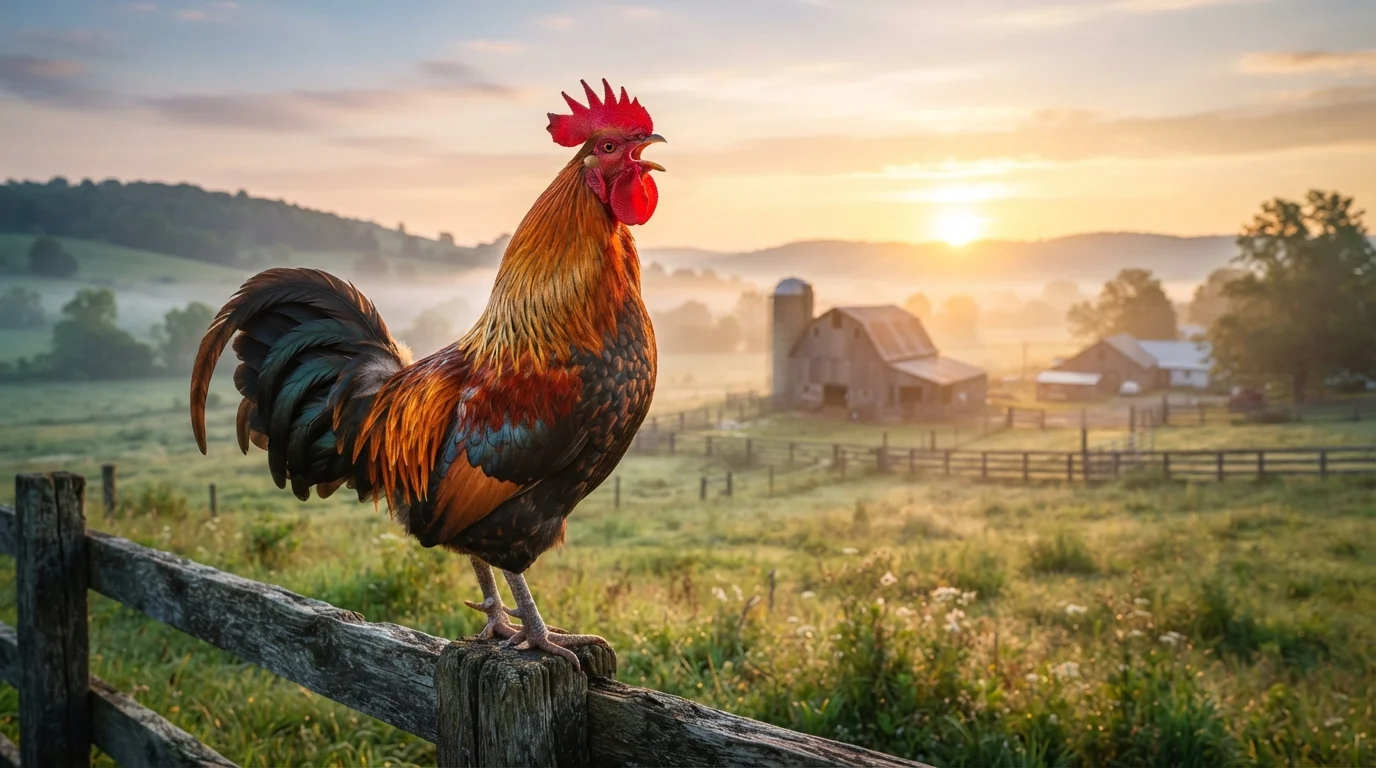
Rooster symbolism is closely associated with courage, confidence, vigilance, renewal, and the arrival of new opportunities.
Known for crowing at daybreak, the rooster has long represented awakening, the triumph of light over darkness, and the willingness to stand proudly in one’s own strength.
Across different cultures and spiritual traditions, roosters carry meanings connected to protection, honesty, leadership, and personal transformation.
Their bold appearance and unmistakable crow make them powerful symbols of awareness and self-expression.
If you see a rooster in a dream, encounter one in everyday life, or feel drawn to its symbolism, this remarkable bird can inspire you to embrace confidence, trust your abilities, and welcome a fresh chapter in life.
Rooster Symbolism Meaning (Clear Definition)
Rooster symbolism refers to the ideas and qualities associated with roosters, including courage, confidence, vigilance, leadership, awakening, and new beginnings.
Because roosters crow at dawn, they are also commonly linked to hope, alertness, and the transition from darkness to light.
The rooster’s behavior contributes to its symbolic meaning. Its upright posture suggests pride, its crow announces the beginning of a new day, and its alertness reflects awareness of its surroundings.
In simple terms, rooster symbolism represents the courage to be seen, the wisdom to remain alert, and the hope that comes with every new beginning.
Common rooster symbolism meanings include:
- Courage: Standing firm and facing challenges with determination.
- Confidence: Expressing your identity without unnecessary fear.
- Awakening: Recognizing new possibilities and becoming more aware.
- Protection: Remaining alert and responding to potential threats.
- Leadership: Taking initiative and accepting responsibility.
- Renewal: Welcoming change, fresh starts, and personal growth.
- Pride: Valuing your abilities while maintaining humility.
The rooster can also symbolize arrogance, aggression, or excessive pride when its confidence becomes a desire to dominate others. Its meaning depends on the cultural context and the circumstances in which it appears.
What Does Rooster Symbolism Represent?
Rooster symbolism represents several qualities that influence how people approach relationships, challenges, personal development, and spiritual growth.
1. Courage and Bravery
One of the most recognized meanings of a rooster is courage. Its bold stance, loud crow, and territorial behavior have made it an enduring image of strength and determination.
Symbolically, the rooster encourages you to face difficult situations rather than allowing fear to make your decisions.
Courage does not mean acting without thinking. It means recognizing a challenge, considering your options, and moving forward despite uncertainty.
2. Confidence and Self-Expression
A rooster is difficult to overlook. Its colorful feathers, upright posture, and distinctive call give it a strong presence.
This makes the bird a symbol of confidence and authentic self-expression. It can remind you that your opinions, abilities, and ideas deserve to be acknowledged.
However, rooster symbolism also encourages balance. Healthy confidence allows you to appreciate your strengths without dismissing the contributions of others.
3. Awakening and New Beginnings
The rooster’s crow is traditionally associated with daybreak. As night gives way to morning, the rooster becomes a natural symbol of awakening and renewal.
This association can represent a moment when you begin to see a situation more clearly or recognize an opportunity that previously seemed hidden.
A rooster may serve as a personal reminder to leave outdated habits behind and approach the next stage of life with renewed energy.
4. Vigilance and Awareness
Roosters are attentive to their surroundings and may respond quickly when they detect danger.
Symbolically, this behavior represents alertness, discernment, and the ability to recognize important details.
This meaning encourages you to remain aware of your environment, listen carefully, and make thoughtful decisions instead of acting on assumptions.
5. Leadership and Responsibility
In popular symbolism, the rooster’s visible presence within a flock often connects it with leadership and authority.
The deeper lesson is that leadership involves more than appearing powerful. It also requires responsibility, sound judgment, and consideration for those who depend on you.
Rooster symbolism can inspire you to take initiative while remembering that genuine leadership is demonstrated through actions.
6. Pride and Personal Identity
The rooster’s upright posture and impressive plumage have made it an image of dignity and pride.
In a positive sense, this represents self-respect and the willingness to recognize your own value.
In a negative sense, it can warn against vanity, stubbornness, and the need to prove yourself constantly.
The rooster therefore offers a useful reminder: stand tall, but remain willing to learn.
7. Protection and Defiance
Roosters are territorial birds that may defend themselves and members of their flock. This behavior contributes to their association with protection and standing one’s ground.
Symbolically, the rooster can encourage you to establish healthy boundaries and defend your values when necessary.
Its lesson is not to seek conflict, but to recognize when a firm and respectful response is appropriate.
Spiritual Meaning of Rooster Symbolism
The spiritual meaning of rooster symbolism often centers on awakening, inner strength, awareness, protection, and transformation.
Although interpretations vary among traditions, the rooster’s connection with dawn makes it a particularly powerful metaphor for recognizing truth and moving into a new phase of life.
Rooster as a Symbol of Spiritual Awakening
A rooster’s crow announces the arrival of morning, making it a natural symbol of waking up from darkness.
Spiritually, this may represent becoming more conscious of your choices, values, and direction in life.
You might interpret the rooster as a reminder to examine your habits, question limiting beliefs, and pay attention to opportunities for personal growth.
Spiritual awakening does not necessarily involve a dramatic revelation. Sometimes, it begins with a small realization that changes how you see yourself and the world.
Rooster as a Symbol of Inner Strength
The rooster’s confident presence can symbolize the strength required to remain true to yourself.
If this meaning resonates with you, consider if you have been hiding your abilities or allowing other people’s expectations to determine your choices.
The rooster encourages you to develop confidence rooted in self-awareness rather than the need for approval.
Rooster as a Symbol of Light Over Darkness
Because roosters crow at daybreak, they are often interpreted as symbols of hope following a difficult period.
The transition from night to morning provides a powerful metaphor for moving through uncertainty toward greater clarity.
This does not mean every problem will disappear quickly. Instead, the rooster can remind you that difficult circumstances may change and that a new perspective can reveal possibilities you could not previously see.
Rooster as a Symbol of Spiritual Protection
In some cultural and spiritual traditions, the rooster is associated with protection because its crow signals activity and its alert behavior makes it a natural guardian image.
In symbolic interpretations, this can represent awareness of harmful influences, the importance of boundaries, and the desire to protect what matters.
Such meanings are matters of cultural or personal belief rather than proof that a rooster provides supernatural protection.
Rooster as a Symbol of Transformation
The rooster’s connection with morning also makes it a symbol of transition and renewal.
You may associate it with leaving an old chapter behind, developing greater independence, or preparing for a meaningful change.
Its message is to approach transformation with courage and awareness instead of waiting until every uncertainty has disappeared.
What Does It Mean When a Rooster Keeps Appearing?
Repeatedly noticing roosters may feel significant, especially during a period of personal change.
A symbolic interpretation might invite you to consider if you need more confidence, greater awareness, or a fresh start. There is no established evidence that repeated rooster encounters predict a particular event, so your personal associations and circumstances are important to consider.
Biblical / Religious Meaning of Rooster Symbolism
Rooster symbolism has a notable place in Christian interpretation, particularly through the biblical account of Peter denying Jesus. Roosters also appear in religious and cultural traditions beyond Christianity, where they may symbolize vigilance, renewal, or protection.
It is important to distinguish specific scriptural references from later symbolic interpretations.
The Rooster in the Bible
The rooster is most famously associated with Jesus’ prediction that Peter would deny knowing him three times before the rooster crowed.
This account appears in Matthew 26:34 and is revisited in Matthew 26:69–75. Related accounts appear in Mark 14, Luke 22, and John 18.
After Peter denies Jesus, the rooster crows, and Peter remembers Jesus’ prediction. He then responds with deep sorrow.
Because of this story, the rooster can be interpreted in Christian contexts as a symbol of:
- Spiritual awareness: Recognizing an important truth.
- Conscience: Becoming aware of one’s actions and choices.
- Repentance: Feeling remorse and seeking a better path.
- Vigilance: Remaining spiritually attentive.
- Human weakness: Recognizing that fear can lead people to act against their convictions.
The rooster is therefore not simply a symbol of confidence. In the biblical narrative, it also marks a painful moment of recognition and the possibility of self-examination.
The Rooster as a Symbol of Repentance
Peter’s experience illustrates how people can fail to live according to their values when they feel threatened or afraid.
The rooster’s crow becomes a turning point because it reminds Peter of what Jesus had said.
In a Christian reflection, this imagery can encourage honesty about mistakes and a willingness to grow. Recognizing failure can be the first step toward renewed faith and a more thoughtful way of living.
The Rooster as a Symbol of Watchfulness
Some Christian artistic traditions associate the rooster with vigilance and spiritual readiness.
Its crow can serve as a reminder to remain attentive to one’s conscience, responsibilities, and relationship with God.
This meaning fits the broader religious theme of being spiritually prepared rather than becoming careless or complacent.
Rooster Symbolism in Other Religious Traditions
Beyond Christianity, roosters appear in various cultural and religious practices. Their associations may include dawn, vitality, fertility, protection, and the marking of time.
In Chinese zodiac traditions, the Rooster is associated with qualities such as diligence, confidence, and alertness. In some other traditions, roosters also have ceremonial or protective significance.
These interpretations differ across communities and should not be treated as one universal religious meaning.
Rooster Symbolism in History and Culture
Throughout history, roosters have appeared in folklore, mythology, national imagery, religious art, and everyday traditions.
Their connection with dawn, their striking appearance, and their distinctive crow have made them meaningful symbols in societies around the world.
Rooster Symbolism in Ancient Greece and Rome
In ancient Greek culture, roosters were associated with several deities and symbolic themes, including vigilance, vitality, and martial courage. The bird also appeared in contexts connected with competition and strength.
In ancient Rome, roosters had practical and religious significance, including their use in certain forms of divination.
These associations helped establish the rooster as more than a farm animal. It could also represent alertness, conflict, and the interpretation of signs.
Rooster Symbolism in Chinese Culture
The Rooster is the tenth animal in the Chinese zodiac’s twelve-year cycle.
In traditional Chinese zodiac interpretations, the Rooster is associated with punctuality, diligence, confidence, and attention to detail. Because roosters crow at dawn, they can also represent the beginning of activity and the movement from darkness toward light.
The rooster appears in Chinese decorative traditions and folk symbolism, although specific meanings vary according to context.
Zodiac descriptions are traditional cultural interpretations rather than scientifically proven personality assessments.
Rooster Symbolism in Japanese Culture
In Japanese cultural and religious settings, roosters are associated with dawn and can appear in stories and imagery connected with the sun.
One well known connection is the Shinto tradition surrounding Amaterasu, the sun goddess. In the myth of Amaterasu’s withdrawal into a cave, sacred roosters are among the elements involved in the effort to draw her out, according to traditional accounts.
This association strengthens the rooster’s connection with sunlight, renewed activity, and the return of brightness after darkness.
Rooster Symbolism in European Folklore
In several European folk traditions, the rooster’s crow has been associated with dawn, protection, and the dispersal of darkness.
Its voice made it a natural marker of time, especially in communities where daily activities followed the rhythms of sunrise and sunset.
Roosters also appear on weather vanes, church decorations, and other traditional objects. In these settings, they can symbolize watchfulness, confidence, and the announcement of a new day.
Rooster Symbolism in French Culture
The Gallic rooster, known in French as le coq gaulois, is a longstanding emblem associated with France.
Its cultural importance developed through historical associations involving the Latin word gallus, which can mean both a Gaul and a rooster. Over time, the rooster became an emblem of national identity, vigilance, and resilience.
It appears in French sporting imagery and other representations of national pride, although it is not France’s sole or official national emblem in every context.
Rooster Symbolism in African and Other Cultural Traditions
Roosters and chickens play roles in various African communities, including ceremonies, folklore, divination, and offerings. Their meanings may relate to community, vitality, spiritual obligations, or transitions.
Similar birds appear in religious and cultural practices across parts of Asia, the Caribbean, and the Americas.
There is no single interpretation that applies to every community. Understanding rooster symbolism requires attention to the particular tradition, ceremony, and beliefs involved.
Rooster Symbolism in Literature and Art
In literature and visual art, the rooster often serves as a vivid symbol of awakening, confidence, pride, and the passage of time.
Its recognizable appearance allows artists and writers to communicate ideas quickly, while its different cultural associations create opportunities for deeper interpretation.
The Rooster as a Symbol of Dawn
A rooster crowing at sunrise can represent the beginning of a new chapter or the return of hope after a difficult period.
In a poem or story, its call may signal a change in atmosphere, the arrival of a new character, or a moment when the truth becomes difficult to ignore.
The image is especially powerful because it connects a familiar natural event with an emotional or spiritual transition.
The Rooster as a Symbol of Pride
Artists often emphasize the rooster’s colorful feathers, upright stance, and prominent comb to express dignity, confidence, and vitality.
However, the same features can represent vanity or arrogance when the rooster appears excessively dominant.
This contrast allows writers and artists to explore the difference between self-respect and the desire to control others.
The Rooster as a Symbol of Masculinity
In some artistic and cultural contexts, the rooster represents masculinity, virility, competitiveness, and assertiveness.
These associations arise partly from its reproductive role, display behavior, and territorial tendencies.
They are cultural symbols rather than universal descriptions of men or masculine identity.
The Rooster as a Symbol of Time
Because a rooster’s crow is associated with dawn, it can represent the passage of time and the rhythms of everyday life.
In literature, this symbolism may suggest urgency, routine, or the opportunity to begin again.
A rooster’s crow can also function as a reminder that time continues moving forward, encouraging characters or readers to act before an opportunity passes.
The Rooster in Paintings and Decorative Art
Roosters frequently appear in folk art, still-life paintings, textiles, ceramics, and decorative designs.
Their bold colors and distinctive shapes make them visually memorable. Depending on the setting, they may suggest prosperity, rural identity, vitality, or cultural heritage.
The rooster’s meaning is ultimately shaped by the artistic style, surrounding imagery, and tradition in which it appears.
Dream Meaning of Rooster Symbolism
Dreaming about a rooster may invite reflection on confidence, awareness, pride, personal boundaries, or an approaching change in your life.
Dreams do not have universally fixed meanings, and there is no reliable scientific basis for treating a rooster dream as a prediction. However, examining your feelings and the dream’s details may help you understand what is currently on your mind.
Dreaming of a Crowing Rooster
A crowing rooster may symbolize awakening, an important realization, or a desire to pay attention to something you have overlooked.
If the crow makes you feel hopeful, you might associate it with a fresh start. If it feels irritating or alarming, it could reflect stress, interruption, or a concern demanding your attention.
Dreaming of a White Rooster
A white rooster may personally symbolize clarity, peace, confidence, or a fresh beginning.
In some spiritual interpretations, white is associated with purity or renewal, but the meaning of a white rooster is not universal.
Consider whether the dream felt peaceful, inspiring, uncomfortable, or threatening.
Dreaming of a Black Rooster
A black rooster may bring up themes of mystery, hidden concerns, personal strength, or the unknown.
Black does not automatically represent something evil or unlucky. Your own cultural background and emotional response can provide more useful context.
Dreaming of an Aggressive Rooster
An aggressive rooster may reflect conflict, competitiveness, or a situation in which you feel challenged.
It could also prompt you to examine your own behavior. Are you defending a reasonable boundary, or have pride and frustration begun to influence your reactions?
The dream may encourage you to balance assertiveness with patience.
Dreaming of a Rooster Chasing You
A rooster chasing you may represent a responsibility, confrontation, or uncomfortable truth you are trying to avoid.
Consider whether there is a conversation you have postponed or a decision you are reluctant to make.
The dream does not necessarily warn of danger; it may simply reflect the emotional pressure of an unresolved situation.
Dreaming of a Dead Rooster
A dead rooster may symbolize a perceived loss of confidence, the end of a familiar routine, or a change in how you express yourself.
If you are moving away from an old identity or role, the dream might reflect uncertainty about what comes next.
It should not be interpreted automatically as a prediction of death or misfortune.
Dreaming of a Rooster Fighting Another Rooster
Two fighting roosters may symbolize rivalry, competition, or a struggle for recognition.
The dream may encourage you to consider whether a disagreement is worth pursuing and whether cooperation could produce a better outcome than trying to win.
Modern Meaning of Rooster Symbolism
In modern life, rooster symbolism remains relevant to personal development, leadership, cultural identity, and the importance of being alert to opportunities.
The rooster can represent both the value of confidence and the need to avoid allowing pride to become excessive.
Rooster Symbolism and Personal Empowerment
The rooster’s confident appearance makes it a popular metaphor for speaking up, taking initiative, and trusting your abilities.
Its symbolism can be especially relevant when you are starting a project, changing careers, setting boundaries, or learning to express yourself more openly.
The key lesson is to recognize your worth without needing constant approval from others.
Rooster Symbolism and Leadership
A rooster can represent initiative, responsibility, and the willingness to make decisions.
In modern leadership, however, confidence is most useful when combined with listening, humility, and accountability.
The rooster’s symbolic strength can remind leaders to act decisively while respecting the people affected by their choices.
Rooster Symbolism and New Opportunities
The rooster’s association with dawn makes it a natural symbol of fresh starts.
This interpretation can apply to personal goals, relationships, education, and professional growth. It encourages you to approach each new phase with curiosity rather than assuming the past will determine the future.
Rooster Symbolism and Self Awareness
The rooster’s vigilance suggests the importance of observing your surroundings and recognizing patterns in your behavior.
This may involve noticing unhealthy habits, understanding your emotional reactions, or becoming more aware of opportunities that align with your values.
Awareness gives you a better chance of responding thoughtfully instead of reacting automatically.
Rooster Symbolism and the Balance Between Pride and Humility
Modern culture often encourages people to promote themselves and demonstrate confidence. The rooster reflects this quality, but its symbolic association with arrogance offers a useful warning.
Self-respect does not require constant competition. You can celebrate your achievements, acknowledge your strengths, and still remain open to feedback.
The healthiest expression of rooster symbolism combines courage with humility and ambition with responsibility.
Rooster Symbolism Meanings at a Glance
| Rooster image or association | Symbolic meaning |
|---|---|
| Crowing at sunrise | Awakening, renewal, and new beginnings |
| Upright posture | Confidence, dignity, and pride |
| Alert behavior | Vigilance, awareness, and discernment |
| Protecting its territory | Boundaries, courage, and defense |
| Colorful feathers | Individuality, vitality, and self-expression |
| Biblical rooster | Recognition, conscience, and repentance |
| Rooster in a dream | Personal reflection, change, or confidence |
| Gallic rooster | French identity, resilience, and national pride |
| Chinese zodiac Rooster | Diligence, punctuality, and confidence |
| Aggressive rooster | Conflict, competition, or excessive pride |
These meanings are common symbolic interpretations, not fixed rules. The context in which a rooster appears can change how its symbolism is understood.
Frequently Asked Questions About Rooster Symbolism
1. What does a rooster symbolize spiritually?
A rooster often symbolizes spiritual awakening, courage, vigilance, protection, and renewal. Its crow at dawn makes it a powerful image of recognizing truth and beginning a new chapter.
2. Is a rooster a symbol of good luck?
In some cultures and personal belief systems, roosters are associated with prosperity, confidence, protection, and positive beginnings. These associations vary, and seeing a rooster does not guarantee good fortune.
3. What does a rooster symbolize in the Bible?
In the biblical account of Peter denying Jesus, the rooster’s crow marks Peter’s recognition of his actions. It is therefore associated in Christian interpretation with conscience, repentance, spiritual awareness, and vigilance.
4. What does it mean to dream about a rooster?
A rooster dream may reflect confidence, personal boundaries, a new beginning, or an issue that needs your attention. Its possible meaning depends on the dream’s details and your emotional response.
5. What does a crowing rooster symbolize?
A crowing rooster commonly symbolizes awakening, alertness, the arrival of a new day, and renewed opportunities. In Christian contexts, it can also recall Peter’s recognition of his denial of Jesus.
Conclusion: The Deeper Meaning of Rooster Symbolism
Rooster symbolism reminds us to approach life with courage, awareness, and confidence. From its crow at daybreak to its striking presence in cultural traditions, the rooster represents awakening, protection, leadership, and the possibility of beginning again.
Its deeper lesson is to stand firmly in your values without allowing pride to overshadow wisdom.
If you encounter a rooster in a dream, religious story, work of art, or everyday setting, its symbolism can encourage you to recognize new opportunities, learn from the past, and move forward with greater self-awareness.

I’m Beau Warren, a passionate writer exploring the meanings behind symbols, dreams, colors, animals, and traditions. I enjoy creating well-researched, engaging content that inspires curiosity and deeper understanding every day.


