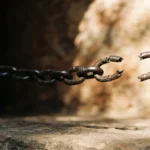
Rope symbolism is often connected with connection, strength, unity, support, restraint, and survival. Because a rope can bind, secure, pull, rescue, or hold things together, its meaning changes greatly depending on how it appears and how it is used.
Across spiritual traditions, literature, dreams, and everyday life, rope can represent the ties that connect people, the challenges that hold us back, or the inner strength that helps us endure difficult moments.
Understanding the context is essential because the same rope may symbolize security in one situation and restriction in another.
Rope Symbolism Meaning (Clear Definition)
At its simplest, rope symbolism represents connection, strength, support, and bonds. It can symbolize something that joins separate people or things together, while also representing the ability to withstand pressure.
A rope may also carry opposite meanings. A rope that helps someone climb can suggest hope and assistance, while a rope used to tie someone can represent limitation or loss of freedom.
Common symbolic meanings of rope include:
| Rope Symbolism | Possible Meaning |
|---|---|
| Connection | Relationships, bonds, and unity |
| Strength | Endurance and resilience |
| Support | Help, protection, and stability |
| Binding | Commitment or attachment |
| Restraint | Limitation or lack of freedom |
| Climbing | Progress, ambition, and overcoming obstacles |
| Rescue | Hope, assistance, and survival |
| Knot | Commitment, complexity, or unresolved issues |
The meaning often depends on whether the rope is holding, connecting, securing, pulling, climbing, or restraining.
What Does Rope Symbolism Represent?
Rope symbolism can represent several important aspects of human experience.
Connection and relationships: A rope physically connects objects, making it a natural symbol of relationships, family ties, friendship, and community.
Strength and resilience: Rope is made by twisting or braiding fibers together. This makes it a powerful metaphor for strength created through unity.
Support and security: Ropes are used to secure loads, assist climbers, and stabilize structures. Symbolically, they can represent someone or something that provides stability during uncertain times.
Commitment: A knot tied into a rope can suggest a promise, agreement, marriage, or lasting bond.
Restriction: When a rope is used as a restraint, its symbolism changes. It may represent feeling trapped, controlled, obligated, or unable to move forward.
Perseverance: A rope used for climbing can symbolize continuing upward despite difficulty.
This dual nature makes rope a particularly interesting symbol: the same object can represent both freedom through support and limitation through restraint.
Spiritual Meaning of Rope Symbolism
Spiritually, rope can symbolize the invisible connections that hold life together. It may represent a bond between people, a connection with the divine, or the strength gained through faith and community.
A strong rope can suggest spiritual resilience. Just as individual fibers become stronger when woven together, people may become stronger through relationships, shared beliefs, and mutual support.
A rope can also symbolize a spiritual journey. A person climbing a rope may represent someone attempting to rise above difficulties, develop greater awareness, or move toward a higher purpose.
A frayed rope may carry a different message. It can suggest weakened relationships, exhausted energy, uncertainty, or the need to repair something important before it breaks completely.
Spiritual Rope Symbolism at a Glance
- Strong rope: Inner strength and stability
- Knot: Commitment or an important spiritual bond
- Rope bridge: Transition and trust
- Climbing rope: Growth and spiritual progress
- Broken rope: Separation or release
- Frayed rope: Vulnerability or weakening connections
- Rope pulling upward: Guidance, rescue, or hope
Biblical / Religious Meaning of Rope Symbolism
Rope and cord imagery appears in religious traditions as a metaphor for bonds, relationships, security, and interconnectedness. In biblical language, cords can describe both physical restraint and metaphorical bonds.
One important biblical image is the idea that something woven together is stronger than something standing alone. Ecclesiastes 4:12 famously describes a “threefold cord” as difficult to break, making cord symbolism closely associated with unity, companionship, and strength through togetherness.
Ropes and cords can also symbolize captivity or bondage when they are used to restrain someone. In this context, the image represents oppression, limitation, or separation from freedom.
Religiously, therefore, rope symbolism can have two contrasting meanings:
- A cord that binds people together: unity and fellowship
- A cord that restrains: bondage or captivity
- A strong cord: endurance and stability
- A broken cord: separation or release
- A woven cord: strength through cooperation
The surrounding story or religious context determines which interpretation is most appropriate.
Rope Symbolism in History and Culture
Ropes have played practical roles in transportation, construction, agriculture, sailing, climbing, warfare, and rescue for thousands of years. Because ropes have been essential to survival and physical work, their symbolic meanings often developed from these practical uses.
In maritime culture, ropes are closely associated with navigation, teamwork, endurance, and survival. Sailors depend on ropes to secure equipment, control sails, and keep vessels functioning.
In climbing traditions, rope represents trust and protection. A climber may depend on a rope and another person for safety, making it a natural symbol of courage supported by cooperation.
Rope can also represent labor and craftsmanship. Traditional rope-making requires many strands to be twisted or braided together. This process naturally lends itself to the metaphor that many individual parts can become stronger when united.
In ceremonial contexts, cords and ropes have sometimes represented commitment, status, community, or sacred bonds. Knots, in particular, have appeared across cultures as symbols of promises and relationships.
Rope Symbolism in Literature and Art
Writers and artists often use rope because it has an unusually wide symbolic range.
A rope may represent a lifeline when a character is struggling and needs help. It can symbolize the possibility of escape or survival when someone is pulled away from danger.
In another context, rope can represent entrapment. A character surrounded by ropes or tied down may symbolize emotional pressure, social expectations, fear, or a lack of freedom.
The knot is especially powerful in literature. A complicated knot can represent a difficult problem, tangled relationship, secret, or unresolved emotional conflict. Untying the knot may symbolize understanding, forgiveness, or liberation.
A rope bridge can symbolize a transition between two stages of life. Crossing it may represent courage and uncertainty, especially when the destination is unknown.
Because of these associations, rope imagery can communicate complex ideas without requiring lengthy explanation.
Dream Meaning of Rope Symbolism
Dreams involving ropes can have many interpretations, and personal circumstances matter more than any single universal meaning.
Dreaming of holding a rope may symbolize seeking support or trying to maintain control during a challenging period.
Climbing a rope can represent ambition, personal growth, or an effort to overcome obstacles.
Being tied with a rope may reflect feelings of restriction, obligation, pressure, or being unable to move freely.
Untying a rope can symbolize solving a problem, releasing an attachment, or freeing yourself from an unwanted limitation.
A broken rope may represent separation, disappointment, or the ending of a connection. It can also symbolize freedom if the rope had previously been holding you back.
A rope bridge may suggest a transition. It can represent moving from one stage of life to another while dealing with uncertainty or fear.
Rather than treating a dream as a fixed prediction, it can be more useful to consider what the rope meant to you in the dream and what emotions accompanied it.
Modern Meaning of Rope Symbolism
Today, rope symbolism continues to appear in relationships, personal development, design, storytelling, and popular culture.
A rope can represent teamwork because many tasks involving rope require cooperation. It can also symbolize resilience because rope remains useful under tension and pressure.
In personal symbolism, rope may represent the relationships that keep someone grounded. At the same time, it can remind us that not every connection is healthy. Some bonds provide support, while others become restrictive.
This makes rope a useful modern metaphor for boundaries and relationships. The question is not simply whether we are connected, but if those connections strengthen us or prevent us from moving forward.
Common Secondary Meanings of Rope
- Rope symbolism and strength
- Rope symbolism and connection
- Rope symbolism and unity
- Rope symbolism and relationships
- Rope symbolism in dreams
- Spiritual meaning of rope
- Meaning of knots and cords
Frequently Asked Questions About Rope Symbolism
What is the main meaning of rope symbolism?
The main meanings of rope symbolism are connection, strength, support, unity, and restraint. Its interpretation depends on how the rope is being used.
What does a rope symbolize spiritually?
Spiritually, a rope can symbolize connection, faith, resilience, guidance, and the bonds that unite people. A strong or woven rope may particularly suggest strength through unity.
What does a rope mean in a dream?
A rope in a dream may represent support, connection, restriction, ambition, or the need to overcome an obstacle. The specific meaning depends on the dream’s situation and your emotional response.
What does a broken rope symbolize?
A broken rope can symbolize separation, a weakened relationship, failure of support, or release from something restrictive. Its meaning depends on whether the break feels frightening or liberating.
What does a knot symbolize?
A knot commonly represents commitment, connection, complexity, or something difficult to resolve. Untying a knot can symbolize solving a problem or releasing an emotional burden.
Conclusion
Rope symbolism is ultimately about the bonds that hold, support, challenge, and connect us. A rope can represent strength when many strands work together, hope when it becomes a lifeline, and restriction when it prevents movement.
Its deepest meaning comes from context. If appearing in a dream, religious image, work of art, or everyday life, rope invites us to consider an important question: Which connections give us strength, and which ones keep us from moving forward?

I’m Beau Warren, a passionate writer exploring the meanings behind symbols, dreams, colors, animals, and traditions. I enjoy creating well-researched, engaging content that inspires curiosity and deeper understanding every day.