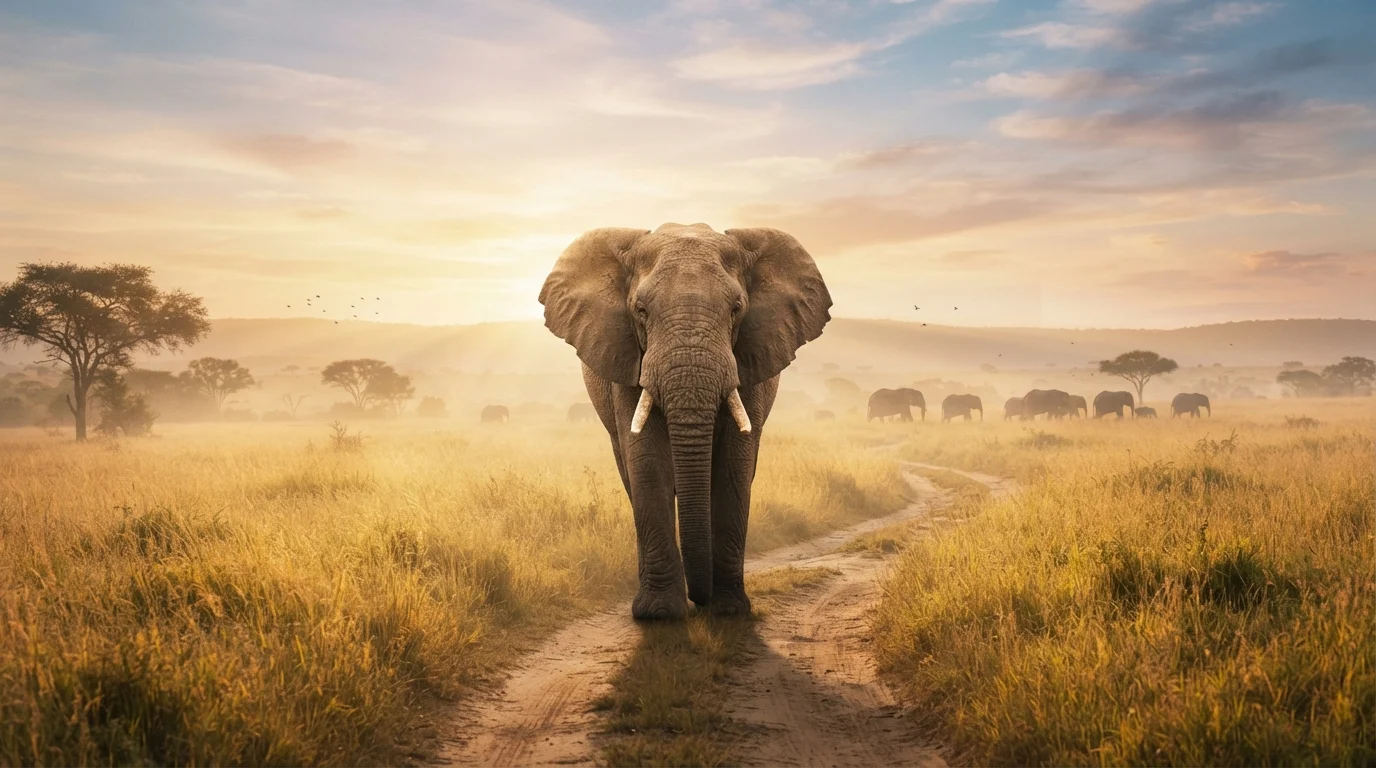
Elephant symbolism is deeply connected with strength, wisdom, loyalty, protection, memory, and emotional depth. Across cultures, elephants have been admired not only for their physical power but also for their intelligence, strong family bonds, patience, and calm presence.
For centuries, people have viewed the elephant as a symbol of resilience and dignity. Its ability to endure hardship while remaining connected to its family has given it a powerful place in spiritual traditions, mythology, art, literature, and modern culture.
If you encounter an elephant in a dream, artwork, story, spiritual practice, or meaningful personal experience, its symbolism often points toward inner strength, thoughtful action, and lasting relationships.
Elephant Symbolism Meaning (Clear Definition)
Elephant symbolism represents strength, wisdom, patience, loyalty, protection, family, memory, and resilience. Because elephants are powerful yet generally peaceful animals, they often symbolize the ability to use strength with compassion and self-control.
The meaning can change depending on the context. An elephant may represent protection in one situation, while in another it can symbolize spiritual wisdom, overcoming obstacles, or staying grounded during difficult times.
Key Elephant Symbolism Meanings
| Symbolic Meaning | What It Represents |
|---|---|
| Strength | Physical, emotional, and inner power |
| Wisdom | Experience, intelligence, and thoughtful decisions |
| Loyalty | Strong relationships and devotion |
| Protection | Safety, guardianship, and courage |
| Family | Community, motherhood, and close bonds |
| Memory | Life experiences, remembrance, and learning |
| Patience | Calmness, endurance, and steady progress |
| Resilience | Surviving challenges and continuing forward |
At its heart, elephant symbolism reminds us that true strength does not always need to be loud. Sometimes the greatest power comes from patience, stability, and knowing when to move forward.
What Does Elephant Symbolism Represent?
Elephants represent several qualities that humans have admired throughout history. Their enormous physical presence naturally connects them with power, but their social behavior adds deeper meanings.
Strength and Power
The elephant is one of the strongest land animals, making it a natural symbol of physical and emotional strength. In symbolic language, elephant strength can represent the ability to withstand pressure without losing your sense of purpose.
Wisdom and Intelligence
Elephants are commonly associated with wisdom because of their intelligence, complex social behavior, and ability to learn. As a symbol, the elephant encourages thoughtful choices rather than impulsive reactions.
Loyalty and Family
Elephants are strongly associated with family bonds. Their close social groups have made them powerful symbols of loyalty, cooperation, belonging, and unconditional support.
Protection and Security
An elephant’s size and strength can symbolize protection. Elephant symbolism may therefore appear in contexts involving guardianship, safety, courage, and the desire to protect people or values that matter.
Patience and Stability
The elephant’s slow, deliberate movement is often interpreted as a reminder to be patient. Symbolically, it suggests that meaningful progress does not always happen quickly.
Spiritual Meaning of Elephant Symbolism
Spiritually, elephant symbolism often represents grounded strength, wisdom, protection, and the ability to overcome obstacles.
An elephant can serve as a reminder to remain calm when life feels overwhelming. Instead of reacting immediately, its symbolism encourages you to become grounded, observe the situation carefully, and move with intention.
In many spiritual interpretations, elephants are also connected with abundance and positive transformation. Their symbolism can suggest that you already possess more inner strength than you realize.
Common spiritual messages associated with elephants include:
- Trust your inner wisdom.
- Stay grounded during difficult periods.
- Protect what is genuinely important to you.
- Move forward patiently rather than rushing.
- Value family and meaningful relationships.
- Use strength with compassion.
- Remember the lessons of your past without becoming trapped by them.
The spiritual meaning of an elephant is therefore not simply about being powerful. It is about having power while remaining calm, compassionate, and purposeful.
Biblical / Religious Meaning of Elephant Symbolism
Elephants are not among the most prominent symbolic animals in the Bible, and the Bible does not establish one universal theological meaning for elephants. However, elephants have acquired religious and spiritual significance in several traditions outside Christianity.
In Hinduism, the elephant is especially important through Ganesha, the elephant-headed deity associated with wisdom, learning, prosperity, and the removal of obstacles. This makes elephant symbolism particularly strong in discussions of spiritual knowledge and overcoming challenges.
In Buddhist traditions, elephants can also represent qualities such as mental strength, mindfulness, patience, and spiritual discipline. The symbolism often emphasizes the importance of developing a calm and focused mind.
Because religious symbolism varies between traditions, the meaning of an elephant should be understood within its specific cultural and spiritual context rather than assigned a single universal interpretation.
Elephant Symbolism in History and Culture
Elephants have played important roles in the history and cultures of Africa and Asia. They have been respected as powerful animals, working companions, royal symbols, spiritual figures, and representations of status.
In parts of Asia, elephants have historically been associated with royalty, ceremonial traditions, warfare, transportation, and religious life. Their impressive size and intelligence contributed to their association with authority and dignity.
In African cultures, elephants have often been admired for their strength, social relationships, intelligence, and connection with the natural world. Their presence in traditional stories and cultural expressions has helped establish them as symbols of power and community.
Elephant symbolism also appears in architecture, sculpture, textiles, jewelry, paintings, and ceremonial objects. The animal’s recognizable form makes it particularly effective as a visual representation of strength and protection.
Cultural Elephant Symbolism
Depending on the culture and context, elephants may symbolize:
- Royal authority
- Good fortune
- Prosperity
- Wisdom
- Fertility
- Protection
- Family unity
- Spiritual power
- Long life
- Endurance
This wide range of meanings explains why elephant imagery continues to appear across different societies.
Elephant Symbolism in Literature and Art
Elephants have long captured the imagination of writers and artists. Their physical size creates a natural image of power, while their social and emotional characteristics provide opportunities to explore more subtle themes.
In literature, an elephant may represent strength, memory, loneliness, wisdom, innocence, or the relationship between humans and nature. Writers can use the animal as both a literal character and a metaphor for something much larger.
In visual art, elephants often communicate grandeur and stability. Their bodies can symbolize permanence, while their family structures can represent love, belonging, and community.
Elephant imagery can also create a contrast between power and gentleness. This is one reason the animal is such a compelling symbolic figure: it demonstrates that something can be enormous and formidable without being aggressive.
Dream Meaning of Elephant Symbolism
Dreaming about an elephant can have different meanings depending on the emotions, surroundings, and actions in the dream.
Generally, an elephant dream may symbolize strength, wisdom, memory, family, responsibility, or an important challenge in your life.
Common Elephant Dream Interpretations
Dreaming of a peaceful elephant:
This may suggest emotional stability, protection, wisdom, or a sense of inner strength.
Dreaming of an angry elephant:
An aggressive elephant may represent overwhelming emotions, suppressed frustration, or a situation that feels difficult to control.
Dreaming of a baby elephant:
A baby elephant can symbolize growth, innocence, new responsibilities, or something valuable that requires patience and protection.
Dreaming of a herd of elephants:
A herd may represent family, community, belonging, teamwork, or the importance of supportive relationships.
Dreaming of riding an elephant:
This can symbolize confidence, leadership, control, or progress toward an important goal.
Dreaming of a dead elephant:
Such a dream may represent the ending of a major chapter, the loss of something meaningful, or the need to let go of an old way of thinking.
Dream interpretation is personal rather than scientific, so the most meaningful interpretation usually depends on what the elephant represented to you and how you felt during the dream.
Modern Meaning of Elephant Symbolism
Today, elephant symbolism continues to appear in fashion, home décor, jewelry, tattoos, artwork, conservation campaigns, and personal spiritual practices.
Modern interpretations often focus on emotional intelligence, resilience, family, environmental awareness, and compassionate strength.
An elephant tattoo, for example, may symbolize personal strength, family loyalty, overcoming hardship, or remembrance. Elephant artwork may be chosen to create a feeling of calmness, wisdom, protection, or connection with nature.
The elephant has also become an important symbol in wildlife conservation. Because elephants face threats from habitat loss and illegal hunting, modern elephant imagery can represent respect for nature and the responsibility to protect vulnerable wildlife.
Elephant Symbolism in Everyday Life
People may connect with elephant symbolism when they are:
- Beginning a new chapter
- Recovering from difficult experiences
- Protecting their family
- Seeking greater wisdom
- Learning patience
- Remembering someone important
- Building emotional resilience
- Looking for stability and grounding
In this sense, elephant symbolism remains relevant because its core message is timeless: strength becomes most meaningful when it is guided by wisdom and compassion.
Frequently Asked Questions About Elephant Symbolism
What is the main meaning of elephant symbolism?
The main meanings of elephant symbolism are strength, wisdom, loyalty, protection, patience, family, and resilience. The exact interpretation depends on the cultural or personal context.
What does an elephant symbolize spiritually?
Spiritually, an elephant often symbolizes grounded strength, wisdom, protection, patience, and overcoming obstacles. It can encourage a person to remain calm and trust their inner abilities.
What does an elephant symbolize in dreams?
An elephant in a dream can represent strength, memory, family, responsibility, or a major challenge. A peaceful elephant may suggest stability, while an aggressive one may reflect overwhelming emotions or pressure.
What does an elephant symbolize in Hinduism?
In Hinduism, elephants have major spiritual significance, particularly through Ganesha, the elephant-headed deity associated with wisdom, learning, prosperity, and the removal of obstacles.
Why are elephants associated with wisdom and memory?
Elephants are associated with wisdom and memory because of their intelligence, complex social behavior, learning abilities, and long lives. These qualities have inspired powerful symbolic associations across cultures.
Conclusion
Elephant symbolism carries a powerful message of strength, wisdom, loyalty, protection, patience, and resilience. From ancient traditions to modern life, the elephant represents a form of power that does not need aggression to be meaningful.
If seen in a dream, spiritual setting, work of art, or personal symbol, the elephant can remind us to stand firmly, care deeply, learn from the past, and move forward with patience.

Hi, I’m Kingston Fox, the administrator of Symbolop. I manage our platform and enjoy exploring symbols, their meanings, and cultural significance while ensuring readers have a reliable, engaging experience.