Wolf symbolism has fascinated people for centuries because wolves represent a powerful mix of independence, loyalty, instinct, courage, and mystery. Across different cultures, the wolf can symbolize both protection and danger, wild freedom and deep connection.
If you encounter a wolf in a dream, artwork, mythology, or spiritual experience, its meaning often depends on the context. At its heart, wolf symbolism encourages us to trust our instincts, value meaningful relationships, and remain strong while walking our own path.
Wolf Symbolism Meaning (Clear Definition)
Wolf symbolism refers to the symbolic meanings people have attached to wolves throughout history, mythology, religion, literature, and modern culture. Wolves commonly represent strength, freedom, loyalty, instinct, protection, courage, and independence.
The wolf is especially interesting because it combines two seemingly opposite qualities. It can live as part of a close knit pack while also representing the solitary individual who confidently follows an independent path.
Common wolf symbolism meanings include:
| Wolf Symbolism | Meaning |
|---|---|
| Strength | Inner power, resilience, and courage |
| Loyalty | Devotion to family, friends, or community |
| Freedom | Independence and the desire to live authentically |
| Instinct | Intuition, awareness, and trusting your inner voice |
| Protection | Defending yourself or those you love |
| Transformation | Personal growth and major life changes |
| Leadership | Confidence, responsibility, and guidance |
| Wildness | Authenticity, untamed energy, and natural instincts |
The exact meaning of a wolf symbol can change according to the situation. A friendly wolf may suggest protection or loyalty, while an aggressive wolf may represent fear, conflict, or a challenge that needs attention.
What Does Wolf Symbolism Represent?
Wolf symbolism represents several powerful qualities that are deeply connected with human experience.
Strength is one of the most recognizable meanings. Wolves survive challenging environments, adapt to changing conditions, and rely on their abilities to navigate uncertainty.
Loyalty is another important theme. Wolves are strongly associated with pack relationships, making them symbols of family bonds, companionship, cooperation, and devotion.
Freedom also plays a major role. The image of a wolf moving through a vast wilderness often represents the desire to break free from restrictions and live according to one’s true nature.
Other common associations include:
- Instinct: Listening to intuition instead of ignoring inner feelings.
- Courage: Facing uncertainty without allowing fear to control you.
- Protection: Defending loved ones, personal values, or boundaries.
- Independence: Developing confidence without constantly relying on others.
- Leadership: Guiding others through wisdom, experience, and strength.
- Adaptability: Responding intelligently to difficult circumstances.
Together, these qualities make the wolf a symbol of both individual power and meaningful connection.
Spiritual Meaning of Wolf Symbolism
Spiritually, wolf symbolism is often connected with intuition, inner strength, protection, guidance, and personal transformation.
The wolf’s powerful instincts can represent the inner voice that guides you when logic alone cannot provide an answer. Seeing wolf imagery may therefore encourage you to pay closer attention to your intuition and emotional awareness.
The wolf can also symbolize spiritual independence. Instead of blindly following the crowd, its energy suggests discovering your own truth and having the courage to follow it.
Wolf symbolism may spiritually represent:
- Trusting your intuition
- Finding inner strength
- Protecting your energy and boundaries
- Connecting with nature
- Embracing personal freedom
- Learning from solitude
- Strengthening meaningful relationships
The wolf’s connection to both solitude and community is particularly significant. It reminds us that being independent does not mean being disconnected from others.
Sometimes growth requires solitude. At other times, strength comes from knowing when to return to your community.
Biblical / Religious Meaning of Wolf Symbolism
In the Bible, wolves are generally associated with danger, false teachers, deception, aggression, or threats against the vulnerable rather than with the positive spiritual symbolism commonly found in modern interpretations.
One well-known biblical image appears in Matthew 7:15, where Jesus warns about false prophets who come in sheep’s clothing but are inwardly described as wolves. The wolf therefore becomes a metaphor for someone who appears harmless while carrying harmful intentions.
The biblical use of wolf imagery also emphasizes the importance of discernment. The lesson is not simply to fear wolves, but to recognize what may be hidden beneath appearances.
In Christian symbolism, therefore, the wolf can represent:
- Deception
- Spiritual danger
- Predatory behavior
- False guidance
- Threats to innocence or vulnerability
- The need for wisdom and discernment
This differs from many Indigenous, mythological, and contemporary interpretations in which wolves can represent guardianship, wisdom, loyalty, or spiritual power.
Wolf Symbolism in History and Culture
Wolves have appeared in myths, legends, folklore, and traditional stories across many societies.
In Roman mythology, the she wolf is famously connected with Romulus and Remus, the legendary founders of Rome. The wolf in this story is associated with nourishment, protection, and the survival of future leaders.
In Norse mythology, wolves have powerful and sometimes frightening roles. Fenrir, one of the best-known wolves in Norse mythology, represents enormous destructive power and plays an important role in the events surrounding Ragnarök.
Across various Indigenous cultures of North America, wolf traditions differ greatly from nation to nation. In some traditions, wolves may be associated with loyalty, family, hunting ability, wisdom, courage, or spiritual relationships with the natural world.
These beliefs should not be treated as one single universal Indigenous interpretation because cultures and traditions are diverse.
European folklore often presents wolves more fearfully. Stories such as the wolf in Little Red Riding Hood portray the animal as a symbol of danger, predation, and hidden threats.
This wide range of interpretations shows why wolf symbolism cannot be reduced to one simple definition.
Wolf Symbolism in Literature and Art
Wolves have long been powerful subjects in literature and visual art because they allow creators to explore the tension between civilization and wilderness.
In stories, the wolf can represent the outsider, the predator, the guardian, or the untamed side of human nature.
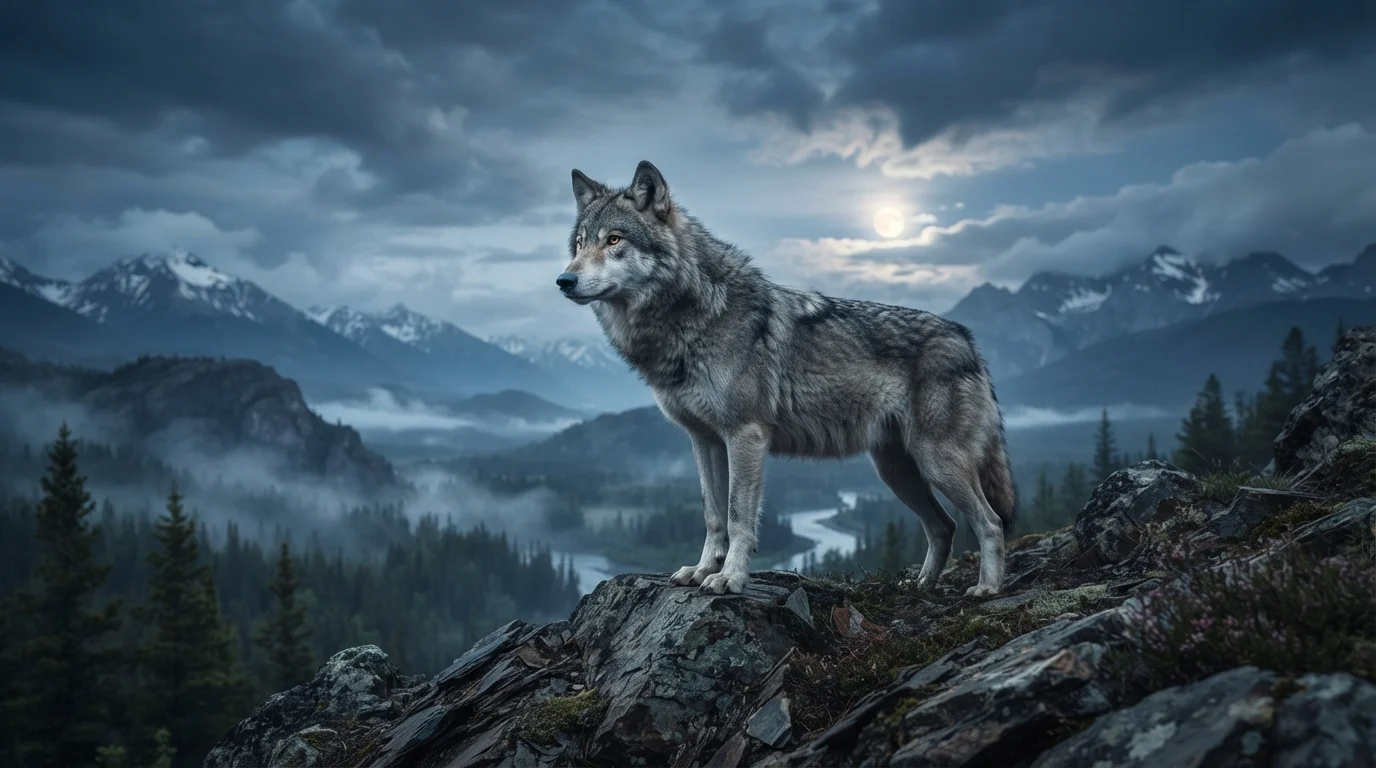
The wolf’s relationship with the wilderness makes it particularly effective as a symbol of freedom. A wolf standing alone beneath the moon can evoke solitude, mystery, independence, and emotional depth.
At the same time, an image of wolves traveling together can symbolize family, cooperation, loyalty, and belonging.
Literary and artistic wolf symbolism often explores questions such as:
- Who are we when social expectations disappear?
- How much of our natural instinct should we trust?
- Is solitude empowering or lonely?
- What does loyalty mean?
- When should we protect ourselves or others?
- Can strength exist alongside compassion?
Because of these questions, the wolf remains one of the most recognizable symbols of the wild human spirit.
Dream Meaning of Wolf Symbolism
Dreaming about a wolf can have many possible interpretations. The meaning usually depends on the wolf’s behavior, your emotions during the dream, and what happens in the surrounding scene.
A friendly wolf may symbolize loyalty, protection, guidance, or a trustworthy relationship.
A howling wolf may represent communication, longing, emotional expression, or a desire to reconnect with something important.
A wolf chasing you could reflect fear, pressure, unresolved conflict, or an issue you have been avoiding.
A wolf attacking you may symbolize a perceived threat, emotional tension, betrayal, or a situation that makes you feel vulnerable.
A wolf walking peacefully beside you may suggest confidence, companionship, protection, or a growing trust in your instincts.
A lone wolf may represent independence and self-discovery, but it can also reflect loneliness or feeling disconnected from others.
Dream symbolism is highly personal. Rather than treating one interpretation as universally correct, consider how the wolf made you feel and what is happening in your waking life.
Modern Meaning of Wolf Symbolism
Today, wolf symbolism is commonly associated with independence, resilience, loyalty, confidence, authenticity, and freedom.
The phrase “lone wolf” has become especially popular in modern culture. It usually describes someone who prefers independence and does not feel the need to follow conventional social expectations.
However, the real symbolism of wolves offers a more balanced message. Wolves are not simply solitary animals. Their social bonds are essential to their lives, making them powerful symbols of both independence and community.
Modern wolf symbolism can therefore encourage a healthier form of independence:
Be strong enough to stand alone, but wise enough to recognize the value of your pack.
For many people, the wolf represents the courage to remain authentic while still maintaining meaningful relationships.
Wolf Symbolism and Personal Growth
The wolf can also represent a journey of transformation.
You may connect with wolf symbolism when:
- You are entering a new stage of life.
- You need to trust yourself more.
- You are learning to establish boundaries.
- You are leaving behind an unhealthy situation.
- You want greater independence.
- You are reconnecting with nature or your instincts.
- You are discovering who truly belongs in your life.
In this sense, the wolf becomes a reminder that growth does not always look comfortable. Sometimes becoming stronger requires leaving familiar territory and learning to navigate the unknown.
Frequently Asked Questions About Wolf Symbolism
What is the main meaning of wolf symbolism?
Wolf symbolism commonly represents strength, loyalty, freedom, instinct, courage, protection, and independence. Its exact meaning depends on the cultural or personal context.
What does a wolf symbolize spiritually?
Spiritually, a wolf may symbolize intuition, inner strength, protection, personal freedom, and guidance. It can encourage you to trust your instincts while maintaining meaningful connections with others.
What does a wolf mean in a dream?
A wolf in a dream can represent instinct, fear, protection, independence, loyalty, or personal transformation. The wolf’s behavior and your emotions during the dream are important clues to its possible meaning.
What does a lone wolf symbolize?
A lone wolf commonly symbolizes independence, self-reliance, individuality, and the courage to follow your own path. In some contexts, it can also represent loneliness or social disconnection.
Is wolf symbolism positive or negative?
Wolf symbolism can be either positive or negative. It may represent loyalty, courage, protection, and freedom, while in some religious and cultural contexts it can symbolize danger, deception, aggression, or destructive forces.
Conclusion
Wolf symbolism brings together some of life’s most powerful themes: strength, freedom, instinct, loyalty, protection, and transformation. The wolf reminds us that true strength is not simply about standing alone; it is also about knowing when to trust others, protect what matters, and follow our inner wisdom.
If the wolf appears in a dream, story, spiritual experience, or piece of art, its message often points back to one essential idea: trust your instincts, honor your nature, and walk your path with courage.

I’m Camden Holland, a passionate writer at Symbolop, where I explore the meanings, history, and cultural significance of symbols. I enjoy creating clear, engaging content that helps readers discover the fascinating stories behind symbols from around the world.