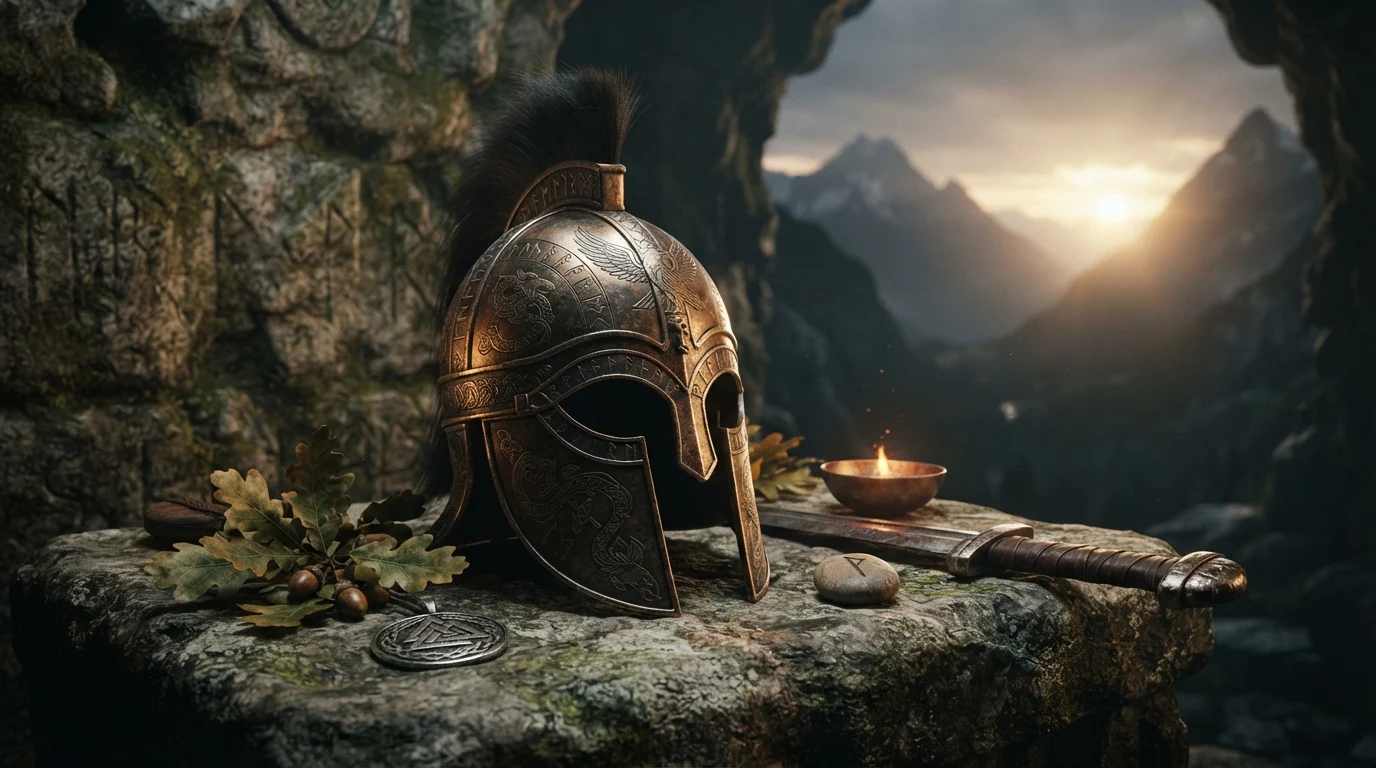
A helmet is more than protective equipment. Across history and cultures, helmet symbolism has been associated with protection, courage, strength, identity, authority, and readiness.
Because a helmet shields one of the most vulnerable and important parts of the body the head it can represent the desire to protect thoughts, beliefs, identity, and inner strength.
In dreams, art, religion, and everyday life, a helmet may also symbolize preparation for challenges, emotional defense, leadership, or the courage to face uncertainty. Its meaning often depends on who wears it, how it looks, and what is happening around it.
Helmet Symbolism Meaning (Clear Definition)
Helmet symbolism represents protection, courage, strength, preparedness, authority, and defense against physical or emotional threats.
At its simplest level, a helmet is a protective covering for the head. Symbolically, this practical function becomes a powerful metaphor for safeguarding the mind, identity, values, and personal boundaries.
A helmet can therefore suggest:
- Protection — guarding yourself from harm or danger
- Courage — preparing to face difficult circumstances
- Strength — remaining resilient under pressure
- Readiness — being prepared for challenges
- Authority — leadership, rank, or responsibility
- Defense — protecting beliefs, emotions, or personal boundaries
- Identity — expressing a role, group, profession, or purpose
The symbolism changes according to context. A warrior’s helmet may suggest bravery and battle, while a firefighter’s helmet can represent service and sacrifice. A bicycle helmet may symbolize caution and responsible freedom.
What Does Helmet Symbolism Represent?
Helmet symbolism commonly represents the idea of being prepared while protecting what matters most.
Because the head contains the brain and is closely associated with thought and identity, protecting the head can have a deeper symbolic meaning. A helmet may represent protecting one’s ideas, principles, decisions, or sense of self.
| Symbolic Meaning | What It Can Represent |
|---|---|
| Protection | Safety, security, and defense |
| Courage | Facing danger or adversity |
| Strength | Resilience and endurance |
| Readiness | Preparation for challenges |
| Authority | Leadership, rank, and responsibility |
| Identity | Belonging to a role or group |
| Boundaries | Emotional or psychological protection |
| Victory | Survival, achievement, or triumph |
A helmet can also symbolize the balance between caution and courage. Wearing one does not necessarily mean expecting disaster; it can mean understanding risk while still moving forward.
Common Secondary Keywords Related to Helmet Symbolism
Relevant ideas include:
- helmet spiritual meaning
- helmet meaning in dreams
- helmet as a symbol of protection
- warrior helmet symbolism
- helmet symbolism in mythology
- biblical helmet symbolism
- helmet meaning in psychology
Spiritual Meaning of Helmet Symbolism
Spiritually, a helmet can represent protection of the mind and inner self.
Many spiritual traditions place importance on guarding one’s thoughts, intentions, and beliefs. In this context, a helmet can become a metaphor for maintaining clarity and resisting influences that may weaken one’s sense of purpose.
A helmet may spiritually symbolize:
Protection of the Mind
The helmet can represent protecting your thoughts from fear, confusion, negativity, or harmful influences.
Inner Strength
Wearing a helmet may suggest that spiritual strength is not simply about avoiding difficulties. It can mean developing resilience so that difficulties do not easily overcome you.
Faith and Conviction
A helmet may symbolize holding firmly to one’s principles even when facing pressure or uncertainty.
Readiness for a Spiritual Journey
Because helmets are associated with preparation, they can represent entering a new stage of life with awareness and determination.
Emotional Boundaries
The protective function of a helmet can also symbolize learning when to protect your emotional energy and establish healthy boundaries.
In this sense, helmet symbolism can carry a gentle reminder: protect your mind without closing yourself off from the world.
Biblical / Religious Meaning of Helmet Symbolism
The helmet has a particularly recognizable symbolic role in Christian scripture.
In Ephesians 6:17, Paul describes the “helmet of salvation” as part of the spiritual armor of God. The passage connects the helmet with salvation while describing a broader set of spiritual defenses.
This gives the helmet an important religious association with salvation, spiritual protection, and steadfast faith.
The imagery is especially significant because a helmet protects the head, making it a natural metaphor for guarding one’s spiritual understanding and confidence.
The Bible also uses military imagery elsewhere to communicate ideas of protection and deliverance. In 1 Thessalonians 5:8, Paul again refers to a helmet, connecting it with the “hope of salvation.”
Therefore, in Christian symbolism, the helmet can represent:
- Salvation
- Hope
- Spiritual protection
- Faith
- Perseverance
- Confidence in one’s beliefs
The religious meaning should not be confused with the practical function of historical helmets. The biblical imagery uses familiar protective equipment as a metaphor for spiritual life.
Helmet Symbolism in History and Culture
Helmets have appeared in many societies because protecting the head has always been an important practical concern. Over time, their practical function developed into powerful cultural symbolism.
Ancient Warriors
In ancient warfare, helmets represented protection, military readiness, and courage. Their designs could also communicate rank, identity, or affiliation.
A decorated helmet could be more than defensive equipment—it could become part of a warrior’s public image.
Medieval Europe
Medieval helmets became closely associated with knights, warfare, honor, and social status. Different helmet styles were connected with particular periods, military roles, and forms of protection.
In popular imagination, the knight’s helmet continues to symbolize bravery, duty, and the defense of others.
Mythology
Helmets frequently appear in mythology as objects of supernatural or symbolic power.
The Greek goddess Athena, for example, is traditionally depicted wearing a helmet. Her helmet reinforces associations with wisdom, strategic warfare, protection, and disciplined strength.
The helmet of Hades, often called the Cap of Invisibility, is another famous example in Greek mythology. Its symbolism moves beyond ordinary protection toward concealment, mystery, and supernatural power.
Modern Professions
Today, helmets can represent specific roles and responsibilities.
A construction helmet can symbolize safety and labor. A firefighter’s helmet may evoke courage and service. A military helmet can represent duty and defense. A sports helmet can symbolize discipline, risk management, and determination.
Thus, the helmet has evolved while retaining its central symbolic idea: protection in the face of potential danger.
Helmet Symbolism in Literature and Art
In literature and visual art, helmets often help communicate character, conflict, and identity without requiring extensive explanation.
A helmet may instantly establish a character as:
- A warrior
- A protector
- A soldier
- A leader
- A hero
- A defender
- Someone preparing for conflict
An uncovered head and a helmeted head can also create a symbolic contrast. Removing a helmet may suggest vulnerability, honesty, peace, or the abandonment of a warrior role.
In art, the helmet can similarly serve as a visual shorthand for courage and conflict. Its shape, material, decoration, and condition can add further meaning.
For example, a shining helmet might suggest honor or victory, while a damaged helmet may symbolize survival, sacrifice, or the cost of conflict.
A forgotten or abandoned helmet can represent the end of a struggle or the loss of an identity associated with battle.
Dream Meaning of Helmet Symbolism
Dreams involving helmets can have different meanings depending on personal circumstances and the emotions experienced during the dream.
A helmet in a dream may symbolize protection, preparation, fear of danger, emotional defense, or the need to remain mentally strong.
Wearing a Helmet
Wearing a helmet may suggest that you feel prepared to deal with a difficult situation or are consciously protecting yourself.
Losing a Helmet
Losing a helmet may symbolize feelings of vulnerability or being unprepared for an upcoming challenge.
Buying a Helmet
Buying one may represent preparation, caution, or an intention to take greater responsibility for your safety.
A Broken Helmet
A damaged helmet may symbolize a weakened sense of security or the feeling that an existing defense is no longer sufficient.
A Warrior Wearing a Helmet
A warrior may represent determination, confrontation, personal struggle, or the need to stand up for yourself.
Taking Off a Helmet
Removing a helmet can symbolize lowering your defenses, becoming emotionally open, or moving away from conflict.
Dream symbolism is personal rather than universal. The strongest interpretation usually comes from the dreamer’s emotions, experiences, and the specific events surrounding the helmet.
Modern Meaning of Helmet Symbolism
In modern life, helmets are strongly connected with safety, responsibility, risk awareness, and protection.
Unlike purely military symbolism, today’s helmets appear in ordinary activities such as cycling, construction, motorcycling, skiing, climbing, and professional sports.
This gives modern helmet symbolism a practical dimension.
A helmet can communicate the message:
“I value what I am protecting, so I am willing to prepare for risk.”
This makes the helmet a useful symbol of responsible courage. It does not represent the absence of danger; instead, it represents taking sensible precautions while continuing forward.
Modern helmets can also express identity. A firefighter’s helmet, military helmet, racing helmet, or sports helmet can immediately communicate something about a person’s role and purpose.
Frequently Asked Questions About Helmet Symbolism
What does a helmet symbolize spiritually?
A helmet can symbolize spiritual protection, strength, faith, and the guarding of one’s thoughts and beliefs. In Christian symbolism, the helmet is especially associated with salvation and hope.
What does a helmet symbolize in dreams?
A helmet in a dream may represent protection, preparedness, emotional defense, or vulnerability. Its meaning depends strongly on what happens in the dream and how you feel during it.
What does a warrior helmet symbolize?
A warrior helmet commonly symbolizes courage, protection, strength, duty, and readiness for conflict. It can also represent a person’s willingness to defend their values or those they care about.
What does a helmet symbolize in Christianity?
In Christianity, the helmet is prominently associated with the “helmet of salvation” in Ephesians 6:17. It represents salvation as part of the spiritual armor described by Paul.
Is a helmet a symbol of protection?
Yes. Protection is one of the most consistent meanings associated with helmets because their primary physical purpose is to protect the head from injury.
Conclusion
Helmet symbolism is ultimately about protecting what matters while finding the courage to move forward. From ancient warriors and mythology to modern workers, athletes, and everyday travelers, the helmet represents protection, preparation, resilience, identity, and responsibility.
If her it appears in religious imagery, dreams, art, or daily life, its central message remains powerful: strength is not only about facing challenges it is also about knowing what is worth protecting.

Hi, I’m Kingston Fox, the administrator of Symbolop. I manage our platform and enjoy exploring symbols, their meanings, and cultural significance while ensuring readers have a reliable, engaging experience.