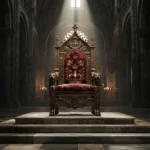
Shadow symbolism has fascinated people for centuries because a shadow is both familiar and mysterious. It appears whenever light meets an object, yet its deeper meaning can suggest hidden emotions, the unknown, mystery, protection, or the parts of ourselves we do not always acknowledge.
Across spirituality, religion, psychology, literature, art, and dreams, shadows can represent very different ideas depending on context. Sometimes they symbolize fear or darkness; at other times, they suggest self-awareness, transformation, memory, or the contrast that makes light visible.
Understanding shadow symbolism is therefore less about finding one fixed definition and more about exploring what the shadow represents in a particular setting.
Shadow Symbolism Meaning (Clear Definition)
Shadow symbolism refers to the use of shadows as symbols representing hidden aspects of life, the unknown, unconscious thoughts, mystery, fear, memory, protection, or the contrast between opposing forces.
In simple terms, a shadow often symbolizes something that exists beneath the visible surface.
A shadow can represent:
- The hidden or unknown
- Unconscious thoughts and emotions
- Fear and uncertainty
- Mystery and secrecy
- The past or lingering memories
- Self discovery
- Transformation and personal growth
- The contrast between darkness and light
- A concealed side of human nature
- Protection or shelter in certain contexts
The meaning changes according to the situation. A threatening shadow in a story may symbolize fear, while a person’s shadow in a reflective artwork may represent self-awareness or an overlooked part of the personality.
What Does Shadow Symbolism Represent?
Shadow symbolism commonly represents the relationship between what is visible and what remains hidden.
Unlike darkness itself, a shadow depends on light. Without light, there is no ordinary shadow. This makes the shadow a particularly powerful symbol of contrast, balance, and duality.
1. The Hidden Self
A shadow may represent thoughts, emotions, desires, or experiences that a person keeps out of conscious awareness.
It can symbolize the parts of ourselves that are difficult to accept or understand.
2. Mystery and the Unknown
Because a shadow can obscure details and create uncertainty, it is often associated with mystery.
In stories, a shadowy figure may suggest that something has not yet been revealed.
3. Fear
Shadows can make ordinary objects appear unfamiliar or threatening. For this reason, they frequently symbolize anxiety, danger, uncertainty, or fear of the unknown.
4. The Past
A shadow can also represent something that follows us. Memories, regrets, unresolved experiences, or previous decisions may metaphorically “cast a shadow” over the present.
5. Self-Awareness
Not every shadow symbol is negative. Recognizing one’s shadow can suggest honesty and self understanding.
The image can encourage a person to acknowledge uncomfortable feelings rather than simply ignoring them.
6. Duality and Balance
Shadow symbolism often highlights opposites such as:
| Shadow Symbol | Possible Meaning |
|---|---|
| Dark shadow | Mystery, fear, uncertainty |
| Personal shadow | Hidden self or unconscious feelings |
| Long shadow | Lasting influence or the past |
| Moving shadow | Change, transition, uncertainty |
| Shadow behind a person | Memory, influence, or unresolved experience |
| Protective shadow | Shelter, privacy, security |
| Shadow beside light | Duality, balance, contrast |
These meanings are interpretive rather than universal. Cultural background and personal experience can significantly change what a particular shadow represents.
Spiritual Meaning of Shadow Symbolism
Spiritually, shadow symbolism can point toward inner reflection, transformation, hidden truths, and the process of becoming more aware.
A shadow may remind us that life contains both visible and invisible dimensions. What we see on the surface does not always tell the whole story.
Shadow as Inner Reflection
A shadow can symbolize the unexplored parts of the inner world. It may represent emotions or experiences that deserve attention instead of avoidance.
In this interpretation, encountering one’s shadow becomes an invitation to reflect.
Shadow as Transformation
Shadows change as the position of light changes. They become longer, shorter, larger, or smaller.
This makes them useful symbols for personal transformation. What once seemed overwhelming may look different as circumstances and perspective change.
Shadow as Hidden Wisdom
Some spiritual interpretations view darkness not simply as evil but as a space of uncertainty, stillness, and introspection.
A shadow can therefore symbolize something not yet understood rather than something inherently bad.
Shadow and the Search for Balance
The relationship between light and shadow can also represent balance.
Instead of suggesting that darkness must always be eliminated, shadow symbolism can encourage people to recognize complexity. Growth may involve understanding difficult experiences alongside positive ones.
Biblical / Religious Meaning of Shadow Symbolism
Shadow imagery appears frequently in biblical and religious language, although its meaning depends heavily on the passage and context.
In biblical texts, a shadow can symbolize protection, shelter, temporary earthly life, or the presence and care of God. For example, biblical poetry sometimes describes finding refuge under a protective shadow.
At the same time, shadows can be associated with mortality and the temporary nature of human life. Expressions involving the “shadow of death” convey danger, suffering, or the nearness of death.
The Bible therefore does not assign one universal meaning to every shadow.
Religious traditions beyond Christianity also use darkness, shade, and shadow imagery in different ways. Some traditions associate shadows with mystery, spiritual testing, the unseen world, or the contrast between ignorance and knowledge.
Because religious symbolism is context-dependent, a specific scripture or tradition should be considered before assigning a definitive interpretation.
Shadow Symbolism in History and Culture
Throughout history, shadows have attracted attention because they occupy an unusual position between physical reality and visual illusion.
Ancient cultures frequently connected light and darkness with cosmic, moral, or spiritual ideas. Shadows could be associated with death, spirits, mystery, or the boundary between the known and unknown.
In some cultural traditions, shadows have been connected with the soul or life force. Such associations contributed to beliefs and stories in which a person’s shadow could carry symbolic or supernatural significance.
Shadows in Folklore
Folklore often uses shadows to create uncertainty.
A shadow that moves unexpectedly, appears larger than its source, or belongs to an unidentified figure can become a symbol of something supernatural or threatening.
This tradition continues in ghost stories, legends, myths, and horror narratives.
Shadows and Mortality
Because a person’s shadow disappears when the light is removed, it can symbolize the temporary nature of existence.
This idea has made shadows useful in reflections on death, aging, memory, and the passage of time.
Shadows as Protection
Shade offers relief from intense sunlight, so shadow can also symbolize protection and refuge.
This is an important reminder that shadow imagery is not necessarily negative. In some contexts, being in the shadow means being sheltered rather than threatened.
Shadow Symbolism in Literature and Art
Writers and artists have long used shadows to communicate ideas that are difficult to express directly.
A shadow can reveal something about a character without explicitly explaining it. It may suggest guilt, fear, secrecy, loneliness, identity, or an internal conflict.
Shadows in Literature
In fiction, a character followed by a shadow may symbolize a past that cannot easily be escaped.
A mysterious shadow can create suspense by suggesting an unseen presence. A distorted shadow can also symbolize the difference between appearance and reality.
Poetry frequently uses shadows to explore memory, loss, time, loneliness, and mortality.
Shadows in Visual Art
Artists can use light and shadow to control attention and emotional atmosphere.
Strong shadows can make a scene feel dramatic or mysterious. Soft shadows can create calmness and depth.
The famous artistic technique of contrasting light and dark is often called chiaroscuro. It has been especially important in painting and photography because it can make figures appear more three-dimensional while creating psychological intensity.
Shadow as a Symbol of Identity
An artist may deliberately show a person’s shadow rather than the person themselves.
This can shift attention from physical identity to memory, absence, or psychological presence.
In this sense, the shadow becomes a visual question: What remains when the visible person is no longer the focus?
Dream Meaning of Shadow Symbolism
Dreams involving shadows can have many possible interpretations, and there is no scientifically established dictionary that assigns one universal meaning to every dream symbol.
The personal circumstances surrounding the dream matter greatly.
A shadow in a dream may potentially relate to:
- Fear or uncertainty
- An unresolved memory
- Something unfamiliar in waking life
- Hidden emotions
- A feeling of being watched or followed
- Personal change
- Self reflection
- A desire to understand something unclear
Seeing Your Own Shadow
Seeing your own shadow may encourage reflection on identity, behavior, or emotions.
It can symbolically suggest becoming more aware of an overlooked part of yourself.
Being Followed by a Shadow
A shadow following you may represent the feeling that something from the past continues to affect the present.
The interpretation becomes more meaningful when you consider what you were feeling during the dream.
A Dark or Frightening Shadow
A frightening shadow may reflect anxiety, uncertainty, or a situation that feels difficult to understand.
It does not necessarily predict something negative.
A Shadow Disappearing
A disappearing shadow may symbolize release, change, clarity, or the end of a period of uncertainty.
Again, the emotional tone of the dream is often more useful than the symbol alone.
Modern Meaning of Shadow Symbolism
Today, shadow symbolism remains common in psychology-inspired discussions, photography, film, fashion, design, social media imagery, and popular culture.
Modern audiences often use shadows to communicate complexity and hidden identity.
A shadowy photograph may create an atmosphere of mystery. A person standing between light and darkness may suggest an internal struggle or transition.
In contemporary storytelling, shadows can also represent the parts of society, history, or personal experience that remain overlooked.
Shadow Symbolism and Psychology
One influential psychological interpretation comes from the work associated with Carl Jung, particularly the concept of the shadow.
In Jungian psychology, the shadow broadly refers to aspects of the personality that are not fully integrated into conscious identity. This concept is more specific than simply saying that every shadow represents evil or negativity.
“Shadow work” has consequently become a popular modern phrase for reflecting on difficult emotions, patterns, and less-acknowledged aspects of oneself.
However, psychological concepts should not be confused with universal symbolic rules. A shadow in a dream, painting, or personal experience does not automatically indicate a particular psychological condition.
Shadow Symbolism in Photography and Film
Filmmakers frequently use shadows to build suspense or communicate emotional tension.
A face partly hidden by shadow can suggest secrecy. A long shadow can make a character appear isolated or emphasize the influence of something unseen.
Photographers similarly use shadows to create contrast, depth, mystery, and visual storytelling.
Shadow Symbolism in Everyday Life
Even outside art and psychology, people use shadow-related language regularly.
Expressions such as “living in someone’s shadow” describe the experience of being overshadowed by another person’s reputation or achievements.
Likewise, saying that an event “cast a shadow” over something usually suggests that it created a lasting negative influence or emotional effect.
These everyday expressions show how deeply shadow symbolism is connected with ideas of influence, memory, contrast, and hidden consequences.
Frequently Asked Questions About Shadow Symbolism
What is the main meaning of shadow symbolism?
Shadow symbolism commonly represents the hidden, unknown, unconscious, mysterious, or overlooked aspects of life. Depending on context, it can also symbolize protection, memory, transformation, or balance.
Is shadow symbolism always negative?
No. Shadows can represent fear and darkness, but they can also symbolize shelter, reflection, mystery, self-awareness, and the need for balance.
What does a shadow symbolize spiritually?
Spiritually, a shadow may symbolize inner reflection, hidden aspects of the self, transformation, uncertainty, or the relationship between light and darkness.
What does seeing a shadow in a dream mean?
A shadow in a dream can have many interpretations, including fear, unresolved emotions, uncertainty, memory, or self reflection. The dreamer’s feelings and personal circumstances are important when considering its meaning.
What does a shadow symbolize in literature?
In literature, shadows often represent secrecy, fear, hidden identity, the past, mortality, internal conflict, or an unseen influence affecting a character.
Conclusion
Shadow symbolism is powerful because a shadow exists between the visible and invisible. It can represent fear and mystery, but it can also suggest protection, memory, self awareness, transformation, and balance.
Rather than having one fixed meaning, the shadow changes according to its surroundings. A frightening shadow may represent uncertainty, while a peaceful shadow may represent shelter.
In art, literature, spirituality, dreams, and everyday language, its deeper message often comes from the relationship between light, darkness, and what lies beneath the surface.

Hi, I’m Kingston Fox, the administrator of Symbolop. I manage our platform and enjoy exploring symbols, their meanings, and cultural significance while ensuring readers have a reliable, engaging experience.