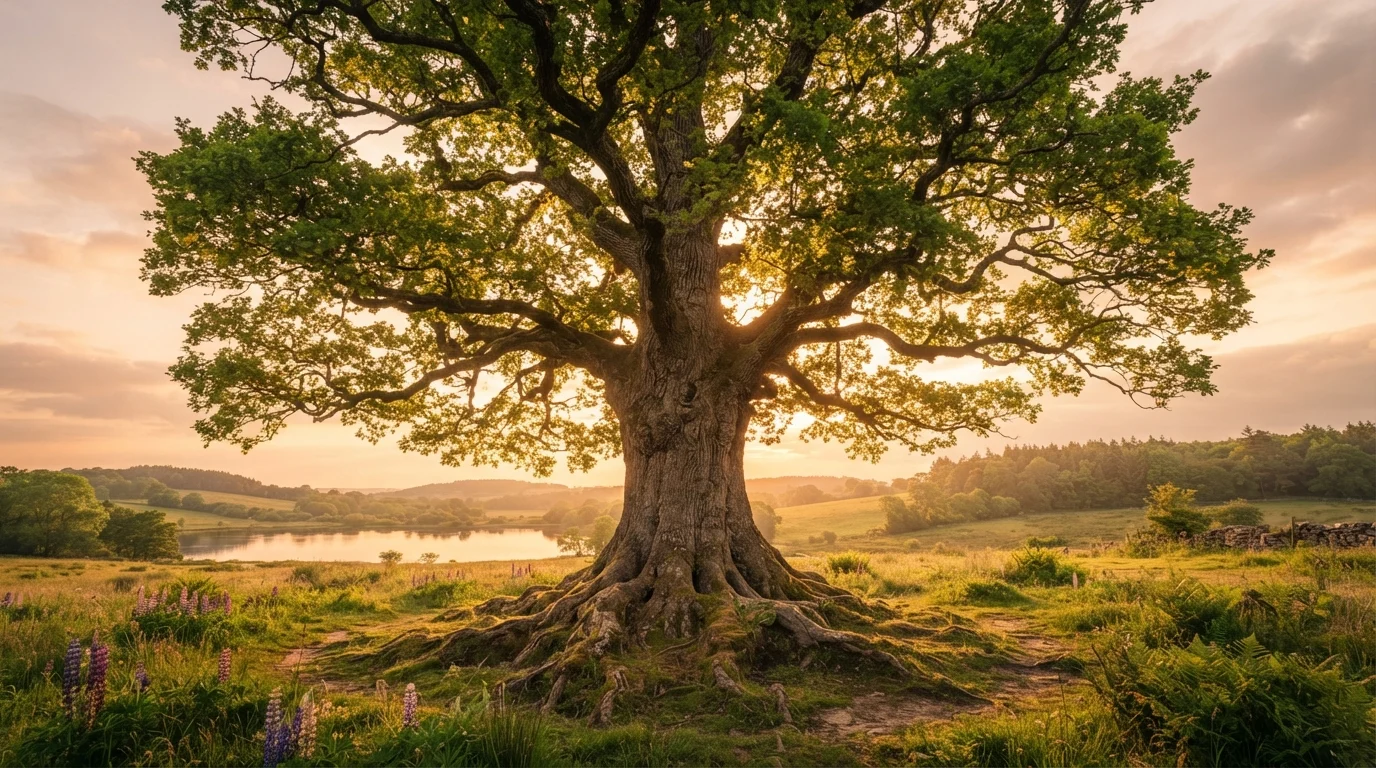
Tree symbolism has fascinated people for centuries because trees connect the earth and sky while representing growth, strength, life, and renewal. Across religions, cultures, literature, and art, trees often symbolize the journey of life and the deep roots that keep us grounded.
If you see a tree in a dream, artwork, tattoo, or spiritual setting, its meaning can change depending on the type of tree, its condition, and the surrounding context.
Understanding tree symbolism can offer a powerful way to reflect on personal growth, resilience, family, and transformation.
Tree Symbolism Meaning: A Clear Definition
Tree symbolism refers to the symbolic meanings associated with trees, including growth, strength, stability, wisdom, connection, renewal, and the cycle of life.
A tree has three important parts that often carry symbolic meaning:
- Roots: Grounding, family, ancestry, stability, and hidden strength
- Trunk: Strength, endurance, identity, and the journey through life
- Branches: Expansion, relationships, opportunities, dreams, and connection
- Leaves: Renewal, change, vitality, and the passing of time
- Fruit: Abundance, achievement, fertility, and the results of one’s efforts
Because trees grow slowly but can survive for decades or even centuries, they naturally represent patience and endurance.
What Does Tree Symbolism Represent?
Tree symbolism can represent many ideas, but some meanings appear repeatedly across cultures and traditions.
| Tree Symbol | Common Meaning |
|---|---|
| Roots | Stability, ancestry, family, grounding |
| Strong trunk | Strength, resilience, identity |
| Branches | Growth, relationships, possibilities |
| Green leaves | Life, renewal, hope |
| Falling leaves | Change, release, transformation |
| Fruit | Abundance, success, fulfillment |
| Ancient tree | Wisdom, longevity, history |
| Tree of life | Connection, balance, existence |
Growth and Personal Development
Trees begin as small seeds and gradually become strong, living structures. For this reason, they often symbolize personal growth and the gradual development of wisdom.
Strength and Resilience
A tree can withstand wind, rain, heat, and cold while continuing to grow. This makes it a powerful symbol of resilience and the ability to remain strong during difficult times.
Family and Ancestry
The roots of a tree are often compared with family heritage. Just as roots support a tree, family history and relationships can provide people with a sense of identity and belonging.
Balance and Connection
A tree exists between the earth and sky. Its roots reach downward while its branches reach upward, making it a natural symbol of balance, connection, and harmony.
Renewal and Transformation
Trees change with the seasons. They grow leaves, lose them, become dormant, and begin again. This cycle represents transformation, endings, new beginnings, and renewal.
Spiritual Meaning of Tree Symbolism
Spiritually, tree symbolism is often connected with grounding, wisdom, connection, protection, renewal, and spiritual growth.
The roots can represent a person’s connection to their origins and inner self. The trunk can symbolize the present moment, while branches reaching toward the sky may represent aspirations, spiritual awareness, or a connection with something greater.
Trees can also symbolize the importance of remaining grounded while continuing to grow.
Tree Symbolism and Spiritual Growth
A tree does not rush its development. It grows gradually, season after season. This can serve as a spiritual reminder that meaningful growth often happens slowly.
Seeing a tree may therefore encourage patience, inner stability, and trust in the natural process of change.
Biblical and Religious Meaning of Tree Symbolism
Trees have significant symbolic roles in several religious traditions, particularly Christianity and Judaism.
In the Bible, trees can represent life, knowledge, prosperity, righteousness, blessing, and spiritual consequences. The Garden of Eden includes the Tree of Life and the Tree of the Knowledge of Good and Evil, making trees central to one of the Bible’s foundational narratives.
The image of a flourishing tree is also used to describe a person who is spiritually grounded and fruitful.
In Psalm 1, for example, a righteous person is compared to a tree planted beside streams of water. The image emphasizes stability, nourishment, and the ability to produce fruit.
Trees also appear symbolically in other religious and philosophical traditions. The Bodhi tree, for instance, is closely associated with the Buddha’s enlightenment, making it an important symbol of awakening and spiritual understanding in Buddhism.
Tree Symbolism in History and Culture
Trees have played an important role in human culture since ancient times.
Many societies viewed particular trees as sacred or connected them with gods, spirits, ancestors, or supernatural forces. Groves of trees were sometimes treated as special places for ceremonies and spiritual gatherings.
The Tree of Life
The Tree of Life is one of the most recognizable examples of tree symbolism. Although its interpretation differs across cultures, it commonly represents interconnectedness, life, creation, family, and the relationship between different parts of existence.
Celtic Tree Symbolism
In Celtic traditions, trees were often associated with nature, protection, wisdom, and spiritual significance. Different tree species could carry different meanings, and forests and sacred groves held important cultural roles.
Norse Mythology
Norse mythology contains one of the world’s most famous cosmic trees: Yggdrasil. This enormous tree connects different realms of existence and represents the structure and interconnectedness of the cosmos.
Trees in Indigenous Traditions
Many Indigenous cultures have developed deep relationships with trees and forests. Trees can represent ancestors, community, survival, nourishment, protection, and a respectful relationship with nature.
Because cultural interpretations differ, tree symbolism should always be understood within its specific historical and cultural context.
Tree Symbolism in Literature and Art
Trees are powerful visual and literary symbols because they can communicate complex ideas without words.
In literature, an ancient tree may represent memory or wisdom. A dying tree can suggest loss or environmental destruction, while a flowering tree may symbolize hope, beauty, or a new beginning.
Artists also use trees to represent emotional states. A lonely tree standing in an empty landscape might suggest isolation, while a large tree surrounded by people can evoke community and belonging.
The tree’s changing appearance makes it especially useful for representing the passage of time. Spring growth, summer fullness, autumn leaves, and winter branches can mirror the stages of human life.
Dream Meaning of Tree Symbolism
Dreaming about a tree can have different meanings depending on the tree’s condition and what happens in the dream.
Dreaming of a Green Tree
A healthy green tree may symbolize growth, hope, vitality, and positive development.
Dreaming of a Large or Ancient Tree
A massive or ancient tree can represent wisdom, stability, heritage, or a desire for security.
Dreaming of Tree Roots
Roots may symbolize family, personal identity, emotional grounding, or a need to reconnect with your origins.
Dreaming of a Fallen Tree
A fallen tree may represent an ending, major change, loss, or the conclusion of an important period in life. However, it can also symbolize making space for something new.
Dreaming of a Tree Full of Fruit
A fruit-bearing tree can symbolize abundance, achievement, creativity, or the rewards of patience and effort.
Dream symbolism is personal, so the emotions you experienced during the dream are often just as important as the tree itself.
Modern Meaning of Tree Symbolism
Today, tree symbolism remains highly relevant.
Trees frequently appear in tattoos, jewelry, home décor, logos, memorials, environmental movements, and personal artwork. The meaning is often connected with identity, family, strength, healing, or personal transformation.
A tree of life tattoo, for example, may represent family connections, personal growth, resilience, or the interconnected nature of life.
Trees are also powerful symbols of environmental awareness. In a world increasingly concerned with climate change and habitat loss, the tree can represent nature, sustainability, responsibility, and the importance of protecting the natural world.
Common Tree Symbolism by Tree Type
Different tree species can carry distinctive symbolic associations.
- Oak: Strength, endurance, courage, and longevity
- Willow: Flexibility, emotion, healing, and resilience
- Pine: Longevity, peace, persistence, and endurance
- Cedar: Protection, strength, purification, and wisdom
- Olive tree: Peace, abundance, reconciliation, and prosperity
- Cherry blossom tree: Beauty, impermanence, renewal, and the fleeting nature of life
- Birch: New beginnings, cleansing, and renewal
These meanings are not universal rules. They can vary depending on culture, religion, personal experience, and artistic context.
Why Are Trees Such Powerful Symbols?
Trees are powerful symbols because they mirror many aspects of human existence.
They begin from something small, grow gradually, develop strong foundations, experience changing seasons, and eventually return their nutrients to the natural world.
Their roots remind us where we come from. Their trunks represent the strength we develop. Their branches suggest the possibilities ahead.
In this sense, tree symbolism is ultimately about life itself: where we come from, how we grow, what we endure, and what we leave behind.
Frequently Asked Questions About Tree Symbolism
What is the main meaning of tree symbolism?
The main meanings of tree symbolism include growth, strength, stability, wisdom, family, renewal, and connection. Trees often represent the journey and cycles of life.
What does a tree symbolize spiritually?
Spiritually, a tree can symbolize grounding, spiritual growth, wisdom, balance, protection, and connection between the physical and spiritual worlds.
What does the Tree of Life symbolize?
The Tree of Life commonly symbolizes interconnectedness, creation, family, growth, and the unity of life. Its meaning varies across religious and cultural traditions.
What does a tree symbolize in a dream?
A tree in a dream can symbolize personal growth, stability, family, transformation, or renewal. Its meaning depends on the tree’s condition and the emotions experienced in the dream.
What does a tree tattoo symbolize?
A tree tattoo can represent strength, family roots, personal growth, resilience, wisdom, or a connection to nature. A Tree of Life design often emphasizes interconnectedness and family.
Conclusion
Tree symbolism offers a timeless reminder that growth requires both strong roots and the courage to reach upward.
From ancient traditions and religious stories to dreams, tattoos, literature, and modern environmental movements, trees continue to represent strength, wisdom, connection, renewal, and the enduring journey of life.

I’m Sophia Brown, passionate about exploring symbols, their meanings, and cultural significance. I enjoy researching history, spirituality, and traditions, creating clear, engaging articles that inspire curiosity and deeper understanding for every reader.