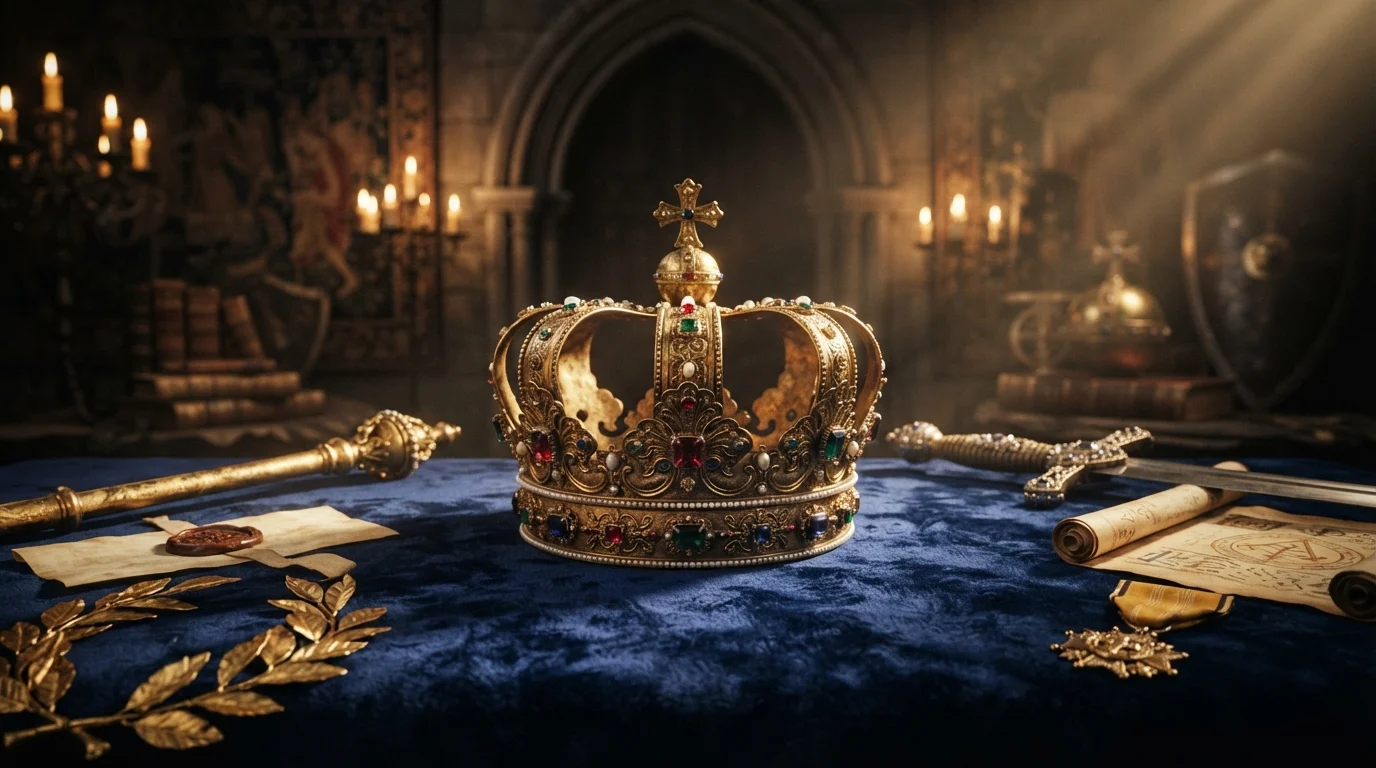
Crown symbolism is closely associated with royalty, authority, achievement, dignity, and spiritual elevation. Across different cultures and historical periods, the crown has represented more than political power it can symbolize honor, responsibility, victory, wisdom, and the highest expression of personal potential.
Because crowns appear in religious imagery, literature, dreams, art, ceremonies, and modern design, their meaning can change depending on context.
A crown worn by a monarch may suggest legitimate authority, while a crown appearing in a dream may represent confidence, recognition, ambition, or a desire for greater respect.
Crown Symbolism Meaning (Clear Definition)
Crown symbolism refers to the meanings and ideas associated with a crown as a visual or cultural symbol. Most commonly, a crown represents authority, power, status, honor, achievement, leadership, and victory.
At a deeper level, the crown can represent the idea of reaching a peak. Just as a crown sits above the head, it is often connected with higher status, elevated consciousness, wisdom, or spiritual accomplishment.
The exact meaning depends on the setting, material, design, and cultural tradition.
| Crown Symbolism | Common Meaning |
|---|---|
| 👑 Authority | Leadership, sovereignty, and influence |
| Victory | Triumph after overcoming challenges |
| Honor | Recognition, dignity, and respect |
| Achievement | Reaching an important goal |
| Wisdom | Mature judgment and higher understanding |
| Responsibility | The duties that come with leadership |
| Spiritual elevation | Higher consciousness or divine reward |
What Does Crown Symbolism Represent?
A crown can represent several interconnected ideas:
- Power and authority: Crowns have historically identified rulers and people with political power.
- Leadership: A crown may symbolize the responsibility to guide and protect others.
- Victory: Crowns can represent triumph, especially after struggle or competition.
- Honor and recognition: Receiving a crown can signify that someone has earned distinction.
- Achievement: The image of a crown often communicates reaching the highest level in a particular field.
- Dignity: A crown can symbolize self-respect, confidence, and personal worth.
- Responsibility: Traditional crowns are not only symbols of privilege; they can also represent the burden of leadership.
This dual meaning is important. A crown may suggest privilege and responsibility at the same time.
Spiritual Meaning of Crown Symbolism
Spiritually, the crown can represent higher awareness, enlightenment, divine connection, and the completion of an inner journey.
The position of a crown above the head naturally connects it with thoughts, consciousness, and higher understanding. In some spiritual traditions, the crown therefore becomes an image of transcendence the movement beyond ordinary concerns toward a greater sense of purpose.
The crown can also symbolize spiritual reward. Someone who has remained patient, compassionate, faithful, or courageous through hardship may be described symbolically as receiving a crown.
Another interpretation is inner sovereignty. Rather than ruling over other people, the spiritual crown can represent learning to govern one’s own thoughts, emotions, desires, and choices.
Crown symbolism may spiritually suggest:
- Higher consciousness
- Wisdom and enlightenment
- Divine favor or reward
- Personal transformation
- Inner authority
- Completion of a spiritual journey
- Connection with something greater than oneself
Biblical / Religious Meaning of Crown Symbolism
Crown imagery has an important place in biblical and Christian symbolism. Scripture uses several different ideas of crowns, including crowns associated with victory, righteousness, life, glory, and spiritual reward.
In the New Testament, crowns can symbolize a reward associated with faithful endurance and spiritual perseverance. For example, the “crown of life” is associated with remaining faithful through trials, while other passages use crowns as images of imperishable reward and glory.
Crowns also appear in Christian religious art. A saint shown with a crown may be represented as having attained heavenly glory, while the crown of Christ carries different theological meanings depending on the image.
The crown of thorns is especially significant. Rather than representing ordinary royal power, it symbolizes Christ’s suffering, humiliation, and sacrifice. This creates an important contrast within crown symbolism: something normally associated with glory can also become a symbol of suffering.
Other religious traditions also use crowns or crown-like objects to communicate sacred authority, spiritual status, divine blessing, or ritual importance. Their meanings should be understood within their particular traditions rather than treated as universal.
Crown Symbolism in History and Culture
Crowns have been used for thousands of years to distinguish rulers and communicate social or sacred authority.
Ancient civilizations used elaborate headpieces and crowns to visually establish the status of kings, queens, priests, and other important figures. In European history, coronation crowns became powerful symbols of monarchy and continuity.
Different crown designs could communicate different forms of authority. Materials such as gold and precious stones emphasized wealth and prestige, while particular shapes and ornaments could connect a ruler with a dynasty, territory, religion, or historical tradition.
The crown therefore became a form of visual language. Before a person even spoke, the crown could communicate “this person holds a special position.”
At the same time, crown symbolism has often been questioned or challenged. In stories and historical movements, removing a crown can symbolize the loss of power, while placing a crown on someone can symbolize the transfer or recognition of authority.
Crown Symbolism in Literature and Art
Writers and artists frequently use crowns because they carry immediate emotional and symbolic associations.
In literature, a crown can represent:
- The desire for power
- The responsibilities of leadership
- Ambition and temptation
- Legitimate or illegitimate authority
- Victory and achievement
- Loss of status
- The temporary nature of worldly power
A character seeking a crown may actually be seeking recognition, control, security, or validation.
Artists can similarly use crowns to communicate status without explaining it directly. A golden crown may emphasize wealth and glory, while a broken or fallen crown can suggest defeat, exile, lost authority, or the collapse of an old order.
The crown can therefore be both an object of achievement and a warning about the cost of power.
Dream Meaning of Crown Symbolism
Dreaming about a crown may relate to recognition, confidence, achievement, leadership, ambition, or personal worth.
The meaning depends heavily on what happens in the dream.
Common crown dreams and interpretations
Wearing a crown:
May symbolize confidence, recognition, leadership, or a desire to be respected.
Receiving a crown:
Can represent appreciation, achievement, success, or acknowledgment from others.
Losing a crown:
May reflect fears about losing status, confidence, control, or something you have worked hard to achieve.
A broken crown:
Can symbolize disappointment, weakened authority, or the realization that external status does not guarantee happiness.
Seeing a golden crown:
Often suggests success, abundance, prestige, or something perceived as highly valuable.
Giving someone a crown:
May represent admiration, respect, or recognizing another person’s authority or accomplishments.
Dream symbolism is personal rather than fixed. Your emotions during the dream and your current circumstances can be more meaningful than any universal interpretation.
Modern Meaning of Crown Symbolism
Today, the crown extends far beyond traditional monarchy.
It frequently appears in logos, fashion, jewelry, tattoos, entertainment, sports celebrations, and social media imagery. In these settings, it can symbolize confidence, excellence, individuality, success, or self-worth.
The phrase “wear your crown” is often used metaphorically to encourage someone to recognize their value and carry themselves with confidence.
Crowns are also used to celebrate achievement. A winner may metaphorically “take the crown,” meaning they have reached the top of a competition or field.
In contemporary culture, the symbol can therefore shift from authority over others to authority over oneself. It may communicate a message such as: know your worth, recognize your accomplishments, and take responsibility for your life.
Crown Symbolism in Different Contexts
The same crown can communicate very different ideas depending on where it appears.
- Royal crown: sovereignty, monarchy, authority, and status
- Gold crown: wealth, achievement, excellence, and prestige
- Crown of thorns: suffering, sacrifice, humility, and Christian devotion
- Broken crown: lost power, defeat, change, or fallen status
- Crown tattoo: individuality, confidence, ambition, or personal achievement
- Crown in dreams: recognition, self-esteem, ambition, or responsibility
- Crown in jewelry: elegance, status, confidence, or personal identity
- Crown in religious art: divine authority, glory, reward, or spiritual significance
Frequently Asked Questions About Crown Symbolism
What is the main meaning of a crown?
The main meaning of a crown is authority, honor, leadership, achievement, and elevated status. Its interpretation can change according to cultural, religious, artistic, or personal context.
What does a crown symbolize spiritually?
Spiritually, a crown can symbolize higher consciousness, wisdom, divine reward, transformation, and inner authority. It may represent reaching a higher stage of personal or spiritual development.
What does a crown symbolize in Christianity?
In Christianity, crowns can symbolize spiritual reward, victory, righteousness, glory, and eternal life. The crown of thorns has a distinct meaning connected with Christ’s suffering and sacrifice.
What does wearing a crown symbolize?
Wearing a crown can symbolize authority, confidence, achievement, recognition, or responsibility. In a personal or symbolic context, it may suggest recognizing one’s own value.
What does a crown mean in a dream?
A crown in a dream may symbolize recognition, ambition, confidence, success, or concerns about status and responsibility. The dreamer’s emotions and circumstances help determine the most relevant interpretation.
Conclusion
Crown symbolism brings together ideas of power, achievement, dignity, victory, responsibility, and spiritual elevation.
Although crowns traditionally identified rulers, their modern meaning can be much more personal: recognizing your worth, accepting responsibility, overcoming challenges, and striving toward your highest potential.
If appearing in religion, history, dreams, literature, or everyday design, the crown remains a powerful reminder that true elevation can involve both honor and responsibility.

I’m Beau Warren, a passionate writer exploring the meanings behind symbols, dreams, colors, animals, and traditions. I enjoy creating well-researched, engaging content that inspires curiosity and deeper understanding every day.