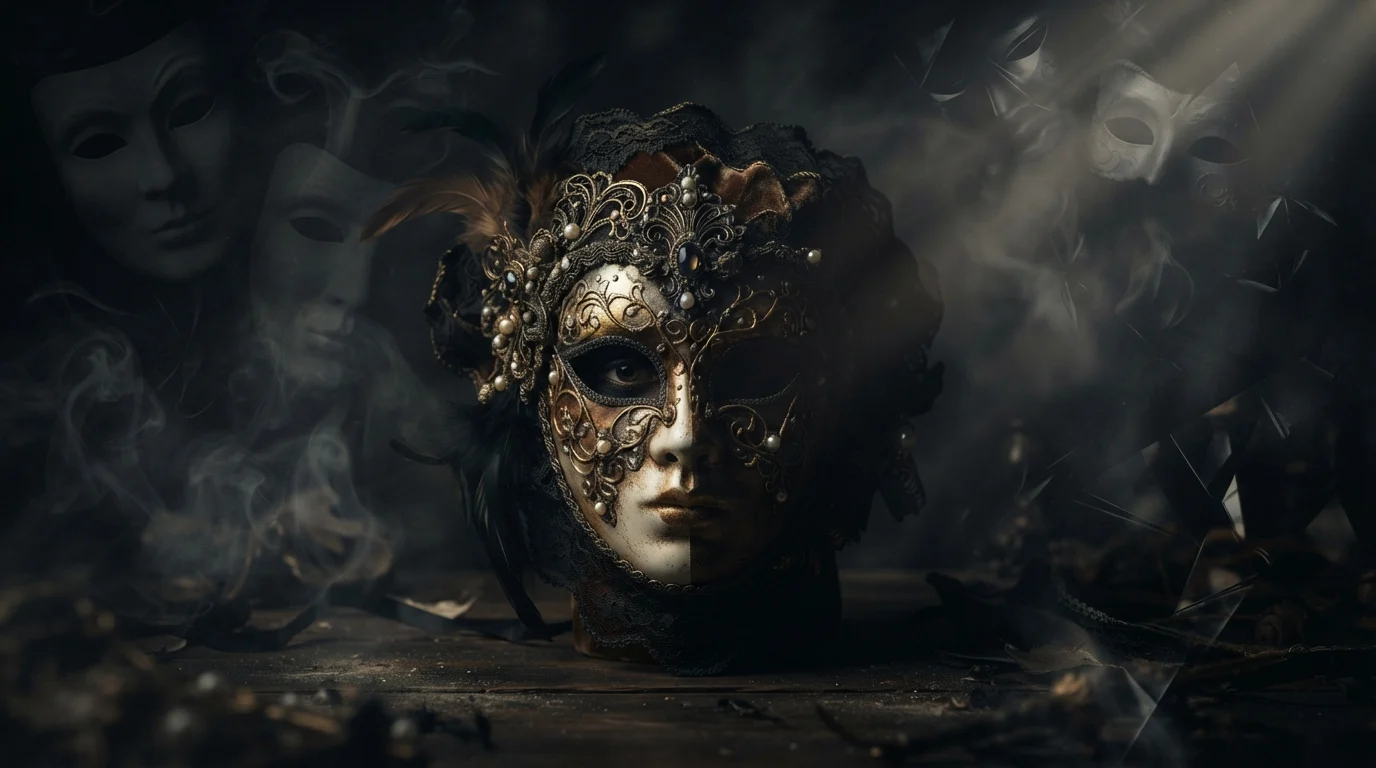
Mask symbolism explores the meanings we attach to masks as objects that conceal, reveal, transform, or protect identity. Across cultures and centuries, masks have represented mystery, disguise, ritual, transformation, protection, social roles, and the hidden parts of the self.
If seen in art, dreams, ceremonies, theater, or everyday life, a mask often invites us to ask an important question: What is being hidden, and what is being revealed?
Mask Symbolism Meaning (Clear Definition)
Mask symbolism refers to the symbolic meanings associated with wearing, creating, seeing, or removing a mask. A mask can represent both concealment and expression, making it one of the most complex symbols of identity.
In simple terms, a mask commonly symbolizes:
- Hidden identity — keeping one’s true self private
- Protection — creating emotional, spiritual, or physical distance
- Transformation — becoming a different version of oneself
- Mystery — concealing information or intentions
- Social identity — playing a particular role in society
- Deception — hiding the truth or presenting a false appearance
- Self-expression — revealing feelings indirectly
- Ritual and spirituality — connecting with ancestors, spirits, or sacred traditions
The meaning depends heavily on context. A ceremonial mask may symbolize spiritual transformation, while a theatrical mask may represent performance and different human emotions.
What Does Mask Symbolism Represent?
At its deepest level, a mask represents the relationship between appearance and identity.
Human beings often behave differently depending on where they are and who they are with. In this sense, a symbolic mask can represent the roles people adopt in families, workplaces, friendships, and communities.
A mask may represent:
| Symbolic Meaning | What It Can Suggest |
|---|---|
| Concealment | Something is being kept private |
| Protection | A person wants emotional or physical safety |
| Transformation | A change in identity or circumstances |
| Mystery | Something remains unknown |
| Deception | Appearance does not match reality |
| Performance | Someone is fulfilling a social role |
| Freedom | An alternative identity can be explored |
| Inner self | Hidden emotions or characteristics |
This dual nature makes mask symbolism especially powerful. The mask can hide the face while simultaneously communicating something about the person behind it.
Spiritual Meaning of Mask Symbolism
Spiritually, masks can symbolize transformation, sacred identity, protection, and contact with the unseen.
In traditional ritual contexts, a mask may allow the wearer to represent an ancestor, deity, animal, spirit, or supernatural being. The mask therefore becomes more than decoration—it can mark a transition from an ordinary social identity into a ritual role.
A spiritual interpretation of a mask may point toward:
- Transformation: entering a new stage of life
- Protection: guarding oneself from harmful influences
- Ancestral connection: honoring previous generations
- Sacred identity: taking on a spiritual role
- Mystery: recognizing that not everything can be understood immediately
- Inner exploration: examining hidden aspects of oneself
In personal symbolism, seeing a mask can encourage reflection on if you are hiding something from yourself or others or if you are protecting something valuable.
Biblical / Religious Meaning of Mask Symbolism
The Bible does not establish masks as a universal symbolic object in the same way that certain recurring biblical images, such as light, water, or bread, are used.
However, the broader idea behind a mask concealing one’s true condition or presenting an outward appearance different from the inward reality can be connected to biblical themes concerning sincerity, hypocrisy, truth, and inner character.
Christian interpretations may therefore associate a metaphorical mask with:
- Hypocrisy
- False appearances
- Concealed intentions
- Spiritual dishonesty
- The difference between outward behavior and inward character
At the same time, a mask does not automatically have a negative religious meaning. Its interpretation depends on the specific tradition, artwork, ceremony, dream, or personal context in which it appears.
Mask Symbolism in History and Culture
Masks have appeared in many societies for purposes ranging from religious ceremonies to theater and celebration.
Ancient civilizations used masks in funerary, theatrical, ceremonial, and ritual settings. In ancient Greek theater, masks helped performers portray different characters and emotions, while ritual traditions in various parts of Africa, Asia, Oceania, and the Americas developed distinctive mask forms connected with community traditions and spiritual practices.
Masks have also appeared in:
- Religious ceremonies
- Funerary traditions
- Initiation rituals
- Theater
- Festivals
- Dance
- Storytelling
- Royal and ceremonial events
- Carnival traditions
- Contemporary performance art
Because traditions differ considerably, it is important not to treat every cultural mask as having the same meaning.
Historically, the mask has often created a temporary separation between the ordinary person and a particular role, character, spirit, or social identity.
Mask Symbolism in Literature and Art
Artists and writers frequently use masks to explore the difference between who someone appears to be and who they really are.
In literature, a masked character can create suspense because readers cannot immediately identify the person’s intentions or identity. The mask may symbolize secrecy, hidden motives, forbidden desires, or an alternate identity.
In visual art, masks can represent psychological complexity. A painted face may appear calm while the mask beneath it suggests fear, sadness, anger, or mystery.
Common artistic themes include:
- The hidden self
- Dual identity
- Secrets
- Social performance
- Emotional repression
- Transformation
- Freedom from ordinary identity
The famous theatrical association of comedy and tragedy also demonstrates how masks can symbolize the contrasting emotions people experience throughout life.
Dream Meaning of Mask Symbolism
Dreams involving masks are often interpreted symbolically rather than literally. Their meaning depends on the dreamer’s emotions, circumstances, and the specific events taking place in the dream.
Seeing a mask may suggest that something about identity, honesty, privacy, or emotional expression deserves attention.
Some possible interpretations include:
- Wearing a mask: feeling the need to hide your true feelings
- Removing a mask: becoming more authentic or revealing something important
- Someone else wearing a mask: uncertainty about another person’s intentions
- A frightening mask: anxiety about something unfamiliar or concealed
- A beautiful mask: attraction to appearances, mystery, or an idealized identity
- A broken mask: a secret or hidden truth coming to light
- Making a mask: consciously creating a new identity or public image
Dream symbolism is personal rather than fixed. Your emotional reaction to the mask is often more meaningful than the mask itself.
Modern Meaning of Mask Symbolism
In modern life, masks continue to symbolize identity and concealment, but their meanings have expanded.
A mask may represent the public persona someone presents while keeping private emotions hidden. Social media and digital communication have made this idea particularly relevant because people can carefully construct how they appear to others.
Modern mask symbolism can therefore relate to:
- Online identity
- Privacy
- Emotional boundaries
- Self protection
- Social expectations
- Personal reinvention
- Authenticity
- Hidden emotions
The symbol can be both positive and negative. Wearing a metaphorical mask may help someone navigate difficult circumstances, but constantly hiding one’s authentic feelings can also create emotional distance.
Common Mask Symbolism and Their Meanings
Here is a quick summary of the most common interpretations:
- White mask: purity, neutrality, emptiness, or a blank identity
- Black mask: mystery, secrecy, authority, or the unknown
- Golden mask: status, power, honor, or immortality
- Broken mask: revelation, vulnerability, or an identity falling apart
- Smiling mask: hidden sadness, performance, or emotional concealment
- Theater mask: performance, contrasting emotions, or social roles
- Animal mask: connection with animal qualities, nature, or transformation
- Ceremonial mask: ritual identity, spirituality, or cultural tradition
These meanings are not universal rules. Color and design can carry very different meanings in different cultural contexts.
FAQs About Mask Symbolism
What does a mask symbolize spiritually?
A mask can symbolize transformation, protection, sacred identity, mystery, or connection with spiritual traditions. Its meaning depends on the specific cultural or personal context.
What does wearing a mask symbolize?
Wearing a mask can symbolize hiding one’s identity, protecting oneself, adopting a social role, or expressing a part of oneself that is normally concealed.
What does a broken mask symbolize?
A broken mask often represents revelation, vulnerability, or the collapse of a false appearance. It may suggest that something previously hidden is becoming visible.
What does a mask symbolize in dreams?
A mask in a dream may relate to secrecy, identity, emotional protection, or uncertainty about someone’s true intentions. The dreamer’s feelings and circumstances are important when interpreting it.
Is mask symbolism always negative?
No. Masks can symbolize protection, creativity, transformation, ceremony, and self-expression as well as secrecy or deception.
Conclusion
Mask symbolism ultimately revolves around the fascinating tension between what we show and what we hide.
A mask can conceal identity, protect vulnerability, express creativity, mark transformation, or connect a person with cultural and spiritual traditions. Its most meaningful interpretation comes from understanding the context and asking what lies behind the mask.

I’m Sophia Brown, passionate about exploring symbols, their meanings, and cultural significance. I enjoy researching history, spirituality, and traditions, creating clear, engaging articles that inspire curiosity and deeper understanding for every reader.