Throne symbolism is deeply connected with power, authority, leadership, dignity, and divine presence. Across history, thrones have represented far more than a place to sit. They often symbolize who holds power, who deserves respect, and who has the right to rule.
From ancient kingdoms to religious imagery, literature, dreams, and modern culture, the throne can carry both positive and cautionary meanings. It may represent wisdom and responsibility, but it can also symbolize pride, control, ambition, or the desire for recognition.
Understanding throne symbolism helps reveal why this powerful image continues to appear in stories, artwork, spiritual traditions, and dreams.
Throne Symbolism Meaning (Clear Definition)
Throne symbolism represents authority, sovereignty, power, leadership, status, and the responsibility associated with ruling or holding an influential position.
A throne is traditionally associated with a ruler or powerful figure. Because of this connection, it has become a universal symbol of social and political authority.
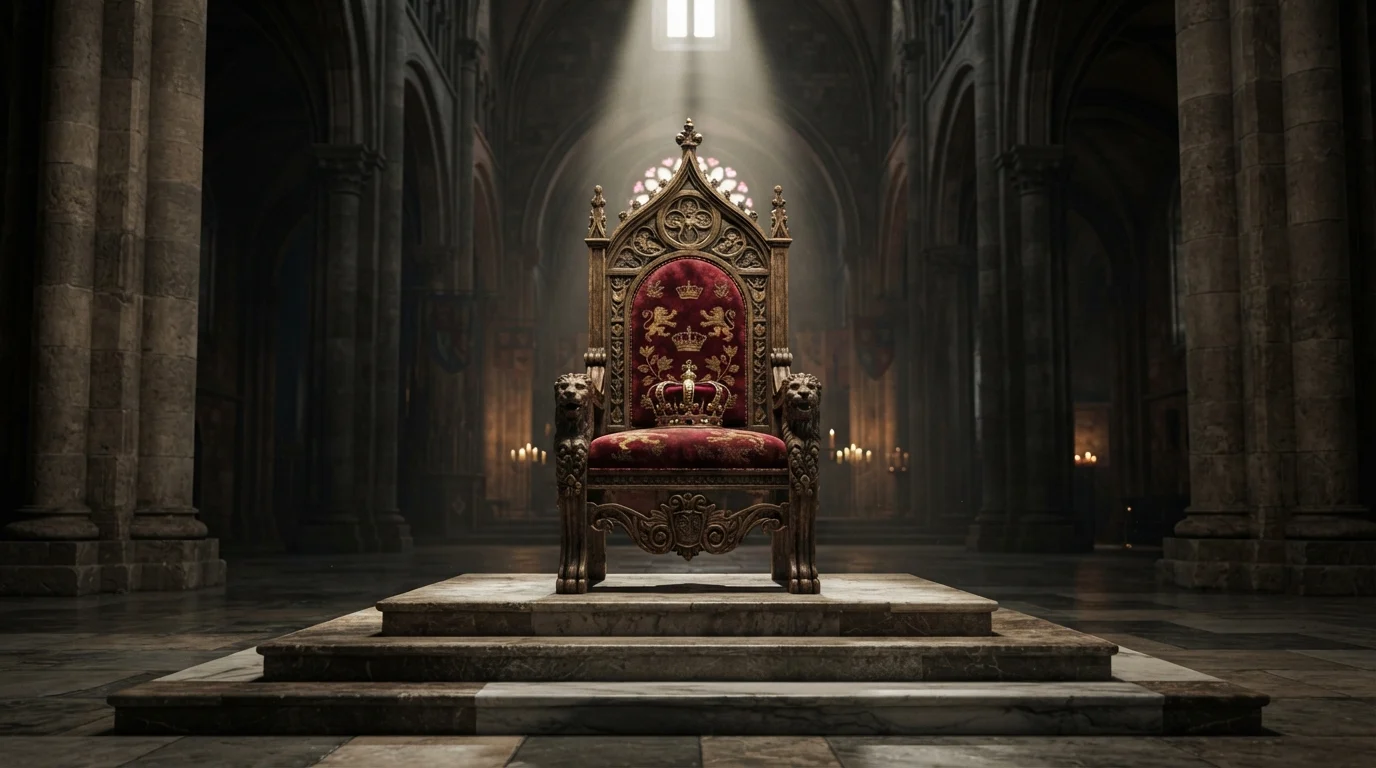
However, the meaning of a throne depends on its context. A magnificent throne may suggest glory and achievement, while an empty throne might represent lost authority, absence, or an opportunity waiting to be claimed.
At a deeper level, the throne can symbolize the center of power the position from which decisions are made and influence is exercised.
Common meanings of throne symbolism
| Symbolic Meaning | What It Can Represent |
|---|---|
| Power | Control, influence, or strength |
| Authority | The right to lead or make decisions |
| Sovereignty | Independence and supreme rule |
| Leadership | Responsibility for others |
| Status | Prestige, honor, and social position |
| Divine authority | Sacred or heavenly power |
| Ambition | Desire for recognition or influence |
| Responsibility | The burden that comes with power |
What Does Throne Symbolism Represent?
Throne symbolism can represent several connected ideas.
Authority: A throne identifies the person who possesses recognized power.
Leadership: It can symbolize the responsibility of guiding others and making important decisions.
Sovereignty: A throne often represents independent or supreme rule.
Honor and status: Historically, elaborate thrones displayed wealth, rank, and prestige.
Responsibility: Power is rarely portrayed as completely effortless. The throne can also symbolize the duties and burdens attached to leadership.
Ambition: In stories and symbolic imagery, seeking a throne may represent a desire to rise in status or obtain control.
This dual meaning is important. The throne can represent both the privilege of power and the responsibility that accompanies it.
Spiritual Meaning of Throne Symbolism
Spiritually, a throne often represents higher authority, divine order, sacred power, and the center of spiritual sovereignty.
The image can suggest that there is an ultimate source of order beyond ordinary human influence. In this sense, the throne is not simply a symbol of worldly leadership. It can represent a higher reality or spiritual authority.
A throne may also symbolize the idea of placing something at the center of one’s life. For example, spiritual traditions may use throne imagery to communicate devotion, reverence, or recognition of divine authority.
On a personal level, seeing a throne symbolically can encourage reflection on questions such as:
- What has the greatest authority in my life?
- Am I using influence responsibly?
- Am I seeking power for the right reasons?
- Where should humility balance ambition?
- What values guide my decisions?
Thus, throne symbolism can carry a message about inner authority as well as external power.
Biblical / Religious Meaning of Throne Symbolism
Throne imagery has an important place in biblical and religious symbolism. In the Bible, a throne can signify kingship, judgment, authority, glory, and divine sovereignty.
God is frequently portrayed through throne imagery, emphasizing supreme authority and majesty. The throne therefore becomes a visual expression of divine rule rather than merely a piece of royal furniture.
The concept of a heavenly throne is especially significant in biblical visions. Such imagery communicates ideas of holiness, judgment, worship, and the ultimate authority of God.
Human thrones also appear throughout biblical narratives. They can represent earthly kingdoms and leadership, while contrasting human authority with divine authority.
This gives throne symbolism an important religious dimension: earthly power may be temporary, while divine authority is portrayed as ultimate.
Throne Symbolism in History and Culture
Throughout history, thrones have served as visible representations of political hierarchy.
Kings, queens, emperors, and other rulers often occupied specially designed seats during ceremonies. Their appearance, materials, decorations, and placement could communicate wealth, legitimacy, military strength, or religious significance.
A throne could therefore function almost like a visual statement:
“This person holds authority.”
Different cultures developed their own royal traditions, but the basic symbolic principle remained remarkably consistent.
An elevated throne could physically place a ruler above others, reinforcing the social hierarchy. Gold, precious stones, carved animals, crowns, and other decorative elements could further communicate strength, prosperity, divine favor, or royal heritage.
At the same time, thrones could become symbols of political conflict. Taking, protecting, or losing a throne frequently represents gaining or losing power.
Cultural associations of throne symbolism
- Royalty: Kingship, queenship, and inherited authority
- Empire: Large-scale political control
- Ceremony: Formal recognition of status
- Legitimacy: The accepted right to rule
- Dynasty: Continuity between generations
- Justice: A ruler’s responsibility to judge fairly
- Conflict: Struggles over succession and power
Throne Symbolism in Literature and Art
In literature, the throne is often used as a powerful shorthand for power itself.
A character who wants the throne may actually desire control, recognition, security, or social superiority. A character who rejects the throne may be choosing humility, freedom, sacrifice, or moral principles over power.
An empty throne can be equally meaningful. It may suggest that a kingdom lacks leadership, that a ruler has died, or that a struggle for succession is about to begin.
Artists also use thrones to communicate status. A ruler seated centrally on a magnificent throne can immediately appear powerful and important, while a broken or abandoned throne may suggest decline.
The symbolic contrast between an impressive throne and the person sitting upon it can also explore an important theme: Does possessing power make someone worthy of it?
Dream Meaning of Throne Symbolism
Dreams involving thrones can have several interpretations depending on the dreamer’s circumstances and emotions.
Dreaming of sitting on a throne may symbolize confidence, recognition, leadership, or a desire to have greater control over one’s life.
Dreaming of seeing an empty throne may represent an opportunity, missing leadership, uncertainty, or a position that has become available.
Dreaming of losing a throne may reflect concerns about status, control, achievement, or personal authority.
Dreaming of approaching a throne may symbolize ambition, a major goal, or the desire to reach a higher position.
Dreaming of a broken throne can suggest the collapse of an old power structure, changing circumstances, or the realization that authority is temporary.
Dream interpretation is highly personal, so the emotional atmosphere of the dream matters. Feeling peaceful while sitting on a throne can suggest something very different from feeling frightened or trapped upon it.
Modern Meaning of Throne Symbolism
Today, throne symbolism extends beyond literal monarchy.
The throne can represent personal power, professional success, social influence, leadership, confidence, and self-mastery.
In popular culture, fantasy stories, films, games, fashion, and visual design, thrones continue to communicate prestige and dominance. A throne may symbolize someone who has reached the highest position within a particular world.
There is also a modern psychological interpretation of the symbol. The throne can represent the question of who is “in control” of one’s life.
In this sense, throne symbolism does not always mean ruling other people. It can mean developing self command having the confidence to make decisions, maintain boundaries, and take responsibility for one’s direction.
Yet the symbol still carries a warning. Excessive attachment to status can turn authority into arrogance. The throne therefore remains a symbol of both power and the responsibility to use power wisely.
Positive and Negative Meanings of Throne Symbolism
Throne symbolism can have both empowering and cautionary interpretations.
Positive meanings
- Leadership
- Confidence
- Authority
- Honor
- Achievement
- Wisdom
- Responsibility
- Stability
- Recognition
Negative meanings
- Pride
- Arrogance
- Domination
- Excessive ambition
- Abuse of power
- Vanity
- Control
- Fear of losing status
The surrounding imagery usually determines which interpretation is most appropriate.
A throne surrounded by light and reverence may communicate sacred authority, while a damaged throne in a dark setting may represent the downfall of power.
Frequently Asked Questions About Throne Symbolism
What does a throne symbolize?
A throne commonly symbolizes authority, power, sovereignty, leadership, status, and responsibility. In religious contexts, it can also represent divine authority and judgment.
What does a throne symbolize spiritually?
Spiritually, a throne can represent divine sovereignty, sacred authority, spiritual order, and the highest source of power or guidance.
What does an empty throne symbolize?
An empty throne can symbolize absent leadership, lost authority, an approaching change in power, or an opportunity waiting to be claimed.
What does sitting on a throne symbolize in a dream?
Sitting on a throne in a dream may symbolize confidence, leadership, recognition, ambition, or a desire for greater control. The dreamer’s emotions and personal circumstances can change the interpretation.
Is throne symbolism positive or negative?
Throne symbolism can be either positive or negative. It may represent responsible leadership and achievement, or pride, domination, and an unhealthy desire for power.
Conclusion
Throne symbolism ultimately represents the complex nature of power and authority. It can signify leadership, honor, sovereignty, and divine order, while also reminding us of the dangers of pride and unchecked ambition.
If found in religious imagery, historical traditions, artwork, literature, or dreams, the throne asks an enduring question: How should power be used once it has been gained?
Its deepest symbolism may therefore be less about simply sitting above others and more about understanding the responsibility that comes with having influence.

Hi, I’m Kingston Fox, the administrator of Symbolop. I manage our platform and enjoy exploring symbols, their meanings, and cultural significance while ensuring readers have a reliable, engaging experience.