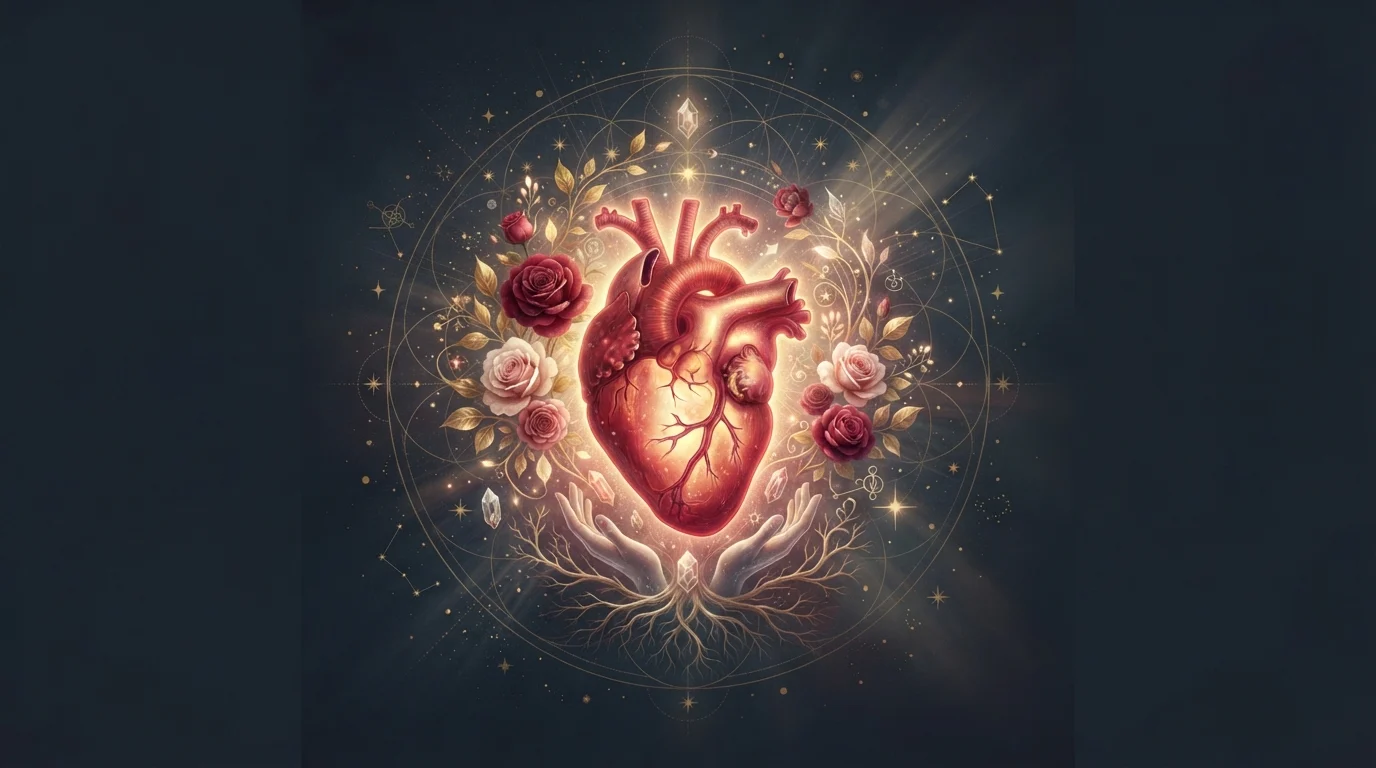
The heart symbolism has been one of the most recognizable ways humans express love, emotion, compassion, courage, and connection. From ancient traditions to modern emojis, the heart represents feelings that are often difficult to put into words.
Although its meaning can change depending on color, culture, religion, dreams, or personal experience, the heart is almost universally connected with the inner self.
It can symbolize romantic love, friendship, kindness, devotion, emotional strength, and the deepest parts of human identity.
Heart Symbolism Meaning (Clear Definition)
At its simplest, heart symbolism represents love, affection, emotion, compassion, and the inner self. The heart has become a universal symbol because people have long associated the physical heart with life and powerful feelings.
The symbolic meaning of the heart can include:
- ❤️ Love and romance — affection, attraction, and emotional attachment.
- 💗 Emotional connection — closeness, friendship, and belonging.
- 💛 Compassion and kindness — generosity, warmth, and care for others.
- ❤️🩹 Healing — recovery from emotional pain, loss, or heartbreak.
- 💔 Heartbreak — grief, separation, disappointment, or emotional suffering.
- 💜 Devotion and admiration — deep appreciation and meaningful bonds.
- 🫶 Connection and support — encouragement, solidarity, and mutual care.
The heart therefore represents much more than romantic love. It can symbolize the entire emotional life of a person.
What Does Heart Symbolism Represent?
Heart symbolism represents the emotional center of human experience. It often appears when people want to communicate feelings of love, loyalty, empathy, courage, or vulnerability.
Love and Romance
The most familiar meaning of the heart is romantic love. Hearts appear on greeting cards, jewelry, wedding decorations, gifts, and messages because they communicate affection instantly.
Compassion and Kindness
A heart can also represent a generous and caring nature. Someone described as having a “good heart” is generally understood to be compassionate, sincere, and considerate.
Courage and Strength
The heart has long been associated with bravery. Expressions such as “take heart” suggest finding courage during difficult circumstances.
Emotional Honesty
Heart symbolism can represent being genuine about feelings. Following your heart often means trusting your emotional instincts rather than ignoring what matters deeply to you.
Life and Vitality
Because the physical heart sustains life, it can symbolize vitality, energy, and existence itself. A beating heart can represent the continuing rhythm of life.
| Heart Symbolism | Common Meaning |
|---|---|
| Red heart | Love, passion, romance |
| Pink heart | Tenderness, affection, sweetness |
| Yellow heart | Friendship, happiness, warmth |
| White heart | Purity, peace, sincerity |
| Black heart | Grief, mystery, sorrow, dark humor |
| Broken heart | Loss, heartbreak, emotional pain |
| Heart with arrow | Attraction, desire, falling in love |
| Heart with wings | Freedom, spiritual love, emotional uplift |
| Heart with bandage | Healing and recovery |
Spiritual Meaning of Heart Symbolism
Spiritually, the heart often represents the deepest part of a person’s being. It can symbolize inner wisdom, unconditional love, spiritual connection, compassion, and the search for meaning.
In many spiritual traditions, the heart is considered more than a physical organ. It is viewed as a center of consciousness, intention, devotion, or moral awareness.
Heart symbolism may encourage you to:
- Listen to your inner wisdom.
- Practice compassion toward yourself and others.
- Forgive emotional wounds.
- Accept love without fear.
- Remain connected to what truly matters.
- Balance reason with emotion.
A heart appearing repeatedly in meaningful circumstances may therefore be interpreted personally as a reminder to pay attention to emotional needs, relationships, or inner values.
Biblical / Religious Meaning of Heart Symbolism
In the Bible, the heart frequently represents a person’s inner life, including thoughts, intentions, emotions, character, and spiritual condition. It is not simply used to describe romantic feelings.
Biblical references to the heart often emphasize sincerity, faith, wisdom, love, and moral intention. The heart can represent the place from which a person’s actions and choices arise.
The symbolism of the heart is also important in Christian traditions surrounding love, devotion, sacrifice, and compassion. The Sacred Heart is a particularly significant Christian symbol associated with the love and compassion of Jesus Christ.
Beyond Christianity, the heart has meaningful associations in many religious and spiritual traditions. Its interpretations vary, but themes such as devotion, compassion, purity, and inner transformation appear repeatedly.
Heart Symbolism in History and Culture
The heart has a remarkably long symbolic history. Ancient societies recognized the importance of the physical heart, and some cultures connected it with thought, identity, morality, or the soul.
Over centuries, artistic representations gradually transformed the heart into the familiar stylized shape used today.
The modern heart shape does not accurately reproduce human anatomy. Instead, it became a visual shorthand for emotion. Its simplicity made it easy to draw, reproduce, decorate, and recognize.
During the Middle Ages and Renaissance, heart imagery became increasingly connected with romantic love and religious devotion. Later, printed cards, jewelry, advertising, popular culture, and digital communication helped make the heart one of the world’s most recognizable symbols.
Different cultures may interpret specific heart colors or designs differently, but the basic association with emotional connection remains widespread.
Heart Symbolism in Literature and Art
Writers and artists have used the heart for centuries to explore love, longing, suffering, devotion, and human identity.
In literature, the heart may symbolize a character’s deepest desires or emotional conflicts. A character who “loses their heart” may be falling in love, while a wounded heart can represent grief or betrayal.
Artists often use hearts to make abstract emotions visible. A heart pierced by an arrow can represent sudden romantic attraction, while a broken heart can communicate loss without requiring words.
The heart is especially powerful in art because viewers already understand its emotional associations. A simple shape can therefore communicate an entire emotional story.
Dream Meaning of Heart Symbolism
Dreams involving hearts can have different meanings depending on the dream’s details and the dreamer’s personal experiences.
A healthy or glowing heart may symbolize love, vitality, emotional openness, or happiness. A broken heart may reflect grief, disappointment, relationship difficulties, or fear of emotional loss.
A red heart in a dream may relate to passion or romance, while a healing heart can symbolize emotional recovery.
Dream symbolism is highly personal, so there is no single interpretation that applies to everyone. The emotions experienced during the dream are often more informative than the heart symbol alone.
Modern Meaning of Heart Symbolism
Today, heart symbolism is everywhere. People use heart emojis, heart-shaped designs, jewelry, clothing, tattoos, artwork, logos, and digital reactions to communicate emotion quickly.
The heart emoji can mean romantic love, but it can also express gratitude, friendship, encouragement, appreciation, or simple affection. Context matters.
Modern heart symbolism has also expanded beyond personal relationships. Hearts are commonly used in charitable campaigns, awareness movements, healthcare imagery, community projects, and messages of support.
This flexibility explains why the heart remains relevant in a world where communication is increasingly visual and digital.
Common Heart Symbolism and Their Meanings
Here are some of the most common interpretations:
- Red heart: passion, romantic love, deep affection.
- Pink heart: tenderness, caring, gentle affection.
- White heart: purity, peace, sincerity, remembrance.
- Yellow heart: friendship, happiness, optimism.
- Purple heart: admiration, compassion, spiritual or emotional depth.
- Black heart: grief, sorrow, mystery, or a darker emotional tone.
- Broken heart: heartbreak, separation, emotional pain.
- Burning heart: intense passion, desire, or spiritual devotion.
- Heart with wings: freedom, transcendence, or uplifting love.
- Heart with an arrow: attraction, desire, or falling in love.
- Anatomical heart: life, vulnerability, mortality, and physical reality.
Heart Symbolism in Tattoos and Jewelry
Heart tattoos and heart-shaped jewelry often carry deeply personal meanings. Some people choose them to represent romantic relationships, family bonds, friendship, remembrance, or self-love.
A heart combined with a name, date, flower, bird, infinity symbol, or other image can create a more specific message.
For some people, a heart tattoo symbolizes surviving heartbreak or honoring someone who is no longer present. For others, it represents a commitment to love themselves and live authentically.
Heart Symbolism and Emotional Healing
One of the most meaningful modern interpretations of the heart is healing.
The broken heart acknowledges emotional pain, while the repaired or bandaged heart represents recovery. This symbolism reminds us that emotional wounds can change over time.
A heart does not have to symbolize perfect happiness. It can represent the courage to continue loving, caring, trusting, and growing after difficult experiences.
FAQs About Heart Symbolism
What is the main meaning of heart symbolism?
The main meaning of heart symbolism is love, affection, emotion, compassion, and human connection. Its interpretation can change depending on context and design.
What does a heart symbolize spiritually?
Spiritually, a heart can symbolize inner wisdom, unconditional love, compassion, devotion, and the deepest part of a person’s being.
What does a broken heart symbolize?
A broken heart commonly symbolizes emotional pain, grief, separation, disappointment, or the end of a meaningful relationship. It can also represent healing after hardship.
What does a red heart symbolize?
A red heart usually symbolizes romantic love, passion, strong affection, and emotional devotion. It is one of the most widely recognized symbols of love.
Why is the heart a symbol of love?
The heart became associated with love because people historically connected the physical heart with strong emotions and life itself. Over time, art and culture transformed that association into the universal heart symbol.
Conclusion
Heart symbolism continues to endure because it gives a simple shape to some of life’s most powerful experiences. It can represent romantic love, friendship, compassion, courage, grief, healing, spirituality, and the connections that give life meaning.
If it appears in a dream, painting, tattoo, piece of jewelry, religious image, or simple message, the heart reminds us that emotions are an essential part of being human. Sometimes, the smallest symbol can carry the biggest feeling.

Hi, I’m Kingston Fox, the administrator of Symbolop. I manage our platform and enjoy exploring symbols, their meanings, and cultural significance while ensuring readers have a reliable, engaging experience.