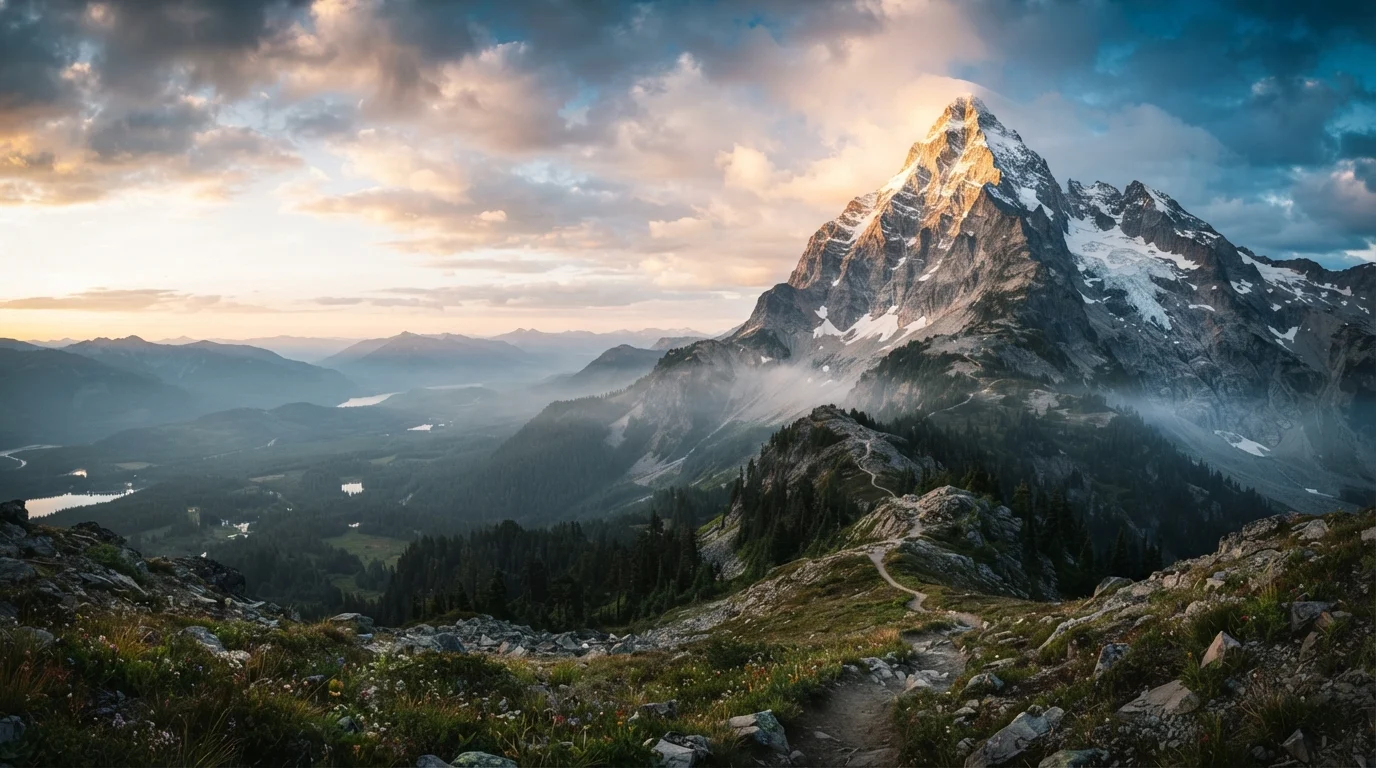
Mountain symbolism has fascinated people for thousands of years. Mountains rise above ordinary landscapes, standing firm through storms, seasons, and centuries.
Because of their strength, height, and mystery, they often symbolize strength, stability, spiritual growth, challenges, achievement, and the journey toward a higher purpose.
If you see mountains in dreams, religious traditions, literature, artwork, or everyday life, their meaning often depends on the context.
A mountain can represent an obstacle that must be overcome or a sacred place where a person discovers wisdom, peace, and a deeper connection with life.
Mountain Symbolism Meaning (Clear Definition)
Mountain symbolism refers to the symbolic meanings people associate with mountains, such as strength, endurance, stability, spiritual elevation, personal growth, and overcoming challenges.
A mountain naturally suggests something that requires effort to reach. Its summit can represent a goal, while the climb may symbolize the struggles and experiences that shape us along the way.
In simple terms:
Mountains symbolize the challenges we face, the strength we develop, and the higher perspective we gain by rising above them.
The meaning can change depending on whether the mountain is being viewed as beautiful, dangerous, sacred, distant, or successfully climbed.
Common Mountain Symbolism Meanings
| Symbolic Meaning | What the Mountain Represents |
|---|---|
| Strength | Inner power and resilience |
| Stability | Firmness, security, and permanence |
| Challenges | Obstacles that require courage |
| Achievement | Reaching an important goal |
| Spiritual growth | Moving toward wisdom or enlightenment |
| Perspective | Seeing life from a higher viewpoint |
| Endurance | Patience and persistence through difficulty |
What Does Mountain Symbolism Represent?
Mountain symbolism can represent many aspects of human life. Its most common meanings include the following.
1. Strength and Endurance
Mountains are powerful natural structures that withstand wind, rain, snow, and time. For this reason, they frequently symbolize strength and endurance.
A mountain can remind us that true strength does not always mean avoiding hardship. Sometimes it means remaining steady while hardship passes.
2. Challenges and Obstacles
A mountain can also represent a difficult challenge.
The phrase “climbing a mountain” is often used metaphorically for accomplishing something that initially seems overwhelming. The higher and steeper the mountain, the greater the perceived challenge.
3. Achievement and Success
Reaching a mountain summit can symbolize achieving an important goal.
The summit represents the destination, while the climb represents the work, patience, failures, and determination required to get there.
4. Stability and Grounding
Unlike constantly changing elements such as clouds or waves, mountains appear solid and dependable.
This gives them associations with stability, grounding, security, and permanence.
5. Higher Perspective
Standing on a mountain provides a wider view of the landscape below. Symbolically, this can represent gaining perspective.
Sometimes a difficult experience allows us to understand our lives differently once we step back and see the bigger picture.
6. Freedom and Independence
Mountains can symbolize freedom because they are often associated with wilderness, open spaces, exploration, and independence.
A solitary mountain may represent a desire to escape distractions and discover one’s own path.
Spiritual Meaning of Mountain Symbolism
The spiritual meaning of mountains is often connected with elevation, transformation, divine presence, meditation, and enlightenment.
Across many spiritual traditions, mountains are imagined as places where the earthly world meets the divine or transcendent realm.
Their upward movement naturally lends itself to spiritual symbolism. Climbing toward a summit can represent moving from confusion toward clarity, fear toward courage, or ordinary awareness toward deeper understanding.
Mountains as Sacred Spaces
Mountains have frequently been regarded as sacred landscapes. Their height, isolation, and dramatic appearance can inspire feelings of awe and humility.
For spiritual seekers, a mountain may symbolize:
- A journey toward enlightenment
- Connection with the divine
- Inner transformation
- Solitude and reflection
- Wisdom and higher consciousness
- Purification and renewal
- A search for meaning
The mountain does not necessarily symbolize an easy spiritual path. Instead, it often suggests that meaningful growth requires patience and effort.
Biblical / Religious Meaning of Mountain Symbolism
Mountains have significant symbolic importance in the Bible and other religious traditions. They are frequently associated with revelation, prayer, divine encounters, worship, refuge, and spiritual transformation.
In the Bible, important events occur on mountains. Mount Sinai, for example, is associated with Moses receiving the commandments. Mount Zion becomes an important symbol of God’s presence and Jerusalem, while mountains also appear in stories involving prayer and divine revelation.
The biblical use of mountains can therefore suggest:
- Divine revelation
- God’s presence
- Spiritual authority
- Worship
- Prayer
- Protection
- Transformation
- A place of significant encounter
One well-known biblical image is the idea of faith being powerful enough to move mountains. In this context, the mountain can represent an apparently impossible obstacle, while faith represents the spiritual power to overcome it.
Mountains also have important roles in other religious traditions. Sacred mountains appear in Hinduism, Buddhism, Indigenous traditions, and many other cultures, although their meanings differ considerably from one tradition to another.
Mountain Symbolism in History and Culture
Mountain symbolism appears throughout human history because mountains have naturally inspired awe, fear, reverence, and curiosity.
Ancient cultures often viewed high mountains as places connected to gods, spirits, ancestors, or supernatural forces.
Mountains in Ancient Traditions
In Greek mythology, Mount Olympus was regarded as the home of the gods. Its height helped reinforce its association with divine power.
In Hindu traditions, Mount Meru has an important cosmological role and is described as a sacred center of the universe.
In Japanese culture, Mount Fuji has been associated with spirituality, beauty, pilgrimage, and artistic inspiration.
In many Indigenous cultures around the world, particular mountains have deep relationships with creation stories, ancestors, sacred landscapes, and community identity.
These examples show that mountain symbolism is not limited to one universal interpretation. A mountain’s meaning often develops from the history and beliefs of the people who live around it.
Mountain Symbolism in Literature and Art
Mountains have long been powerful symbols in literature, poetry, painting, photography, and film.
Writers often use mountains to represent a character’s internal journey. A difficult climb may mirror emotional struggle, while reaching the summit can represent insight or accomplishment.
In poetry, mountains may symbolize:
- Permanence
- Loneliness
- Greatness
- Freedom
- Mystery
- Human struggle
- Spiritual awakening
Artists have also used mountains to create feelings of grandeur and insignificance. A tiny human figure standing beneath a massive mountain can visually emphasize the difference between human life and the vastness of nature.
Romantic-era landscape artists especially used mountains and other dramatic natural scenes to evoke awe, mystery, and the sublime.
Dream Meaning of Mountain Symbolism
Dreams about mountains are often interpreted symbolically rather than literally. Their meaning depends heavily on what happens in the dream and how you feel during it.
Climbing a Mountain
Dreaming of climbing a mountain may represent ambition, perseverance, personal growth, or a difficult goal.
If the climb feels exciting, it may reflect confidence about overcoming challenges. If it feels exhausting or frightening, it could represent pressure or uncertainty.
Reaching the Mountain Summit
Reaching a summit can symbolize achievement, completion, confidence, or gaining a new perspective.
It may reflect a sense that you have overcome something important in your waking life.
Standing at the Foot of a Mountain
Seeing a huge mountain before you may symbolize an important challenge that feels intimidating.
It can also represent an opportunity that requires courage and preparation.
Falling From a Mountain
Falling may symbolize fear of failure, loss of control, disappointment, or anxiety about maintaining an achievement.
However, dream interpretation is personal. The emotional atmosphere of the dream is often more meaningful than the image itself.
A Peaceful Mountain Landscape
A calm mountain scene may symbolize inner peace, solitude, clarity, or a desire to escape everyday stress.
Modern Meaning of Mountain Symbolism
Today, mountains continue to carry powerful symbolic meanings.
People commonly use mountain imagery in motivational messages, tattoos, jewelry, business branding, photography, home décor, and personal art.
The modern mountain often represents the idea that difficult journeys can lead to meaningful destinations.
Mountain Symbolism in Tattoos
A mountain tattoo may represent:
- Overcoming adversity
- Personal strength
- A major life achievement
- Love of nature
- Adventure and exploration
- Stability
- A meaningful journey
- Independence
For some people, a mountain tattoo marks a personal struggle they have overcome. For others, it represents a goal they are still working toward.
Mountain Symbolism in Everyday Life
Mountain imagery is also common in motivational language. Someone might describe a major life challenge as “a mountain to climb.”
This metaphor is powerful because it acknowledges both difficulty and possibility. The mountain may be difficult, but it can be climbed one step at a time.
Mountain Symbolism and Personal Growth
Perhaps the most meaningful interpretation of a mountain is personal growth.
A mountain does not usually allow someone to reach the top instantly. Progress happens gradually.
That makes the mountain a useful symbol for real life. Personal development often works in the same way: small decisions, setbacks, persistence, and patience eventually create significant change.
The summit is important, but the journey matters too.
Sometimes the greatest lesson is not reaching the top. It is discovering how strong you became while climbing.
Frequently Asked Questions About Mountain Symbolism
What is the main meaning of mountain symbolism?
Mountain symbolism commonly represents strength, endurance, challenges, achievement, stability, and spiritual growth. The exact meaning depends on the cultural or personal context.
What does a mountain symbolize spiritually?
Spiritually, a mountain can symbolize elevation, divine connection, enlightenment, transformation, prayer, and the journey toward greater wisdom.
What does a mountain represent in dreams?
A mountain in a dream may represent a challenge, ambition, personal growth, or an important goal. Climbing, reaching, or falling from the mountain can each suggest different interpretations.
What does a mountain tattoo symbolize?
A mountain tattoo often represents resilience, overcoming challenges, adventure, independence, stability, or a significant personal journey.
Why are mountains considered symbols of strength?
Mountains appear powerful, enduring, and stable despite constantly changing weather and surroundings. Their permanence makes them natural symbols of resilience and inner strength.
Conclusion
Mountain symbolism reminds us that strength is built through the journey, not simply found at the destination. Mountains can represent obstacles, ambition, stability, spiritual growth, and the courage to keep climbing.
If viewed through religion, culture, dreams, art, or personal experience, the mountain carries a timeless message: the path may be difficult, but every step upward can bring greater strength, wisdom, and perspective.

I’m Beau Warren, a passionate writer exploring the meanings behind symbols, dreams, colors, animals, and traditions. I enjoy creating well-researched, engaging content that inspires curiosity and deeper understanding every day.