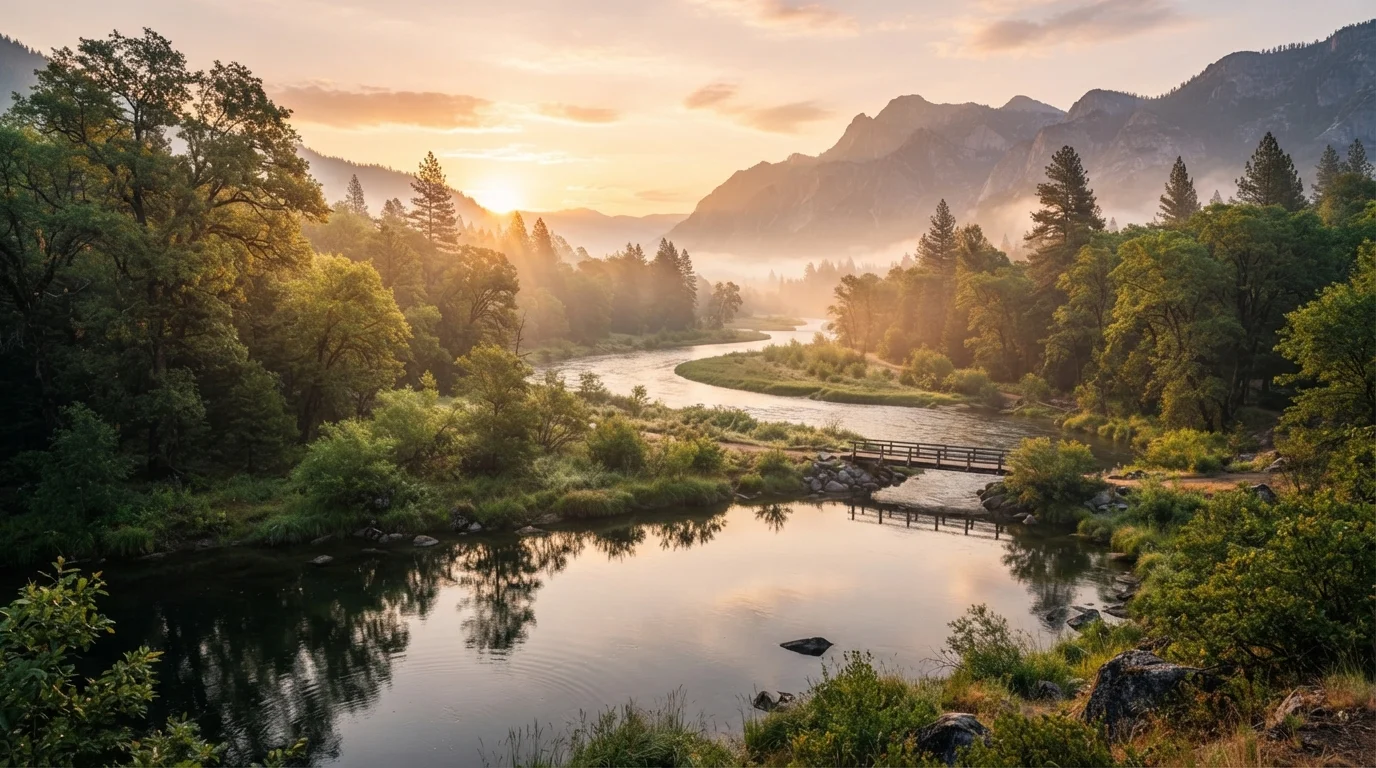
River symbolism has fascinated people for centuries because rivers are more than bodies of flowing water. They move continuously, connect distant places, nourish life, and transform landscapes.
As a symbol, a river often represents life, change, movement, renewal, emotional journeys, and the passage of time.
If you encounter a river in mythology, religion, literature, artwork, dreams, or everyday life, its meaning can change depending on its condition and context.
A calm river may suggest peace, while a rushing or turbulent river can symbolize uncertainty, emotional intensity, or major life changes.
River Symbolism Meaning (Clear Definition)
River symbolism refers to the symbolic meanings associated with flowing water, commonly representing life’s journey, change, transformation, emotional movement, renewal, and the passage of time.
A river has no permanent shape or fixed destination. It begins somewhere, travels through different landscapes, encounters obstacles, and eventually reaches another body of water. This natural journey makes it a powerful metaphor for human existence.
At its simplest, river symbolism can represent:
- Life and the journey of existence
- Change and transformation
- The passage of time
- Emotional movement
- Spiritual cleansing and renewal
- Freedom and movement
- Obstacles and perseverance
- Connection and transition
The meaning often depends on the river’s appearance. Clear, peaceful water can suggest harmony, while muddy, violent, or overflowing water may represent confusion, struggle, or emotional turmoil.
What Does River Symbolism Represent?
Rivers carry several layers of meaning. Their constant movement makes them especially powerful symbols of experiences that cannot remain unchanged.
1. Life’s Journey
A river naturally resembles the journey of life. It has a beginning, a changing course, obstacles, peaceful stretches, and an eventual destination.
This symbolism can remind us that life is not meant to remain still. Like a river, we move through different stages and experiences.
2. Change and Transformation
A river is always changing. Its water moves, its banks shift, and its surroundings evolve.
For this reason, rivers frequently symbolize personal transformation and growth. They can represent leaving an old chapter behind and moving toward something new.
3. The Passage of Time
You cannot stop a river from flowing indefinitely, making it a natural symbol of time.
River symbolism can therefore remind us that moments pass whether we are ready for change or not.
4. Emotional Movement
Water is often connected with feelings and the subconscious. A river’s movement can reflect the movement of emotions.
A calm river may symbolize emotional balance, while waves, rapids, or floods may represent anxiety, passion, grief, or overwhelming feelings.
5. Renewal and Cleansing
Flowing water can wash away dirt and carry it elsewhere. Symbolically, this makes rivers associated with purification, healing, forgiveness, and new beginnings.
6. Freedom
A river follows its course without being completely controlled by humans. Its movement can represent independence, freedom, and the desire to move forward without unnecessary restrictions.
7. Perseverance
Rivers encounter rocks, cliffs, narrow passages, and other obstacles, yet they continue moving.
This makes a river a meaningful symbol of resilience: obstacles may change your direction without necessarily stopping your journey.
Symbolic Meanings of a River
| River Image or Condition | Common Symbolic Meaning |
|---|---|
| Calm river | Peace, balance, emotional harmony |
| Flowing river | Life, movement, progress |
| Clear river | Clarity, purity, understanding |
| Deep river | Mystery, subconscious feelings, spiritual depth |
| Fast river | Urgency, passion, rapid change |
| Turbulent river | Conflict, uncertainty, emotional struggle |
| Flooding river | Overwhelming emotions or major disruption |
| Crossing a river | Transition, challenge, transformation |
| River source | Origins, beginnings, potential |
| River meeting the sea | Completion, unity, surrender, fulfillment |
Spiritual Meaning of River Symbolism
Spiritually, rivers often represent movement, purification, transformation, and the journey toward deeper understanding.
A flowing river can symbolize the spiritual principle of letting go. Instead of holding tightly to everything that has happened, the river encourages us to keep moving.
In many spiritual traditions, water has a cleansing quality. Rivers can therefore represent the release of emotional burdens, old patterns, guilt, or fear.
A river may also symbolize the connection between the physical and spiritual worlds. Its journey from a small source to a vast body of water can be interpreted as the individual’s movement toward something greater than the self.
River Symbolism and Spiritual Growth
A river can offer several spiritual lessons:
- Keep moving: Life changes constantly.
- Adapt: Water finds a way around obstacles.
- Let go: Not everything is meant to remain with you forever.
- Trust the journey: You may not know the entire path ahead.
- Remain connected: Rivers connect landscapes just as people connect with one another.
- Embrace transformation: Change can be part of spiritual growth.
The river’s greatest spiritual lesson may be simple: movement does not always mean losing yourself; sometimes it means discovering who you are becoming.
Biblical / Religious Meaning of River Symbolism
Rivers hold important symbolic roles in several religious traditions, particularly Christianity and Judaism.
In the Bible, rivers can represent life, blessing, abundance, spiritual renewal, boundaries, and God’s provision. The imagery of flowing water is often connected with nourishment and divine grace.
The Garden of Eden is described with a river flowing out to water the garden, giving the river an association with creation, abundance, and life.
The Jordan River is another major biblical symbol. It is associated with significant moments of transition, including the Israelites entering the Promised Land and the baptism of Jesus.
In Christian symbolism, water is also strongly associated with baptism, cleansing, repentance, and spiritual rebirth.
Other religious traditions likewise give rivers sacred significance. The Ganges, for example, holds profound religious importance in Hinduism and is associated with purification and spiritual devotion.
Across religious traditions, sacred rivers often express the idea that water can connect ordinary life with something sacred and transcendent.
River Symbolism in History and Culture
Rivers have shaped civilizations as much as they have shaped landscapes.
Many ancient societies developed around major rivers because rivers provided water, fertile soil, transportation, food, and opportunities for trade. This practical importance naturally contributed to their symbolic importance.
The Nile, Tigris, Euphrates, Indus, and other great rivers became closely connected with the rise of civilizations.
Rivers as Boundaries
Throughout history, rivers have often served as natural borders between territories. Crossing a river could therefore symbolize entering a new land or leaving one world behind.
This created a powerful metaphor for transition and transformation.
Rivers as Sources of Life
Communities have historically depended on rivers for survival. As a result, rivers frequently became symbols of fertility, abundance, nourishment, and prosperity.
Sacred Rivers
Some cultures viewed rivers as sacred or spiritually powerful. Ritual bathing, offerings, ceremonies, and pilgrimages have connected rivers with purification and religious devotion.
Rivers in Mythology
Mythologies around the world contain stories of rivers separating worlds, guiding heroes, providing divine gifts, or presenting dangerous obstacles.
The Greek mythological River Styx is a famous example. It was associated with the boundary between the world of the living and the realm of the dead.
These traditions reinforce the idea of the river as a threshold between different states of existence.
River Symbolism in Literature and Art
Rivers are among the most enduring images in literature and art because they can represent both physical landscapes and inner experiences.
Writers often use rivers as metaphors for:
- Life and mortality
- Time
- Memory
- Freedom
- Change
- Emotional struggle
- Spiritual discovery
- Separation and reunion
- Journeys and transformation
A character traveling beside a river may be physically moving through a landscape while also undergoing an internal transformation.
In poetry, the flowing river can represent the unstoppable movement of time. In novels, crossing a river can mark a turning point in a character’s life.
Artists similarly use rivers to create moods and meanings. A peaceful river may communicate serenity, while a dark or stormy river can evoke danger, mystery, loneliness, or emotional conflict.
Because rivers naturally combine movement and stillness, they allow artists to explore the tension between what changes and what remains.
Dream Meaning of River Symbolism
Dreams about rivers can have different meanings depending on the river’s appearance, your emotions, and what happens in the dream.
There is no single universal interpretation, but common possibilities include:
Dreaming of a Calm River
A peaceful river may symbolize emotional balance, acceptance, or a period of inner calm.
Dreaming of a Fast-Flowing River
A rapidly moving river may suggest that life is changing quickly or that events feel difficult to control.
Dreaming of Crossing a River
Crossing a river can represent a transition or important life decision. It may suggest moving from one stage of life into another.
Dreaming of a Flooded River
A flooded river may symbolize emotions or circumstances that feel overwhelming. It can reflect stress, uncertainty, or a situation that has become difficult to contain.
Dreaming of Clear River Water
Clear water may represent clarity, emotional honesty, healing, or a better understanding of yourself.
Dreaming of a Dirty or Dark River
Dark or polluted water may reflect confusion, unresolved emotions, fear, or concerns that need attention.
The most useful interpretation usually comes from considering how you felt during the dream rather than relying on a single symbolic definition.
Modern Meaning of River Symbolism
Today, river symbolism remains highly relevant because modern life still involves constant movement and change.
People may use river imagery when talking about personal growth, relationships, career changes, emotional healing, or major transitions.
The river can represent the idea of going with the flow, but this phrase does not necessarily mean giving up control. Instead, it can mean recognizing what cannot be controlled while making thoughtful choices about how to respond.
River imagery also appears in tattoos, jewelry, photography, home décor, poetry, films, and personal artwork.
For someone beginning a new chapter, a river can symbolize forward movement. For someone experiencing loss, it can represent time and the gradual process of healing.
For someone facing uncertainty, the river can offer another perspective: you do not always need to see the entire path to keep moving forward.
River Symbolism and Personal Growth
One of the most meaningful interpretations of a river is its connection to personal development.
A person may begin life with a particular identity, expectation, or destination in mind. Over time, experiences reshape their priorities and direction.
Like a river, we may encounter unexpected turns.
We may also discover that an obstacle does not necessarily mean the journey is over. Sometimes it simply means the path has changed.
This makes river symbolism especially powerful for people experiencing:
- A new beginning
- Career or lifestyle changes
- Emotional healing
- Personal transformation
- Moving to a new place
- Ending an old relationship or chapter
- Searching for purpose
- Recovering from disappointment
The river reminds us that growth often happens through movement rather than certainty.
Common River Symbolism Meanings at a Glance
If you need the meaning of river symbolism in a simple form, remember these core ideas:
- Life: The river mirrors the journey of existence.
- Change: Its constant flow represents transformation.
- Time: Its movement reflects the passage of time.
- Emotion: Its condition can mirror inner feelings.
- Renewal: Flowing water can symbolize cleansing and fresh beginnings.
- Transition: Crossing a river can represent entering a new stage.
- Resilience: Its ability to continue around obstacles symbolizes perseverance.
- Spirituality: Sacred rivers can represent purification and connection with the divine.
FAQs About River Symbolism
What is the main meaning of river symbolism?
The main meaning of river symbolism is the journey of life, including change, movement, transformation, and the passage of time.
What does a river symbolize spiritually?
Spiritually, a river can symbolize purification, renewal, spiritual growth, emotional release, and movement toward a deeper sense of purpose.
What does crossing a river symbolize?
Crossing a river often symbolizes transition, overcoming an obstacle, leaving the past behind, or entering a new stage of life.
What does a river symbolize in dreams?
A river in a dream can represent emotions, life changes, personal transitions, or the direction of your current journey. Its condition and your feelings within the dream can influence the interpretation.
Why are rivers important symbols in religion?
Rivers often provide imagery of life, cleansing, abundance, rebirth, and spiritual transition. Many religious traditions therefore use rivers and flowing water in sacred stories and rituals.
Conclusion
River symbolism speaks to something deeply human: the need to keep moving through life’s changes. A river can represent time, transformation, emotional experience, spiritual renewal, and the courage to continue despite obstacles.
Its message is both simple and powerful. We cannot always control the current, but we can learn to navigate it. Like a river, we can change direction, overcome barriers, and continue toward whatever lies beyond the next bend.

I’m Beau Warren, a passionate writer exploring the meanings behind symbols, dreams, colors, animals, and traditions. I enjoy creating well-researched, engaging content that inspires curiosity and deeper understanding every day.