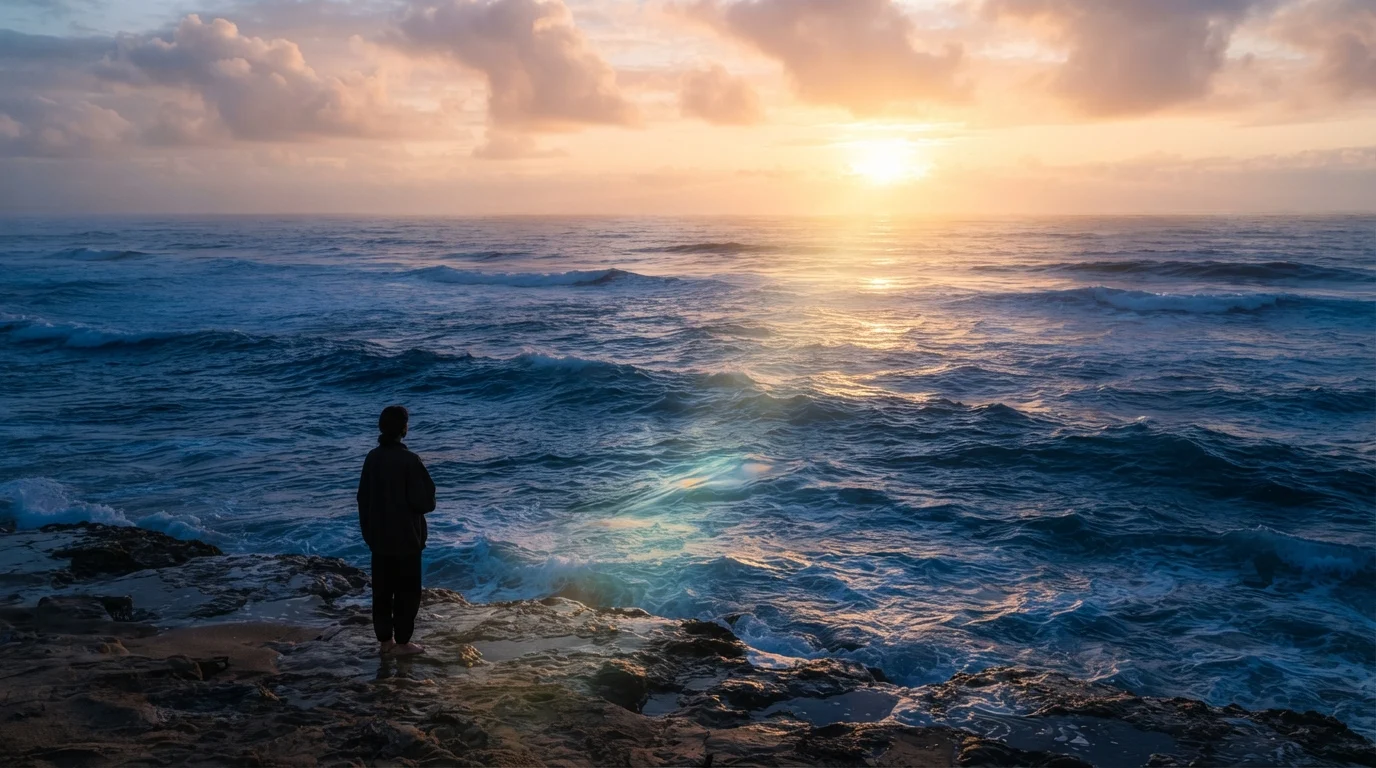
Ocean symbolism is deeply connected with mystery, emotion, transformation, freedom, and the unknown. Across cultures and centuries, the ocean has represented both the beauty of life and the powerful forces that exist beyond human control.
Its endless horizon can inspire hope and possibility, while its depths can symbolize the hidden parts of the mind and soul. If it appears in dreams, religious traditions, literature, artwork, or everyday life, the ocean often invites us to look beneath the surface.
Ocean Symbolism Meaning (Clear Definition)
Ocean symbolism refers to the symbolic meanings people associate with the sea and its vast waters. Because the ocean is immense, deep, constantly moving, and difficult to control, it has become a powerful symbol of emotion, mystery, freedom, change, spirituality, and the unconscious mind.
In simple terms, the ocean can symbolize:
- Emotional depth — the vast range of human feelings.
- Mystery — things that remain unknown or hidden.
- Freedom — openness, exploration, and independence.
- Transformation — constant movement and changing tides.
- Power — forces greater than the individual.
- Life and creation — water as a source of nourishment and existence.
- The unconscious mind — hidden thoughts, memories, fears, and desires.
The meaning can change depending on the ocean’s condition. Calm water may suggest peace, while turbulent waves may represent emotional conflict or uncertainty.
What Does Ocean Symbolism Represent?
Ocean symbolism can represent several important ideas at once.
1. Emotional Depth
The ocean’s enormous depth naturally connects it with deep emotions. Just as most of the ocean exists beneath the surface, people may have feelings and experiences that are not immediately visible.
2. Mystery and the Unknown
The ocean stretches beyond the horizon and contains countless things humans cannot easily see. For this reason, it often symbolizes mystery, unanswered questions, and the unknown future.
3. Freedom and Adventure
An open sea can represent freedom from limitations. Ships crossing oceans have historically been associated with exploration, discovery, courage, and new beginnings.
4. Change and Transformation
The ocean never remains exactly the same. Its tides, currents, waves, and weather constantly change, making it a natural symbol of life’s movement and transformation.
5. Power and Strength
A person can influence a small body of water, but the ocean cannot be controlled by individual human strength. Its storms, waves, and currents symbolize nature’s power and human vulnerability.
6. Renewal and Healing
Water is often associated with cleansing and renewal. The ocean can therefore symbolize letting go of emotional burdens and beginning again.
Symbolic Meanings of the Ocean
| Ocean Feature | Common Symbolic Meaning |
|---|---|
| Calm ocean | Peace, emotional balance, serenity |
| Deep ocean | Mystery, hidden emotions, the unconscious |
| Waves | Change, emotions, life’s challenges |
| Stormy ocean | Conflict, fear, uncertainty |
| Open horizon | Freedom, possibility, adventure |
| Ocean sunrise | Hope, renewal, new beginnings |
| Ocean sunset | Reflection, completion, transition |
| Ocean depths | Secrets, inner wisdom, the unknown |
| Tides | Cycles, change, emotional movement |
Spiritual Meaning of Ocean Symbolism
Spiritually, the ocean can represent the vastness of existence and the connection between the individual and something greater.
Standing beside the ocean often creates a feeling of humility. Its size can remind people that individual worries are part of a much larger world.
The ocean may also symbolize spiritual depth. Its surface is visible, but its depths remain largely hidden. This makes it a fitting metaphor for the journey inward, where people explore their beliefs, emotions, identity, and sense of purpose.
Ocean as a Symbol of Spiritual Transformation
The movement of waves can represent the natural rhythm of life. Difficult periods rise and fall like tides, reminding us that emotional and spiritual circumstances can change.
For some people, the ocean represents surrender not giving up, but accepting that not everything can be controlled.
It can encourage qualities such as:
- Trust
- Patience
- Reflection
- Emotional awareness
- Acceptance
- Renewal
- Inner peace
Biblical / Religious Meaning of Ocean Symbolism
In the Bible and other religious traditions, large bodies of water can carry several different meanings, including creation, divine power, danger, cleansing, chaos, and spiritual transformation.
In the biblical creation story, waters appear at the beginning of creation, giving water an important place in the biblical imagination. The sea can also represent forces that appear threatening or chaotic and that remain subject to divine authority.
Stories involving the sea often emphasize the relationship between human beings and divine power. The sea may appear as an obstacle, a place of danger, or a setting where faith and trust are tested.
Water also has important cleansing and renewal associations in Christianity, particularly through baptism. Although baptism usually involves water rather than the ocean specifically, the broader symbolism of water connects with ideas of spiritual purification and new life.
Other religious and spiritual traditions likewise use oceans and seas as symbols of creation, infinity, divine mystery, and the journey of the soul.
Ocean Symbolism in History and Culture
Oceans have shaped human civilization for thousands of years. They have connected distant communities while also separating continents.
Ancient peoples often viewed the sea with a mixture of fascination, respect, and fear. Sailors depended on it for food, transportation, and trade, yet storms and unpredictable waters could make ocean travel extremely dangerous.
Across cultures, the sea has therefore developed a dual symbolism:
The ocean gives, and the ocean takes.
It can provide food, connect civilizations, and open routes to new lands. At the same time, it can represent danger, loss, isolation, and forces beyond human control.
Ocean symbolism also appears in myths involving sea gods, legendary creatures, underwater kingdoms, floods, voyages, and journeys across mysterious waters.
The Ocean as a Symbol of Exploration
For explorers and sailors, crossing an ocean meant entering the unknown. This made the sea a powerful symbol of courage, discovery, ambition, and adventure.
The horizon became a metaphor for possibilities that could not yet be seen.
Ocean Symbolism in Literature and Art
Writers and artists have long used the ocean to express ideas that are difficult to communicate directly.
In literature, the sea can symbolize a character’s inner emotional world. A peaceful ocean might mirror contentment, while violent waves can reflect fear, grief, anger, or confusion.
The ocean can also represent an enormous challenge that a character must face.
Classic works of literature have used the sea to explore themes such as obsession, mortality, isolation, adventure, fate, and human powerlessness. Herman Melville’s Moby-Dick, for example, turns the ocean into a setting where humanity confronts nature, obsession, uncertainty, and the limits of knowledge.
In visual art, oceans and coastlines can create moods of solitude, wonder, tranquility, or melancholy. The horizon can suggest both an ending and a beginning.
Dream Meaning of Ocean Symbolism
Dreams about the ocean are often interpreted according to the water’s appearance and the dreamer’s emotional response.
There is no single universal interpretation, but common symbolic associations include:
- Calm ocean: Inner peace, emotional stability, or acceptance.
- Clear ocean water: Clarity, self-awareness, and emotional understanding.
- Stormy ocean: Stress, emotional turmoil, or uncertainty.
- Large waves: Overwhelming emotions or major life changes.
- Swimming in the ocean: Moving through emotions or facing personal challenges.
- Drowning in the ocean: Feeling overwhelmed or unable to cope with circumstances.
- Standing beside the ocean: Reflection, observation, or emotional distance.
- Crossing the ocean: A major transition, journey, or new chapter.
- Deep or dark water: Hidden fears, uncertainty, or unexplored aspects of yourself.
The most useful interpretation often depends on how you felt during the dream. A dark ocean might feel frightening to one person but peaceful and mysterious to another.
Modern Meaning of Ocean Symbolism
Today, ocean symbolism remains powerful in everyday life.
The ocean is frequently associated with mental space, relaxation, environmental awareness, adventure, and personal freedom. Beaches and ocean landscapes are commonly used to create feelings of calm and escape from busy routines.
At the same time, modern environmental concerns have added another layer of meaning. The ocean can symbolize the importance of protecting nature and recognizing humanity’s connection to the planet.
For many people, spending time near the sea provides an opportunity to slow down, reflect, and regain perspective.
The ocean can therefore represent a modern lesson:
You do not have to control every wave to continue moving forward.
Ocean Symbolism and Personal Growth
The ocean can offer a meaningful metaphor for personal growth.
Life is rarely completely still. Like the sea, it moves through periods of calm and turbulence. Some experiences may feel overwhelming at first but eventually pass.
Ocean symbolism can remind us that depth is not always visible from the surface. People, relationships, and even our own identities often contain layers that require patience to understand.
It can also encourage us to accept change rather than constantly resist it.
What the Ocean Can Teach Us
- Calm is temporary, but so is the storm.
- Depth requires exploration.
- Change is a natural part of life.
- Some things cannot be controlled.
- Freedom often requires courage.
- Reflection can reveal what the surface hides.
FAQs About Ocean Symbolism
What is the main meaning of ocean symbolism?
Ocean symbolism commonly represents emotional depth, mystery, freedom, transformation, power, and the unknown. Its meaning depends on the context and condition of the water.
What does the ocean symbolize spiritually?
Spiritually, the ocean can symbolize infinity, inner depth, surrender, renewal, and connection with something greater than oneself.
What does a calm ocean symbolize?
A calm ocean commonly represents peace, emotional balance, acceptance, and inner tranquility. It may also symbolize a period of stability after emotional difficulty.
What does a stormy ocean symbolize?
A stormy ocean often symbolizes emotional turmoil, uncertainty, fear, conflict, or major life challenges. In stories and dreams, it can represent an internal struggle.
What does the ocean symbolize in dreams?
The ocean in dreams can represent emotions, the unconscious mind, transformation, or the unknown. The water’s condition and the dreamer’s feelings are important when interpreting its meaning.
Conclusion
Ocean symbolism captures one of life’s most powerful truths: there is always more beneath the surface. The ocean can represent freedom and mystery, peace and danger, endings and beginnings, reflecting the many contrasts within human experience.
If viewed spiritually, culturally, artistically, or personally, the ocean reminds us to respect life’s depth, accept its changing tides, and keep moving toward the horizon.

I’m Beau Warren, a passionate writer exploring the meanings behind symbols, dreams, colors, animals, and traditions. I enjoy creating well-researched, engaging content that inspires curiosity and deeper understanding every day.