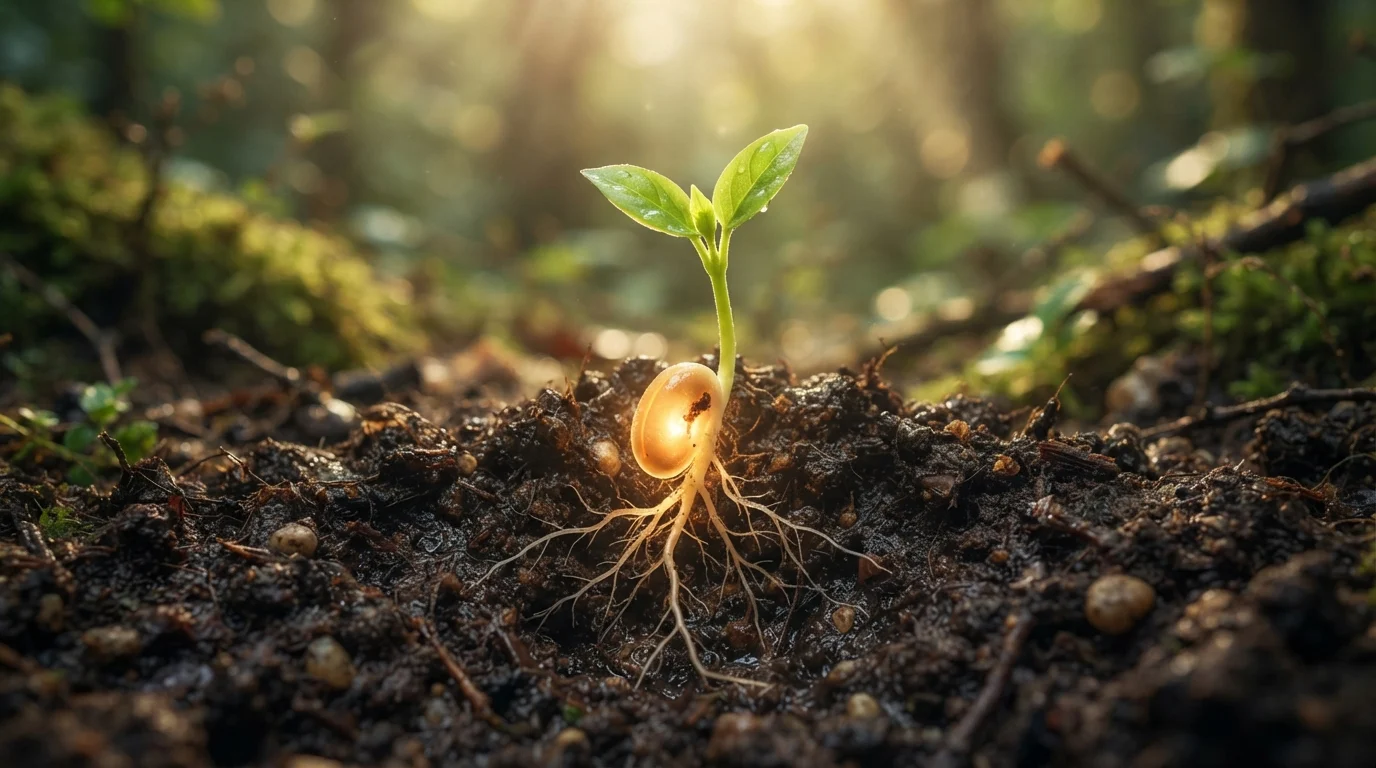
Seed symbolism is deeply connected with growth, potential, beginnings, fertility, hope, and transformation. A seed may look small and ordinary, yet it contains everything needed to become something much larger.
Across cultures, seeds have represented hidden potential and the promise of new life. They can symbolize an idea waiting to develop, a relationship beginning to grow, a spiritual journey, or a personal transformation that has not yet become visible.
Understanding seed symbolism can help us appreciate why seeds appear so often in religious teachings, mythology, literature, artwork, dreams, and everyday expressions.
Seed Symbolism Meaning (Clear Definition)
The simplest definition of seed symbolism is:
A seed symbolizes potential, growth, new beginnings, fertility, renewal, and the hidden possibility of transformation.
A seed represents something that exists in an undeveloped form. Although its future cannot always be seen, it carries the possibility of becoming a plant, tree, or harvest.
This makes the seed a powerful metaphor for human life. A small decision can lead to a major change, while a simple idea can eventually become something meaningful.
Common meanings associated with seeds include:
- New beginnings — starting a fresh chapter
- Growth — developing emotionally, spiritually, or personally
- Potential — possessing possibilities that have not yet appeared
- Fertility — creation, reproduction, and abundance
- Hope — believing something good can develop
- Patience — allowing growth to happen naturally
- Transformation — changing from one state into another
- Abundance — producing more than what was originally planted
The seed therefore represents both what is and what could become.
What Does Seed Symbolism Represent?
Seed symbolism can have several meanings depending on the situation.
1. Potential
A seed is one of the clearest symbols of hidden potential. Before it grows, there is no visible tree, flower, or crop. Yet the possibility already exists within it.
In human life, this can represent talents, dreams, ideas, relationships, and opportunities.
2. New Beginnings
Seeds are often associated with beginnings because planting one marks the start of a growth cycle.
A seed may symbolize:
- Starting a new career
- Beginning a relationship
- Moving into a new stage of life
- Starting a creative project
- Recovering from a difficult period
3. Growth and Development
Seeds remind us that meaningful growth usually takes time.
Just as a plant needs water, sunlight, soil, and care, people need knowledge, encouragement, experience, and patience to develop.
4. Fertility and Creation
Because seeds produce new life, they have long been associated with fertility and reproduction.
In symbolic language, fertility can also mean creativity. An artist, writer, entrepreneur, or thinker may metaphorically “plant a seed” that eventually produces something valuable.
5. Hope
A buried seed is an image of hope. Even when nothing appears on the surface, growth may be happening underneath.
This makes seeds especially powerful symbols during periods of uncertainty or change.
6. Patience
A seed does not become a mature plant overnight. Its symbolism therefore teaches patience and trust in gradual progress.
7. Transformation
The seed changes dramatically as it grows. It moves from a small, dormant object into a living plant.
This makes it a natural symbol of transformation and personal evolution.
Quick Symbolism Table
| Seed Symbolism | Common Meaning |
|---|---|
| Seed | Potential and possibility |
| Planting a seed | Beginning something new |
| Germinating seed | Awakening and development |
| Growing seedling | Progress and personal growth |
| Flower seed | Beauty, creativity, and future potential |
| Fruit seed | Abundance and continuation |
| Buried seed | Hidden potential or patience |
| Harvest | Reward, completion, and abundance |
Spiritual Meaning of Seed Symbolism
Spiritually, seeds often represent the unseen beginning of something meaningful.
A seed can symbolize the idea that important transformations begin quietly. Before a spiritual awakening becomes obvious, there may first be a small realization, question, feeling, or desire for change.
Seed symbolism can therefore represent faith in unseen growth.
The seed also encourages people to think about what they are planting in their own lives. Thoughts, choices, habits, kindness, and intentions can all be viewed metaphorically as seeds.
Positive actions may produce positive results over time, while harmful patterns can also grow if repeatedly encouraged.
Seed as a Symbol of Inner Growth
A seed buried beneath the soil can represent an inward journey. Growth may not immediately be visible to others, but something important can still be developing internally.
This can symbolize:
- Spiritual awakening
- Inner wisdom
- Personal healing
- Faith
- Self-discovery
- Emotional maturity
- A deeper sense of purpose
The spiritual message is often simple: what is hidden today may become visible tomorrow.
Biblical / Religious Meaning of Seed Symbolism
Seed symbolism is especially significant in Christianity and the Bible. Seeds are frequently used as metaphors for faith, God’s word, spiritual growth, descendants, and the consequences of one’s actions.
One of the best-known examples is the Parable of the Sower, in which different types of soil represent different ways people receive spiritual teaching. The seed becomes a metaphor for God’s word and its ability to produce spiritual fruit.
The Bible also uses seed imagery when discussing faith and the kingdom of God. A tiny seed can become something much larger, emphasizing how something seemingly insignificant can develop into something powerful.
In Christian symbolism, a seed can therefore suggest:
- Faith beginning in the heart
- God’s word taking root
- Spiritual growth
- Resurrection and new life
- The beginning of God’s kingdom
- Fruitfulness and spiritual maturity
Seed symbolism also appears more broadly in religious traditions. Agricultural societies often connected planting and harvesting with cycles of life, death, renewal, fertility, and divine blessing.
Because religious interpretations differ between traditions, the meaning of a seed should always be considered within its specific cultural and spiritual context.
Seed Symbolism in History and Culture
Seeds have been important throughout human history because agriculture made them essential to survival.
Ancient communities understood that a tiny seed could determine whether an entire community had food in the future. This practical importance naturally gave seeds symbolic meanings involving life, prosperity, fertility, and abundance.
Ancient Agricultural Traditions
In farming cultures, planting represented faith in the future. Farmers placed seeds into the earth without being able to see the final result.
This created a powerful connection between seeds and hope.
The agricultural cycle also created symbolic associations between:
Seed → burial → germination → growth → harvest → renewal
The apparent disappearance of a seed into the earth could also resemble death, followed by the emergence of new life.
Seeds and Fertility
Many traditional cultures connected seeds with fertility because both plants and human families depend on reproduction.
As a result, seeds could symbolize:
- Family continuation
- Birth
- Fertility
- Generational inheritance
- Prosperity
- The continuation of life
Seeds as Symbols of Inheritance
A seed contains characteristics passed from one generation to another. This makes it an effective metaphor for ancestry and inheritance.
In symbolic language, “seeds” can represent the values, traditions, knowledge, and qualities passed from parents and ancestors to future generations.
Seed Symbolism in Literature and Art
Seeds are powerful literary symbols because they can communicate complex ideas with a simple image.
A writer may describe a seed to represent a character’s potential, an emerging idea, a secret hope, or the beginning of a major transformation.
Seeds in Literature
Common literary interpretations include:
- A seed as an idea
- A planted seed as a decision
- A growing seed as personal development
- A dead seed as lost potential
- A harvest as the result of past choices
- A seed carried by the wind as possibility or destiny
The phrase “planting a seed” is particularly powerful because it suggests that an idea has been introduced and may influence someone later.
Seeds in Visual Art
Artists may use seeds to explore themes of life, death, nature, fertility, regeneration, and time.
A seed placed beside a human figure can suggest potential or mortality. A seedling emerging from dark soil can create a visual contrast between darkness and new life.
Seeds also work well in environmental art because they connect humanity with natural cycles.
Dream Meaning of Seed Symbolism
Dreaming about seeds often relates to potential, beginnings, growth, and opportunities, although the personal meaning depends heavily on the dreamer’s circumstances.
Dreaming of Planting Seeds
Planting seeds may symbolize starting something that you hope will succeed.
It could relate to a new relationship, project, career path, habit, or personal goal.
Dreaming of Seeds Sprouting
Sprouting seeds can represent progress and encouragement. Something you have been waiting for may feel as though it is finally beginning to develop.
Dreaming of Many Seeds
Many seeds may symbolize numerous opportunities, ideas, possibilities, or responsibilities.
The emotional atmosphere of the dream can help determine whether these possibilities feel exciting or overwhelming.
Dreaming of a Dry or Dead Seed
A dry seed may represent disappointment, neglected potential, an unfinished goal, or something that needs attention.
However, it does not necessarily mean failure. It may simply suggest that a situation needs different conditions before it can grow.
Finding a Seed in a Dream
Finding a seed may symbolize discovering an opportunity or recognizing potential that you previously overlooked.
Dream symbolism is highly personal, so the strongest interpretation usually comes from connecting the seed with your current thoughts, emotions, and life circumstances.
Modern Meaning of Seed Symbolism
Today, seed symbolism remains highly relevant because people continue to use seeds as metaphors for personal development and change.
The concept of planting seeds appears in conversations about education, business, relationships, creativity, leadership, and self-improvement.
For example, learning a new skill can be viewed as planting a seed. At first, the result may not be obvious. With consistent effort, however, knowledge can grow into expertise.
Seed Symbolism in Personal Growth
A seed can remind you that progress does not always need to be dramatic.
Small actions can accumulate:
Small choice → repeated effort → gradual growth → meaningful result
This perspective can make seed symbolism especially inspiring during periods when progress feels slow.
Seed Symbolism in Relationships
A relationship can also be described through seed imagery.
Trust may begin as a small seed. Kindness, communication, and shared experiences can nurture it until the relationship becomes stronger.
Seed Symbolism in Creativity
Every creative project begins somewhere.
A single thought can become a story, painting, invention, business, or movement. The original idea is the seed; the finished creation is the harvest.
Seed Symbolism and Personal Transformation
One of the most meaningful lessons of the seed is that growth often begins before it becomes visible.
When a seed is underground, it may appear inactive. In reality, it is preparing for transformation.
Human growth can work in a similar way. Learning, reflection, preparation, and quiet effort may happen long before other people recognize the results.
This makes the seed a beautiful symbol for anyone going through a period of transition.
You may not see the outcome yet, but that does not mean nothing is happening.
What Does a Seed Symbolize in Different Situations?
The meaning of a seed can change according to context.
- In spirituality: faith, awakening, inner growth, and unseen potential
- In religion: divine teaching, faith, spiritual fruit, and renewal
- In dreams: opportunities, beginnings, personal development, or hidden possibilities
- In relationships: trust, affection, commitment, and emotional growth
- In creativity: ideas, inspiration, and artistic potential
- In agriculture: fertility, survival, abundance, and renewal
- In personal development: patience, progress, transformation, and hope
- In literature: destiny, potential, consequences, and change
Frequently Asked Questions About Seed Symbolism
What is the main meaning of seed symbolism?
Seed symbolism primarily represents potential, growth, new beginnings, fertility, hope, and transformation. It reflects the idea that something small can eventually become something significant.
What does a seed symbolize spiritually?
Spiritually, a seed can symbolize faith, inner growth, awakening, and unseen potential. It reminds us that meaningful change may begin quietly before becoming visible.
What does a seed symbolize in the Bible?
In the Bible, seeds can represent God’s word, faith, spiritual growth, descendants, and the results of what people sow. The Parable of the Sower is one of the most prominent examples.
What does dreaming about seeds mean?
Dreaming about seeds commonly relates to new opportunities, potential, growth, or beginnings. Planting or sprouting seeds may suggest that something in your life is developing.
Why are seeds symbols of hope?
Seeds represent hope because they contain the possibility of future growth even when the final result cannot yet be seen. They encourage patience and trust in the process of development.
Conclusion
Seed symbolism reminds us that great things often begin in small and hidden ways. A seed represents potential before achievement, hope before fulfillment, and beginnings before transformation.
If it appears in religion, dreams, literature, art, culture, or everyday life, the seed carries a timeless message: growth takes time, but every meaningful transformation has to begin somewhere.

I’m Beau Warren, a passionate writer exploring the meanings behind symbols, dreams, colors, animals, and traditions. I enjoy creating well-researched, engaging content that inspires curiosity and deeper understanding every day.