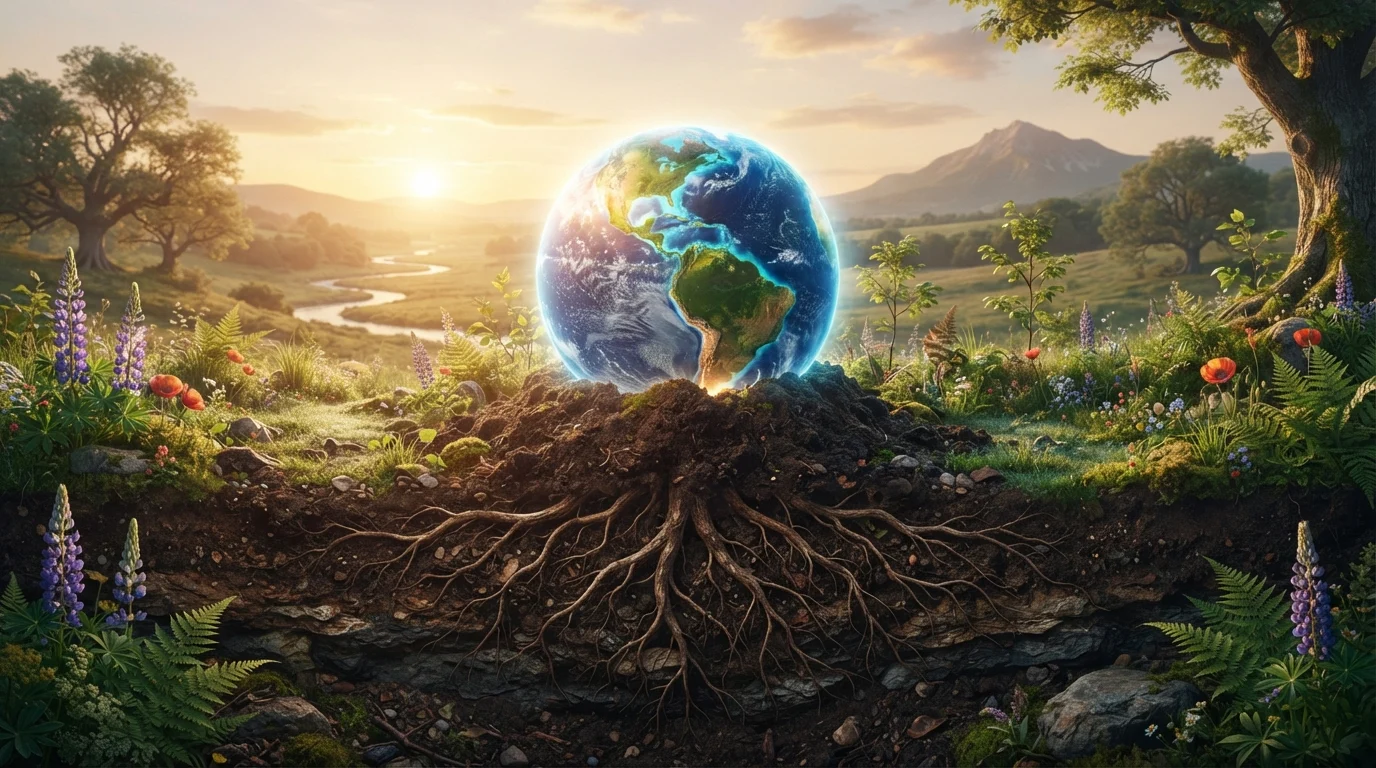
Earth symbolism is deeply connected to grounding, stability, life, nourishment, and renewal. As the foundation beneath our feet, Earth has long represented the physical world, fertility, endurance, and our connection to nature.
Across religions, cultures, dreams, literature, and modern life, the Earth often reminds us to stay grounded while appreciating the life that surrounds us.
Earth Symbolism Meaning (Clear Definition)
At its simplest, earth symbolism represents stability, grounding, fertility, life, strength, and connection to nature.
Earth is the element that gives plants a place to grow and provides humans and animals with food and shelter. Because of this life-giving role, it has traditionally been associated with nourishment, creation, and abundance.
Earth can also symbolize patience and endurance. Mountains, forests, valleys, and soil all demonstrate the quiet strength of nature. Unlike symbols associated with speed or change, Earth often represents something steady and dependable.
Key Earth Symbolism Meanings
| Symbolic Meaning | What It Represents |
|---|---|
| Grounding | Feeling centered, secure, and connected |
| Stability | Strength, reliability, and permanence |
| Fertility | Growth, creation, and abundance |
| Nourishment | Food, life, care, and support |
| Strength | Endurance and resilience |
| Nature | Connection with the natural world |
| Renewal | Cycles of death, growth, and rebirth |
| Home | Belonging, roots, and a sense of place |
What Does Earth Symbolism Represent?
Earth symbolism can carry several meanings depending on the context.
1. Grounding and Stability
Earth is beneath us, making it a natural symbol of stability. It can represent the need to remain calm and centered during uncertain times.
2. Life and Fertility
Seeds planted in soil eventually become plants, making Earth a powerful symbol of fertility, creation, and potential.
3. Strength and Endurance
The Earth withstands storms, seasons, erosion, and countless changes. Its ability to endure makes it a symbol of resilience.
4. Connection and Belonging
Earth can symbolize roots not only physical roots in a particular place but also emotional connections to family, community, ancestry, and home.
5. Growth and Renewal
The natural cycle of planting, growth, decay, and regeneration connects Earth with transformation and renewal.
6. Simplicity and Humility
Earth symbolism can also encourage humility. It reminds us that humans are part of nature rather than separate from it.
Spiritual Meaning of Earth Symbolism
Spiritually, Earth is often viewed as a symbol of grounding, balance, physical existence, and connection to creation.
Many spiritual traditions emphasize the importance of being grounded. Earth energy is associated with slowing down, becoming present, and appreciating the physical world.
Earth may also represent the journey of bringing spiritual ideas into everyday life. Instead of escaping reality, Earth symbolism encourages people to find meaning in ordinary experiences, relationships, work, nature, and daily responsibilities.
Earth as a Spiritual Symbol
- Grounding: Returning to the present moment.
- Balance: Creating harmony between body, mind, and spirit.
- Rootedness: Developing a strong sense of identity and belonging.
- Abundance: Recognizing the resources and opportunities around you.
- Patience: Understanding that meaningful growth takes time.
- Connection: Remembering humanity’s relationship with nature.
In spiritual symbolism, Earth can therefore be understood as a reminder to stand firmly in the present while continuing to grow.
Biblical / Religious Meaning of Earth Symbolism
Earth has important symbolism in the Bible and other religious traditions. In biblical language, Earth can refer to God’s creation, humanity’s physical home, and the material world.
The creation story in Genesis presents the Earth as part of God’s created order. Soil and dust are also closely connected with human existence. The biblical image of humans being formed from dust emphasizes humility and the temporary nature of physical life.
Earth can therefore carry several religious meanings:
- Creation and divine order
- Human mortality and humility
- Fertility and harvest
- Responsibility toward creation
- The physical home of humanity
- Renewal and restoration
In Christianity, Earth symbolism can also point toward stewardship—the responsibility to care for creation rather than treating nature as something without value.
Other religious and cultural traditions likewise have strong connections between Earth, fertility, motherhood, creation, and sacred nature. The exact interpretation varies by tradition.
Earth Symbolism in History and Culture
Throughout history, people have depended on Earth for food, shelter, agriculture, minerals, and survival. This practical relationship naturally influenced symbolic meanings.
Ancient agricultural societies often connected the Earth with fertility and motherhood because the soil produced crops that sustained communities.
The concept of Mother Earth appears in many cultures. Earth is frequently imagined as a nurturing presence that gives birth to life and provides what living beings need to survive.
Earth has also been connected with seasonal cycles. Seeds disappear into the ground before emerging as new growth, creating a natural metaphor for death, transformation, and rebirth.
In many indigenous traditions, relationships with land involve cultural identity, responsibility, ancestry, and spiritual connection. These perspectives demonstrate that Earth symbolism is not simply about physical soil—it can also represent belonging and relationship.
Earth Symbolism in Literature and Art
Earth symbolism has played a major role in literature, poetry, painting, sculpture, and mythology.
Writers often use soil, landscapes, mountains, gardens, forests, and fields to represent deeper emotional ideas. A character returning home may be symbolically returning to their roots, while barren land can represent loss, hardship, or spiritual emptiness.
In poetry, Earth can represent both permanence and mortality. Humans return to the Earth after death, while nature continues through cycles of renewal.
Artists also use earthy landscapes to communicate peace, isolation, abundance, struggle, or connection. Mountains may symbolize strength, while gardens can represent fertility and transformation.
The symbolism often depends on the condition of the Earth being portrayed:
- Rich soil: abundance and potential
- Dry land: hardship or scarcity
- Green fields: life and prosperity
- Mountains: strength and permanence
- Gardens: growth and renewal
- Roots: ancestry and belonging
- Buried seeds: transformation and future potential
Dream Meaning of Earth Symbolism
Dreams involving Earth can have different meanings depending on the details and emotions experienced in the dream.
Dreaming of soil or fertile ground may symbolize growth, opportunity, or the beginning of something important.
Dreaming of digging the Earth can suggest searching for hidden knowledge, memories, answers, or personal truths.
Walking barefoot on the Earth may symbolize grounding and a desire to reconnect with yourself or nature.
Dreaming of dry or cracked Earth may represent emotional exhaustion, difficult circumstances, or a sense that something in life needs nourishment.
A dream involving planting seeds can symbolize hope, patience, personal development, or an investment in the future.
Dream symbolism is personal, so the emotions and circumstances surrounding the dream are often more important than a single universal interpretation.
Modern Meaning of Earth Symbolism
Today, Earth symbolism has become increasingly connected with environmental awareness, sustainability, mindfulness, and a desire for a simpler life.
As people become more aware of climate change, biodiversity loss, and environmental challenges, the Earth can symbolize both the beauty of nature and the responsibility humans have toward it.
Earth imagery is also common in modern wellness and mindfulness practices. Spending time outdoors, gardening, walking barefoot, or simply observing nature can encourage a feeling of groundedness.
In everyday life, Earth symbolism may remind us to:
- Slow down and become present.
- Spend more time in nature.
- Build stable foundations.
- Respect natural resources.
- Be patient with personal growth.
- Appreciate where we come from.
- Create a stronger sense of home and belonging.
The modern meaning of Earth is therefore both symbolic and practical: stay grounded, protect what sustains life, and grow with patience.
Earth Symbolism and the Four Elements
In traditional elemental symbolism, Earth is commonly associated with the physical and stable aspects of existence.
| Element | Common Symbolic Association |
|---|---|
| Earth | Stability, grounding, physical life |
| Air | Thought, communication, freedom |
| Fire | Energy, transformation, passion |
| Water | Emotion, intuition, healing |
Earth is often considered the grounding force among these elements. It represents the foundation upon which the other energies can operate.
Earth Symbolism in Everyday Life
Earth symbolism appears in many ordinary experiences.
A garden can represent patience because growth cannot be rushed. A tree can symbolize rootedness and resilience. A mountain can represent strength and perseverance. Soil can represent hidden potential because something small can grow into something significant when given the right conditions.
These images offer a simple lesson: growth often begins beneath the surface.
Not everything meaningful happens immediately. Some of the most important changes require time, patience, care, and strong foundations.
Frequently Asked Questions About Earth Symbolism
What is the main meaning of Earth symbolism?
The main meaning of Earth symbolism is grounding, stability, fertility, nourishment, strength, and connection to nature. It often represents the foundation that supports life and personal growth.
What does Earth symbolize spiritually?
Spiritually, Earth commonly symbolizes grounding, balance, physical existence, patience, and connection with creation. It encourages people to remain present and rooted.
What does Earth symbolize in the Bible?
In biblical symbolism, Earth can represent God’s creation, humanity’s physical home, fertility, mortality, humility, and responsibility toward creation.
What does Earth symbolize in dreams?
Earth in dreams may symbolize grounding, personal growth, stability, hidden potential, or a need to reconnect with nature. The meaning depends strongly on the dream’s details and the dreamer’s emotions.
Why is Earth called a symbol of fertility?
Earth produces the soil in which seeds grow into plants and crops. Because it supports new life, it has historically been associated with fertility, motherhood, abundance, and creation.
Conclusion
Earth symbolism ultimately represents the strength of being grounded, the patience required for growth, and the deep connection between life and nature.
From ancient traditions to modern spirituality, Earth reminds us that strong roots create lasting growth. It encourages us to appreciate where we come from, care for the world around us, and remain steady as we move through life’s changes.

I’m Sophia Brown, passionate about exploring symbols, their meanings, and cultural significance. I enjoy researching history, spirituality, and traditions, creating clear, engaging articles that inspire curiosity and deeper understanding for every reader.