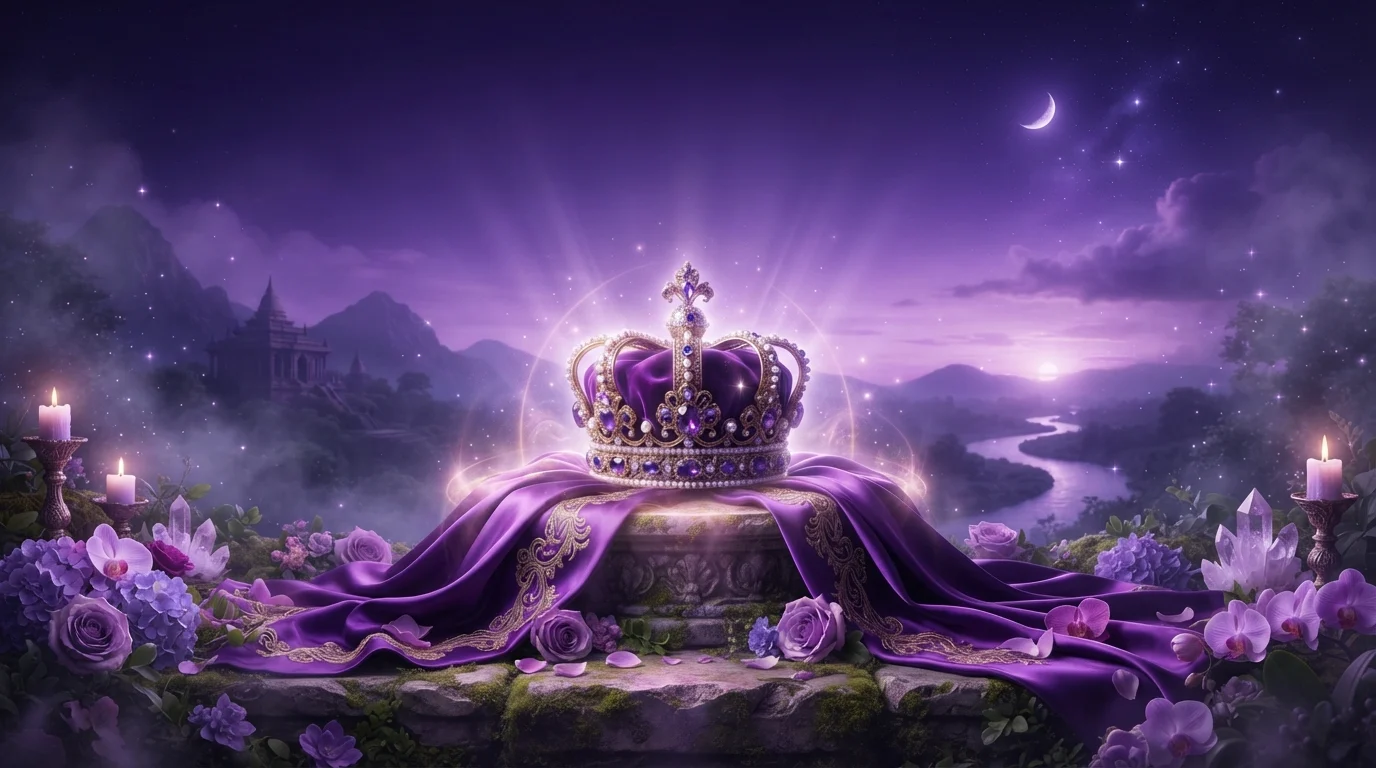
Purple symbolism has fascinated people for centuries because the color combines the calm depth of blue with the passionate energy of red. It is often associated with royalty, spirituality, wisdom, mystery, creativity, luxury, and transformation.
From ancient rulers wearing purple garments to modern designs that use purple to express individuality, this color carries a rich range of meanings. Depending on the culture and context, purple can represent both worldly power and inner enlightenment.
Purple Symbolism Meaning (Clear Definition)
Purple symbolism refers to the ideas, emotions, and qualities traditionally associated with the color purple.
In simple terms, purple commonly symbolizes royalty, wisdom, spirituality, mystery, creativity, luxury, dignity, and transformation.
Its symbolism can change depending on the shade. Deep purple may suggest power and luxury, while lighter shades such as lavender can represent gentleness, peace, and sensitivity.
Some of the most common meanings associated with purple include:
- Royalty and authority
- Spirituality and higher awareness
- Wisdom and intuition
- Mystery and the unknown
- Creativity and imagination
- Luxury and sophistication
- Transformation and personal growth
- Individuality and independence
Because purple sits between red and blue on the color spectrum, it is sometimes viewed symbolically as a meeting point between opposites passion and calm, physical life and spiritual awareness, or strength and sensitivity.
What Does Purple Symbolism Represent?
Purple symbolism can represent several powerful qualities at once. Its meaning often depends on the situation in which the color appears.
| Purple Symbolism | What It Represents |
|---|---|
| Royalty | Power, status, dignity, leadership |
| Spirituality | Higher consciousness, faith, inner awareness |
| Wisdom | Knowledge, intuition, maturity |
| Mystery | The unknown, imagination, hidden truths |
| Creativity | Artistic expression and originality |
| Luxury | Elegance, wealth, refinement |
| Transformation | Change, growth, renewal |
| Individuality | Independence and self-expression |
| Peace | Calmness, especially in softer purple shades |
Purple is especially interesting because it can feel both powerful and peaceful. It can command attention without having the aggressive quality sometimes associated with brighter colors.
Purple Symbolism and Royalty
One of the strongest associations with purple is royalty.
Historically, purple dyes could be difficult and expensive to produce, making rich purple fabrics symbols of wealth and social status. As a result, purple became closely connected with kings, queens, nobility, and authority.
Purple Symbolism and Wisdom
Purple is also frequently associated with wisdom and maturity. Its connection with reflection, intuition, and deeper thought makes it a popular symbolic color for knowledge and spiritual understanding.
Purple Symbolism and Creativity
Purple encourages associations with imagination and originality. Artists, designers, and creative thinkers may use purple to create an atmosphere that feels unusual, expressive, or imaginative.
Spiritual Meaning of Purple Symbolism
The spiritual meaning of purple is often connected with higher consciousness, intuition, meditation, spiritual growth, and inner transformation.
Purple is sometimes viewed as a bridge between the physical and spiritual worlds. Its position between red and blue can be interpreted symbolically as a balance between earthly energy and calm awareness.
In spiritual traditions and modern spiritual practices, purple may represent:
- Intuition
- Inner wisdom
- Spiritual awakening
- Meditation
- Higher consciousness
- Mysticism
- Transformation
- Connection with the divine
For some people, seeing purple repeatedly can feel like a reminder to slow down, reflect, and pay attention to their inner world. However, spiritual interpretations are personal rather than universal, so the meaning can vary greatly from one individual to another.
Purple and Spiritual Awakening
Purple is often associated with spiritual awakening because it suggests moving beyond ordinary awareness.
Symbolically, it can represent a period when someone becomes more reflective, intuitive, or interested in deeper questions about life and purpose.
Purple and Intuition
Purple symbolism is also connected with intuition. When used symbolically, the color can suggest trusting your inner voice while still balancing intuition with thoughtful judgment.
Biblical / Religious Meaning of Purple Symbolism
Purple has important associations in several religious traditions, including Christianity and Judaism.
In the Bible, purple or purple colored materials appear in contexts involving wealth, status, royal authority, and sacred settings. Purple fabrics were associated with costly materials and could signify honor and prestige.
In Christian traditions, purple has also become strongly connected with repentance, preparation, solemnity, and spiritual reflection, particularly during seasons such as Advent and Lent.
Religious symbolism should always be understood within its specific tradition because the meaning of purple can differ between denominations, historical periods, and cultures.
Beyond Christianity, purple has appeared in religious and ceremonial contexts around the world. Its rarity and visual richness have made it a natural symbol for sacredness, authority, and the mysterious.
Purple Symbolism in History and Culture
Purple has a fascinating history because its meaning has often been influenced by the difficulty of producing certain purple dyes.
In the ancient Mediterranean world, a famous purple dye known as Tyrian purple was produced from sea snails. Because producing the dye required considerable effort, the resulting color became associated with wealth and status.
Over time, purple became connected with rulers and elite communities in different parts of the world.
Its cultural meanings have expanded considerably since then. Purple can now symbolize:
- Royal power
- Wealth and elegance
- Religious devotion
- Mourning or remembrance in some traditions
- Feminine and masculine qualities depending on context
- Creativity and counterculture
- Individual identity
- Imagination and fantasy
The meaning of purple is therefore not fixed. Culture, historical period, shade, and personal experience can all influence its interpretation.
Purple Symbolism in Literature and Art
Purple has long been useful to writers and artists because it creates an immediate sense of mystery and emotional depth.
In literature, purple can symbolize a character’s wealth, ambition, spirituality, uniqueness, melancholy, imagination, or transformation. Writers may use purple imagery when they want a scene to feel dreamlike or emotionally significant.
In visual art, purple can create contrast, atmosphere, and psychological intensity. A deep violet sky may suggest mystery, while lavender flowers can evoke tenderness and calm.
Purple is particularly effective when an artist wants to combine opposing emotional qualities. It can feel dramatic without being harsh and peaceful without becoming ordinary.
Dream Meaning of Purple Symbolism
Seeing purple in a dream is often interpreted symbolically rather than literally.
Dream symbolism depends heavily on the dreamer’s emotions and circumstances, but purple may suggest spiritual growth, creativity, power, mystery, intuition, or personal transformation.
Possible interpretations include:
- Wearing purple: confidence, dignity, individuality, or a desire for recognition
- Seeing a purple light: spiritual awareness or a search for deeper meaning
- Purple flowers: emotional growth, beauty, sensitivity, or remembrance
- A purple room: introspection, imagination, or a private inner world
- Dark purple: mystery, authority, intense emotions, or uncertainty
- Lavender or light purple: peace, healing, tenderness, and emotional balance
The feeling of the dream is especially important. A beautiful purple scene may carry a very different meaning from a frightening or unsettling one.
Modern Meaning of Purple Symbolism
Today, purple is often associated with creativity, individuality, luxury, imagination, and self-expression.
Modern culture has made purple more accessible and less exclusively connected with royalty. It can now represent originality, unconventional thinking, and a willingness to stand apart from the crowd.
Purple is commonly used when a visual identity needs to feel:
- Creative
- Premium
- Imaginative
- Sophisticated
- Mysterious
- Innovative
- Distinctive
Different shades also create different impressions. Violet can feel energetic and spiritual, deep purple can appear luxurious and dramatic, while lavender often feels gentle and calming.
Purple Symbolism in Different Shades
Not every shade of purple communicates exactly the same message.
Dark Purple
Dark purple often symbolizes power, ambition, luxury, mystery, and authority.
Violet
Violet can represent imagination, spirituality, creativity, and transformation.
Lavender
Lavender is commonly associated with peace, gentleness, sensitivity, grace, and emotional calm.
Plum
Plum can suggest sophistication, richness, maturity, and elegance.
Magenta-Purple
Purple with stronger red tones can feel passionate, energetic, expressive, and emotionally intense.
These interpretations are flexible rather than absolute, but they can help explain why different purple shades create different emotional impressions.
Purple Symbolism and Personal Transformation
One of the most meaningful interpretations of purple is transformation.
Purple can symbolize the process of becoming something new while carrying lessons from the past. It may represent a transition from confusion toward understanding, from ordinary thinking toward greater awareness, or from dependence toward individuality.
In this sense, purple is not simply a symbol of power. It can represent inner power—the confidence that comes from understanding yourself more deeply.
Purple Symbolism and Personality
People who are naturally drawn to purple may associate with qualities such as creativity, imagination, independence, sensitivity, or curiosity.
However, color preference cannot reliably determine someone’s personality. Instead, purple can serve as a symbolic language for qualities a person values or wishes to express.
Someone may choose purple because they want to communicate elegance. Another person may choose it because it feels artistic, spiritual, unusual, or comforting.
Frequently Asked Questions About Purple Symbolism
What is the main meaning of purple symbolism?
Purple symbolism most commonly represents royalty, spirituality, wisdom, creativity, mystery, luxury, and transformation.
What does purple symbolize spiritually?
Spiritually, purple is often associated with intuition, higher awareness, meditation, spiritual growth, and inner transformation.
What does purple mean in dreams?
Purple in dreams may symbolize creativity, spiritual development, power, intuition, mystery, or transformation. The dream’s emotional atmosphere can provide important context.
Why is purple associated with royalty?
Purple became associated with royalty partly because some ancient purple dyes were rare, difficult, and expensive to produce, making purple garments symbols of wealth and status.
What does lavender symbolize compared with dark purple?
Lavender generally suggests gentleness, peace, sensitivity, and calm, while dark purple is more strongly associated with power, luxury, mystery, and authority.
Conclusion: The Deeper Meaning of Purple
Purple symbolism brings together seemingly opposite qualities: strength and sensitivity, passion and calm, mystery and understanding. Across history, religion, art, dreams, and modern culture, it has remained a powerful color of distinction and depth.
If you see purple as a symbol of royalty, spiritual awakening, creativity, or transformation, its message can be simple: there is value in looking beyond the surface and discovering the deeper meaning within.

Hi, I’m Kingston Fox, the administrator of Symbolop. I manage our platform and enjoy exploring symbols, their meanings, and cultural significance while ensuring readers have a reliable, engaging experience.