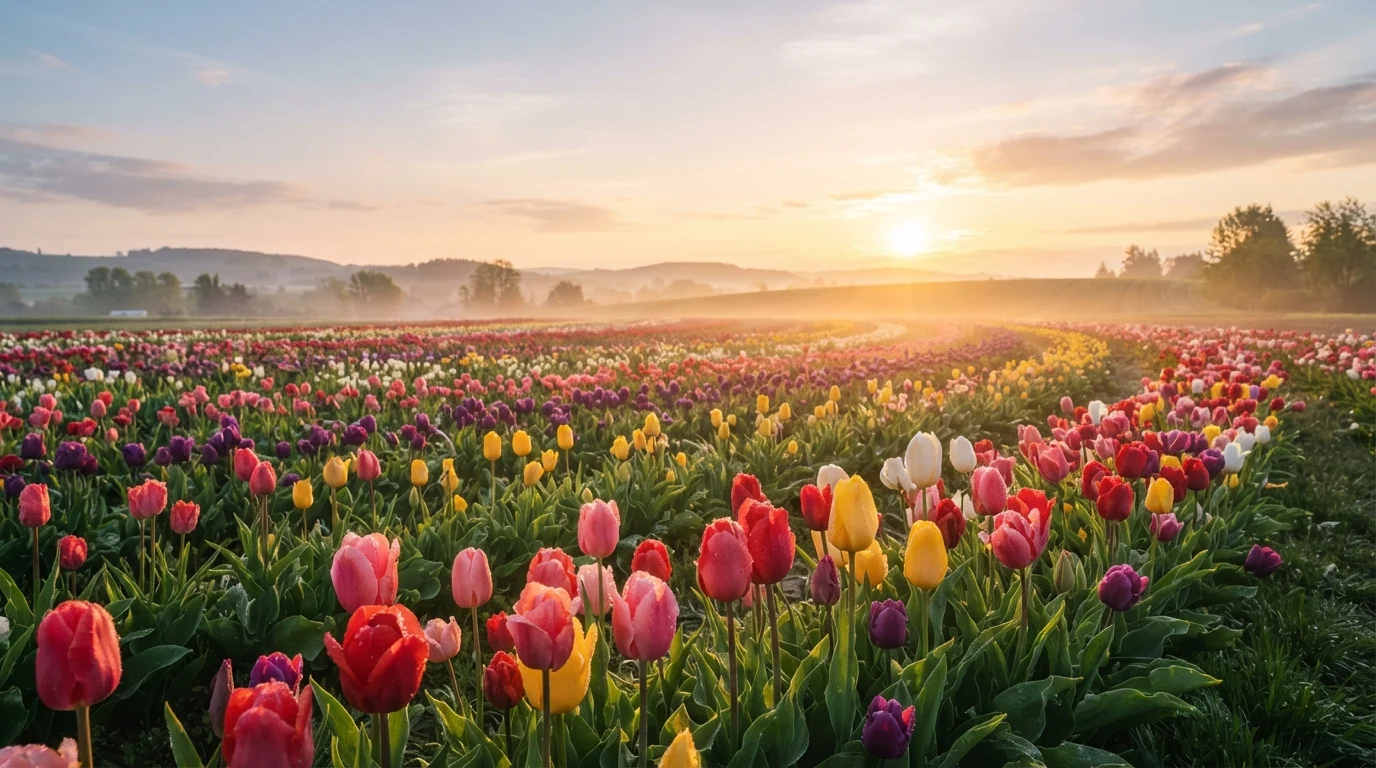
Tulip symbolism is often associated with perfect love, deep affection, renewal, elegance, and the beauty of life’s changing seasons. Although tulips come in many colors, each shade can express a slightly different emotion or message.
From gardens and poetry to weddings and heartfelt gifts, tulips have developed a rich symbolic language. Their simple shape and vibrant colors make them powerful symbols of love, hope, beauty, and new beginnings.
Tulip Symbolism Meaning (Clear Definition)
Tulip symbolism refers to the meanings and emotions people traditionally associate with tulip flowers. The most common meanings include love, affection, renewal, elegance, prosperity, and new beginnings.
Tulips bloom in spring, which naturally connects them with fresh starts and the return of life after winter. Their graceful appearance also gives them an association with refinement and beauty.
In simple terms:
Tulips symbolize love that is sincere, beauty that is graceful, and new beginnings filled with hope.
The meaning can change depending on the tulip’s color, cultural setting, and personal context.
Common Tulip Symbolism by Color
| Tulip Color | Symbolic Meaning |
|---|---|
| Red | True love, passion, deep affection |
| Pink | Caring, happiness, affection, good wishes |
| Yellow | Cheerfulness, friendship, optimism |
| White | Purity, forgiveness, peace, sincerity |
| Purple | Royalty, elegance, admiration |
| Orange | Enthusiasm, energy, excitement |
| Black/Dark | Mystery, strength, uniqueness |
What Does Tulip Symbolism Represent?
Tulips can represent several powerful ideas, making them meaningful flowers for both celebrations and emotional moments.
1. Love and Romance
Red tulips are especially connected with passionate and sincere love. They can communicate strong romantic feelings without the elaborate appearance of some other flowers.
2. New Beginnings
Because tulips emerge prominently during spring, they often symbolize renewal, fresh starts, and personal growth.
They can therefore be meaningful when someone begins a new relationship, career, home, or chapter of life.
3. Elegance and Grace
The clean shape of a tulip gives it a sense of simplicity and sophistication. Tulip symbolism can therefore represent graceful beauty without excess.
4. Hope and Optimism
Bright tulip colors, particularly yellow and orange, can represent happiness, positive energy, and hope for better days.
5. Perfect or Lasting Love
In traditional flower symbolism, tulips are sometimes associated with perfect or enduring love. This makes them especially popular in romantic and celebratory settings.
Spiritual Meaning of Tulip Symbolism
Spiritually, tulips can represent rebirth, transformation, inner growth, and the awakening of hope.
Their seasonal cycle offers a simple spiritual metaphor. A bulb remains hidden beneath the soil before eventually producing a beautiful flower. This can symbolize how growth may happen quietly before its results become visible.
Tulip symbolism may therefore remind us that:
- Growth often begins where nobody can see it.
- Difficult seasons eventually change.
- Beauty can emerge from patience.
- New beginnings can follow periods of uncertainty.
- Inner transformation takes time.
For some people, seeing tulips can be a gentle reminder to embrace change rather than fear it.
Biblical / Religious Meaning of Tulip Symbolism
The tulip is not specifically mentioned in the Bible, so there is no established biblical meaning of the flower itself.
However, people may connect tulips with broader biblical themes such as renewal, beauty, creation, hope, and spiritual growth. Spring flowers in general can serve as symbolic reminders of God’s creation and the renewal of life.
It is important to distinguish traditional Christian symbolism from modern personal interpretations. The tulip’s spiritual associations are largely cultural and symbolic rather than based on a specific biblical passage.
Tulip Symbolism in History and Culture
Tulips have a fascinating cultural history, particularly because of their connection with the Ottoman Empire and the Netherlands.
Tulips originated in regions of Central Asia and became highly valued in the Ottoman world. They were cultivated extensively and appeared in decorative arts, textiles, manuscripts, and architecture.
Later, tulips became strongly associated with Dutch culture. During the famous Tulip Mania of the 17th century, tulip bulbs became the subject of extraordinary speculation.
Today, the tulip is widely recognized as a symbol of spring, beauty, and renewal. It is also strongly associated with the Netherlands and appears in gardens, festivals, artwork, and public celebrations.
Cultural Associations of Tulips
- Ottoman culture: Beauty, refinement, and artistic expression
- Dutch culture: Spring, gardens, national identity, and horticulture
- Modern celebrations: Love, friendship, congratulations, and renewal
- Gardening: Rebirth and the arrival of spring
Tulip Symbolism in Literature and Art
Tulips have long inspired artists, poets, and writers because of their vivid colors and elegant forms.
In literature, tulips can symbolize beauty, desire, vulnerability, transformation, or emotional intensity. Their short flowering season can also suggest the temporary nature of beauty and life.
In visual art, tulips are frequently used to create contrast between color and simplicity. A single tulip may represent elegance, while a field of tulips can suggest abundance, joy, or the richness of spring.
The flower’s symbolic meaning often depends on the surrounding imagery. A bright tulip may communicate happiness, while a solitary flower can suggest introspection or emotional longing.
Dream Meaning of Tulip Symbolism
Dreaming about tulips can be interpreted in different ways depending on the dream’s emotions, colors, and circumstances.
Common interpretations include:
- Red tulips: Romantic feelings, passion, or emotional connection
- Yellow tulips: Happiness, friendship, optimism, or positive change
- White tulips: Peace, forgiveness, innocence, or emotional healing
- Purple tulips: Admiration, dignity, ambition, or spiritual reflection
- Blooming tulips: A new opportunity or positive transformation
- Withered tulips: A relationship, opportunity, or phase of life that may be changing
- Receiving tulips: Feeling appreciated, loved, or emotionally supported
- Planting tulips: Building something meaningful for the future
Dream symbolism is subjective, so the strongest interpretation usually comes from how you felt during the dream.
Modern Meaning of Tulip Symbolism
Today, tulips remain one of the most versatile symbolic flowers.
They are commonly used to express love, appreciation, congratulations, friendship, sympathy, and hope. Their clean and modern appearance also makes them popular in weddings, home decoration, photography, and seasonal celebrations.
A bouquet of tulips can communicate warmth without feeling overly formal. This versatility is one reason their symbolism continues to feel relevant.
Tulips as Modern Emotional Messages
- For a partner: “I love and appreciate you.”
- For a friend: “You bring happiness into my life.”
- For someone starting over: “A beautiful new chapter is beginning.”
- For a celebration: “Joy, success, and fresh possibilities.”
- For someone healing: “Hope and renewal are ahead.”
What Do Different Tulip Colors Symbolize?
Color plays an important role in flower symbolism. While meanings can vary between cultures, these associations are widely recognized:
Red Tulips
Red tulips traditionally symbolize true love, passion, and deep romantic affection.
Pink Tulips
Pink tulips represent caring, affection, happiness, and gentle love. They can work well for friends, family members, or romantic partners.
Yellow Tulips
Yellow tulips are associated with joy, friendship, sunshine, and optimism.
White Tulips
White tulips can symbolize purity, peace, sincerity, forgiveness, and remembrance.
Purple Tulips
Purple tulips often represent elegance, admiration, dignity, and royalty.
Orange Tulips
Orange tulips symbolize enthusiasm, excitement, energy, and strong positive emotions.
FAQs About Tulip Symbolism
What is the main meaning of tulips?
The main meaning of tulips is love, affection, beauty, renewal, and new beginnings. Their exact symbolism can vary according to color and cultural context.
What do red tulips symbolize?
Red tulips commonly symbolize true love, passion, and deep romantic affection. They are often given as a meaningful romantic gift.
What do yellow tulips symbolize?
Yellow tulips generally represent happiness, friendship, optimism, and cheerful energy. They can be a positive symbol of joy and warmth.
What do tulips symbolize spiritually?
Spiritually, tulips can symbolize rebirth, transformation, hope, patience, and personal growth. Their spring blooming makes them a natural symbol of renewal.
What does a tulip symbolize in a dream?
A tulip in a dream may symbolize love, emotional growth, a new beginning, beauty, or changing relationships. The flower’s color and your feelings in the dream can influence the interpretation.
Conclusion
Tulip symbolism beautifully connects love, beauty, renewal, and hope. From the passionate meaning of red tulips to the cheerful message of yellow ones, these flowers can express emotions that words sometimes struggle to capture.
At its heart, the tulip is a reminder that beautiful new beginnings can grow quietly before they finally bloom.

Hi, I’m Kingston Fox, the administrator of Symbolop. I manage our platform and enjoy exploring symbols, their meanings, and cultural significance while ensuring readers have a reliable, engaging experience.