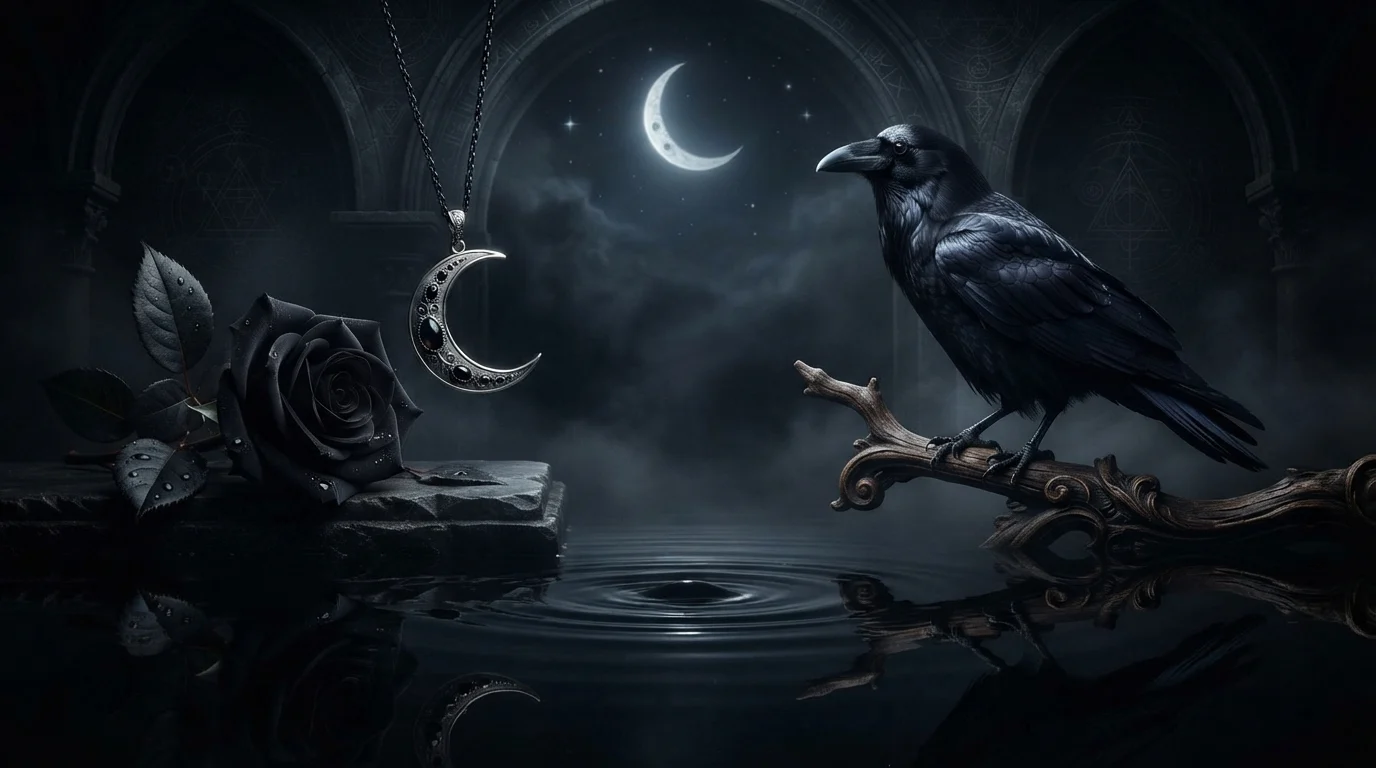
Black symbolism is rich, complex, and often deeply personal. Across different cultures and periods of history, black has represented mystery, power, protection, mourning, elegance, transformation, and the unknown.
Unlike colors with one dominant meaning, black can communicate very different ideas depending on context. A black garment may suggest sophistication, while a black sky can represent mystery or uncertainty.
In spiritual traditions, black may symbolize endings, protection, hidden knowledge, or the beginning of transformation.
Understanding black symbolism means looking beyond a simple definition. Its meaning changes with culture, religion, personal experience, art, dreams, fashion, and modern society.
Black Symbolism Meaning (Clear Definition)
Black symbolism refers to the ideas, emotions, and concepts traditionally associated with the color black.
In general, black can symbolize:
- Mystery and the unknown
- Power and authority
- Protection and strength
- Mourning and grief
- Death and endings
- Elegance and sophistication
- Rebellion and independence
- Transformation and renewal
- Hidden knowledge
- Seriousness and formality
Black often represents what cannot immediately be seen or understood. Because darkness hides details from view, it naturally became connected with mystery, secrecy, and the unknown.
At the same time, black can create a feeling of strength and confidence. This is why it appears so often in formal clothing, uniforms, luxury design, and powerful visual identities.
What Does Black Symbolism Represent?
Black symbolism represents both darkness and depth. It can point toward difficult experiences, but it can also represent strength, dignity, protection, and transformation.
The meaning usually depends on the situation.
| Symbolic Meaning | What Black Can Represent |
|---|---|
| Mystery | The unknown, secrets, and hidden realities |
| Power | Authority, confidence, and control |
| Mourning | Grief, loss, and remembrance |
| Protection | Boundaries, strength, and spiritual defense |
| Elegance | Luxury, sophistication, and refinement |
| Rebellion | Independence, nonconformity, and resistance |
| Transformation | Endings that make space for new beginnings |
| Depth | Serious thought, emotional intensity, and inner reflection |
Black is therefore not simply a symbol of negativity. It can represent the darkness before discovery, the ending before renewal, or the quiet strength found during difficult periods.
Spiritual Meaning of Black Symbolism
The spiritual meaning of black symbolism varies considerably among traditions. In many interpretations, black represents the unknown, spiritual protection, inner reflection, and transformation.
Because darkness conceals what lies beyond ordinary sight, black can symbolize the mysterious side of existence. It may encourage a person to look inward rather than relying only on what is visible.
Black is also sometimes associated with protection. In symbolic traditions, darkness can create a boundary between the known and unknown, making black a metaphor for spiritual defense and personal strength.
Another important interpretation is transformation. Symbolically, black may represent the closing of one chapter before another begins. This makes it particularly meaningful when someone is experiencing major changes in life.
Black as a Symbol of the Unknown
Darkness has always represented things humans cannot immediately see or understand. Spiritually, black can therefore encourage curiosity, introspection, and acceptance of uncertainty.
Black as Protection
Black may symbolize a protective boundary. Rather than representing fear, this interpretation focuses on strength, privacy, emotional boundaries, and resilience.
Black as Transformation
The symbolism of darkness can also relate to personal transformation. A difficult or uncertain period may become the starting point for greater wisdom and self-understanding.
Biblical / Religious Meaning of Black Symbolism
The meaning of black in religious traditions is not universal. In biblical contexts, darkness can sometimes be associated with judgment, sorrow, death, obscurity, or separation from light. However, religious symbolism is more nuanced than simply treating black as evil.
The Bible frequently contrasts darkness and light as symbolic concepts. Darkness can represent uncertainty or spiritual difficulty, while light commonly represents truth, revelation, and divine guidance.
Black or dark imagery can therefore carry a serious symbolic weight, particularly when connected with mourning, judgment, suffering, or the unknown.
In Christianity, however, the interpretation of black clothing and objects has also changed across history. Black clerical or monastic clothing, for example, has sometimes represented humility, seriousness, devotion, and separation from worldly concerns.
Other religious and spiritual traditions may interpret black differently. Some associate it with protection, ancestral wisdom, fertility, mystery, or sacred power.
Because religious symbolism depends heavily on tradition and context, it is important not to assume that black has one universal spiritual meaning.
Black Symbolism in History and Culture
Black has carried powerful meanings throughout human history.
In many societies, black became connected with death and mourning because darkness was naturally associated with the unknown and the end of life. Black clothing eventually became a widely recognized expression of grief in various cultures.
At the same time, black has represented authority and social status. Dark clothing could communicate seriousness, discipline, and formality, especially when made from expensive or carefully crafted materials.
Black also became an important symbol of resistance and independence. In different historical and cultural movements, black has been used to challenge established systems, express solidarity, or create a strong collective identity.
Cultural Meanings of Black
Different societies may associate black with:
- Mourning: grief, remembrance, and loss
- Authority: leadership, discipline, and seriousness
- Protection: strength and spiritual boundaries
- Mystery: secrecy and the unknown
- Luxury: refinement and exclusivity
- Rebellion: independence and resistance
- Fertility or creation: in some traditional cultures, dark earth and fertile soil
These meanings demonstrate why color symbolism cannot always be separated from cultural history.
Black Symbolism in Literature and Art
Black has been one of the most powerful symbolic colors in literature and art.
Writers frequently use darkness to create atmosphere or suggest emotional and psychological depth. A black night may symbolize uncertainty, while a dark room can represent secrecy, isolation, or fear.
In poetry, black may describe grief, emotional emptiness, mystery, or profound love. Its meaning depends on the surrounding imagery and the author’s intention.
Artists have also used black to create contrast. A dark background can make lighter objects appear brighter, creating dramatic tension and directing attention toward specific elements.
Common Artistic Uses of Black
- Black shadows: secrecy, fear, or hidden emotions
- Black clothing: elegance, grief, authority, or rebellion
- Black landscapes: isolation, mystery, or emotional darkness
- Black animals: mystery, intelligence, or superstition
- Black backgrounds: depth, drama, and contrast
In modern design, black often communicates confidence and sophistication. In fine art, it can convey emotional intensity or create a powerful sense of depth.
Dream Meaning of Black Symbolism
Seeing black in a dream can have many possible interpretations. Dream symbolism is highly personal, so the meaning often depends on what appeared black and how you felt during the dream.
A black object may represent something unknown or unresolved. Black clothing might suggest seriousness, emotional protection, or a transition in life. A black sky or dark environment could reflect uncertainty or fear.
However, black in a dream is not automatically a negative sign.
Common Black Dream Interpretations
- Black clothing: privacy, seriousness, confidence, or emotional protection
- Black animal: mystery, instinct, hidden fears, or personal power
- Black sky: uncertainty, change, or emotional heaviness
- Black room: the unknown or something not yet understood
- Black water: deep emotions or unconscious thoughts
- Black object: a hidden issue, secret, or important transition
The strongest clue is usually the emotion experienced in the dream. Feeling calm around black imagery may suggest strength or mystery, while feeling frightened may point toward anxiety or uncertainty.
Modern Meaning of Black Symbolism
Today, black symbolism is everywhere, from fashion and branding to technology, architecture, entertainment, and popular culture.
In fashion, black is commonly associated with elegance, confidence, minimalism, and sophistication. A simple black outfit can appear formal and timeless without relying on bright colors.
In branding and design, black often communicates authority and premium quality. It can make a product or visual identity feel modern, powerful, exclusive, or sophisticated.
Black can also represent rebellion and individuality. Music, fashion, film, and youth cultures have repeatedly used black to challenge conventional ideas and create distinctive identities.
Black in Modern Psychology and Design
Black can create a strong visual impact. It absorbs attention through contrast and can make surrounding colors appear brighter.
Its emotional effect may include:
- Confidence
- Seriousness
- Mystery
- Strength
- Sophistication
- Emotional distance
- Authority
Because of this range, black is one of the most versatile colors in modern visual culture.
Black Symbolism in Different Contexts
The same color can mean something completely different depending on where it appears.
Black in Clothing
Black clothing can represent elegance, professionalism, mystery, independence, or mourning.
Black in Nature
Black animals, caves, night skies, and dark landscapes often evoke mystery, instinct, hidden power, and the unknown.
Black in Relationships
Symbolically, black may represent emotional boundaries, independence, depth, or unresolved feelings. The interpretation depends strongly on the relationship and circumstances.
Black in Jewelry
Black stones and jewelry are sometimes associated with grounding, protection, mystery, and strength in spiritual and symbolic traditions.
Black in Architecture
Black architecture can communicate modernity, minimalism, strength, and sophistication. It is often used to create dramatic contrast and a sense of permanence.
Is Black Symbolism Always Negative?
No. Black symbolism is not inherently negative.
Although black can represent death, grief, darkness, or fear, it can equally symbolize power, elegance, protection, wisdom, independence, and transformation.
Think of black as a symbol of depth rather than simply darkness. Night may hide the world from view, but it can also create space for rest, reflection, and renewal.
The meaning of black depends on the cultural setting, personal experience, and symbols surrounding it.
Frequently Asked Questions About Black Symbolism
What is the main meaning of black symbolism?
Black commonly symbolizes mystery, power, protection, mourning, elegance, and the unknown. Its meaning changes according to cultural and personal context.
What does black symbolize spiritually?
Spiritually, black can represent protection, mystery, introspection, transformation, and the unknown. Some traditions also connect it with endings, mourning, or judgment.
What does black symbolize in dreams?
Black in dreams may represent uncertainty, hidden emotions, protection, transformation, or unresolved concerns. The emotion you experience in the dream is important when interpreting its meaning.
Is black a symbol of power?
Yes. Black is frequently associated with authority, confidence, strength, discipline, and control. This is one reason it is common in formal clothing, uniforms, and powerful visual designs.
Does black symbolize death?
Black can symbolize death and mourning in many cultures, but it does not exclusively represent death. It may also symbolize mystery, transformation, elegance, protection, and new beginnings after an ending.
Conclusion
Black symbolism is powerful because it contains many apparent opposites. It can represent darkness and mystery, but also strength and protection. It can express grief while simultaneously communicating elegance, independence, and confidence.
Rather than viewing black as simply positive or negative, it is more meaningful to see it as a color of depth, mystery, transformation, and power. Its symbolism reminds us that darkness does not always mean an ending it can also be the quiet space where something new begins.

Hi, I’m Kingston Fox, the administrator of Symbolop. I manage our platform and enjoy exploring symbols, their meanings, and cultural significance while ensuring readers have a reliable, engaging experience.