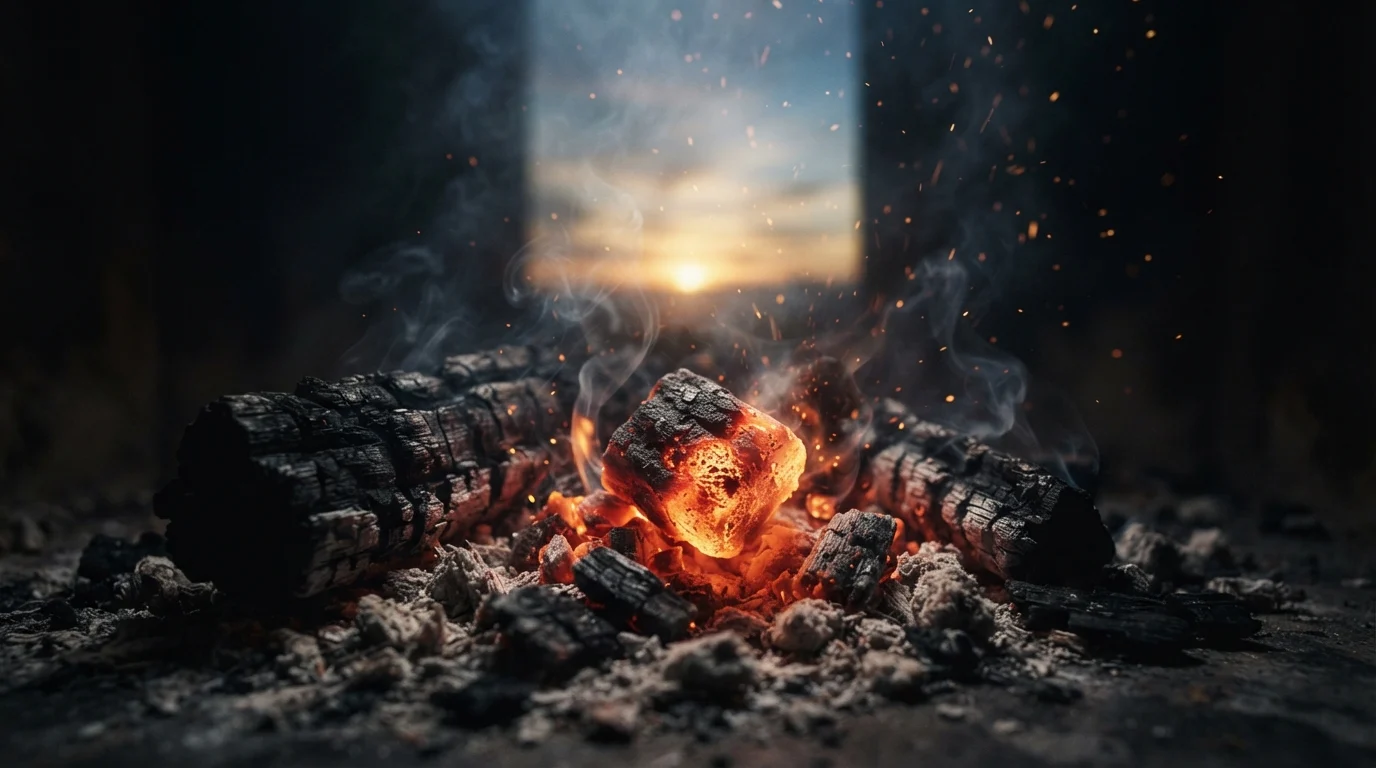
Charcoal symbolism is deeply connected with transformation, purification, resilience, hidden potential, and the aftermath of fire. Although charcoal appears dark, burned, and lifeless, it carries a fascinating symbolic message: something can pass through destruction and still retain value.
Across spiritual traditions, history, art, dreams, and modern culture, charcoal often represents what remains after intense change and the possibility of creating something new from it.
Charcoal Symbolism Meaning (Clear Definition)
Charcoal symbolism represents transformation, endurance, purification, mystery, and potential hidden beneath darkness.
Charcoal is created when wood is exposed to intense heat while receiving limited oxygen. Symbolically, this process makes charcoal a powerful image of change through hardship.
It can represent:
- Transformation — becoming something different through intense experiences.
- Resilience — surviving heat, pressure, and difficult circumstances.
- Purification — leaving behind what is unnecessary.
- Hidden potential — something valuable existing beneath an ordinary appearance.
- Mystery — darkness, secrecy, and the unknown.
- Renewal — using what remains after destruction to begin again.
- Creativity — charcoal becoming a tool for artistic expression.
The symbolism can be positive or negative depending on the context. Fresh charcoal may suggest potential and renewal, while cold or crumbling charcoal can symbolize exhaustion, endings, or something that has already served its purpose.
What Does Charcoal Symbolism Represent?
Charcoal symbolism often centers on the idea that fire changes rather than simply destroys.
A piece of wood enters the fire as one thing and emerges as charcoal. Its appearance changes dramatically, yet it retains useful qualities. This makes it an excellent metaphor for people who have experienced difficult periods and emerged stronger or wiser.
| Symbolic Meaning | What Charcoal Can Represent |
|---|---|
| Transformation | Personal change after hardship |
| Resilience | Surviving pressure and adversity |
| Purification | Releasing unwanted influences |
| Hidden potential | Value concealed beneath darkness |
| Endings | The remains of something completed |
| Renewal | Preparing for a new beginning |
| Creativity | Artistic expression and imagination |
| Mystery | The unknown or unconscious mind |
Charcoal can therefore symbolize the strength that remains after a challenging experience.
Its black color also adds another layer of meaning. Black is frequently associated with mystery, authority, mourning, protection, depth, and the unseen.
Spiritual Meaning of Charcoal Symbolism
Spiritually, charcoal can represent purification through transformation.
Fire has long been viewed as a force that removes impurities and changes one substance into another. Charcoal is one of the results of that process, making it a symbol of what survives after intense spiritual or emotional refinement.
Charcoal may suggest that you are:
- Leaving an old version of yourself behind.
- Going through an important period of personal growth.
- Discovering strength you did not know you possessed.
- Releasing emotional burdens.
- Moving from darkness toward understanding.
- Preparing for a spiritual or personal renewal.
The symbolism can also encourage patience. Charcoal does not become charcoal instantly; it develops through a process involving heat and gradual change. In a similar way, meaningful personal transformation often takes time.
Charcoal as a Symbol of Resilience
One of the strongest spiritual interpretations of charcoal is resilience.
The material has survived an encounter with fire. In symbolic language, this can represent a person who has experienced pressure but continues moving forward.
Its message can be simple:
What changed you does not necessarily have to destroy you. It may become part of your strength.
Biblical / Religious Meaning of Charcoal Symbolism
Charcoal has meaningful associations within biblical imagery, particularly through scenes involving fire, purification, repentance, sacrifice, and restoration.
In the Bible, burning coals or charcoal appear in several contexts. One notable example occurs in the Gospel of John, where the resurrected Jesus prepares a charcoal fire for his disciples. This scene is especially significant because Peter is present, creating an association between the fire and his earlier denial of Jesus.
The biblical symbolism of fire itself is often connected with divine presence, testing, purification, judgment, and sacrifice. Charcoal, as a product of fire, can therefore be interpreted symbolically through these broader themes.
However, charcoal does not have one universal biblical meaning. Its significance depends heavily on the specific passage and context.
In broader religious traditions, burned materials may also symbolize offerings, purification, mortality, or the transformation of physical matter.
Charcoal Symbolism in History and Culture
Charcoal has been important to human civilization for thousands of years.
Long before modern fuels became common, charcoal was widely used for cooking, heating, metalworking, and other practical purposes. Its importance to ancient industries gives it a strong connection with human ingenuity and survival.
Charcoal was especially valuable in metalworking because it could provide the intense heat needed for working metals. This creates an interesting symbolic connection between fire, craftsmanship, strength, and transformation.
Culturally, charcoal can therefore represent the process of turning raw materials into something useful.
Its history also connects it with traditional cooking, rural life, craftsmanship, and communal gatherings around fire.
In some contexts, charcoal’s dark appearance has been associated with mourning and death. In others, its connection to warmth and cooking gives it associations with nourishment, family, and togetherness.
Charcoal Symbolism in Literature and Art
Charcoal has a particularly strong relationship with artistic expression.
Charcoal sticks are among the oldest and most versatile drawing materials. Artists use them to create deep blacks, soft shadows, dramatic contrasts, rough textures, and expressive marks.
Because charcoal can be erased and reshaped, it also carries symbolic associations with impermanence.
A charcoal drawing can suggest:
- Memory and nostalgia
- Mortality
- Emotional intensity
- Darkness and mystery
- Simplicity
- Imperfection
- Human vulnerability
- Creative freedom
In literature, charcoal imagery can symbolize what remains after a powerful event. A burned landscape, blackened wood, or dying fire can evoke loss, change, survival, or the possibility of renewal.
The contrast between charcoal’s darkness and the creative images it can produce makes it especially powerful as an artistic metaphor.
Dream Meaning of Charcoal Symbolism
Dreaming about charcoal can symbolize transformation, emotional exhaustion, hidden potential, or the aftermath of a major experience.
The exact interpretation depends on what happens in the dream.
Dreaming of Burning Charcoal
Burning charcoal may represent active transformation, passion, energy, or an intense emotional experience.
Dreaming of Black Charcoal
Black charcoal may point toward mystery, hidden feelings, uncertainty, or something in your life that has not yet been fully understood.
Dreaming of Charcoal Turning to Ash
This may symbolize completion, loss, letting go, or the final stage of a significant chapter.
Dreaming of Using Charcoal for Art
This can represent creativity, self-expression, and the desire to communicate feelings that are difficult to express directly.
Finding Charcoal in a Dream
Finding charcoal may symbolize discovering value or potential in something that initially appears damaged, ordinary, or forgotten.
Dream symbolism is personal rather than fixed, so your emotions and circumstances are important when interpreting the image.
Modern Meaning of Charcoal Symbolism
Today, charcoal symbolism extends beyond traditional fire imagery.
Charcoal is associated with minimalism, sustainability, wellness, design, food culture, and artistic expression.
Its deep black color has become popular in fashion, interiors, packaging, and visual design because it can communicate sophistication and simplicity.
Charcoal can also symbolize balance between nature and human creativity. Wood comes from nature, while charcoal is produced through a human-controlled process involving fire. This makes it an interesting representation of the relationship between natural materials and human transformation.
Activated charcoal has further contributed to modern associations with cleansing and purification, although symbolic interpretations should not be confused with medical claims about its actual uses.
Charcoal as a Symbol of Personal Growth
Perhaps the most meaningful modern interpretation is personal transformation.
Charcoal reminds us that appearances can be deceptive. Something dark or damaged may still possess usefulness, beauty, or potential.
A difficult chapter does not automatically mean the end of the story.
Sometimes, it becomes the material from which something new is created.
Charcoal Symbolism and Personal Transformation
Charcoal can serve as a metaphor for difficult seasons of life.
A person may experience failure, loss, uncertainty, or emotional pressure and feel as though everything familiar has been burned away. Yet the charcoal metaphor suggests that transformation can leave behind something valuable: wisdom, resilience, maturity, or a clearer sense of purpose.
This does not mean hardship is inherently good. Rather, it suggests that people can sometimes find meaning and strength in what they survive.
Charcoal therefore carries a quiet but powerful message:
Transformation may leave marks, but those marks can become part of your story rather than the end of it.
Frequently Asked Questions About Charcoal Symbolism
What is the main meaning of charcoal symbolism?
Charcoal symbolism primarily represents transformation, resilience, purification, hidden potential, and what remains after intense change.
What does charcoal symbolize spiritually?
Spiritually, charcoal can represent purification, personal transformation, endurance, renewal, and strength gained through difficult experiences.
What does black charcoal symbolize?
Black charcoal can symbolize mystery, darkness, hidden emotions, endings, protection, or potential concealed beneath an outwardly simple appearance.
What does charcoal mean in dreams?
Charcoal in dreams may represent transformation, emotional intensity, exhaustion, creativity, or the completion of an important chapter, depending on the dream’s context.
Is charcoal a symbol of rebirth?
Charcoal can symbolize rebirth indirectly because it represents material transformed by fire and can suggest that something new may emerge after an ending.
Conclusion
Charcoal symbolism is ultimately a story of transformation. It represents what remains after fire, pressure, and change but also what can still be useful, creative, and full of potential.
Its dark appearance reminds us that not everything valuable looks bright at first. Sometimes strength is found in what survives the fire, and sometimes the darkest material can become the foundation for something beautiful.

I’m Camden Holland, a passionate writer at Symbolop, where I explore the meanings, history, and cultural significance of symbols. I enjoy creating clear, engaging content that helps readers discover the fascinating stories behind symbols from around the world.